


Clinical features and outcomes of plasma cell leukemia: a single-institution experience in the era of novel agents
- PMID: 23087795
- PMCID: PMC3475946
- DOI: 10.4081/rt.2012.e39
Clinical features and outcomes of plasma cell leukemia: a single-institution experience in the era of novel agents
Abstract
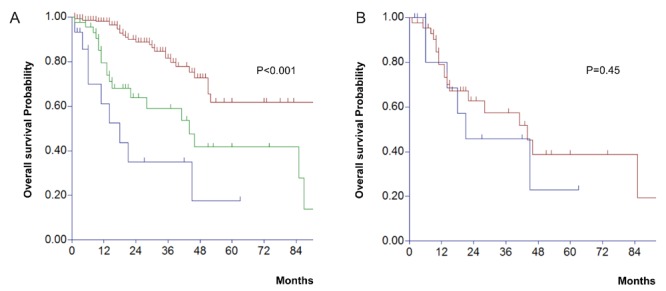
Plasma cell leukemia (PCL) is a rare hematologic malignancy with aggressive clinical and biologic features. Data regarding its prognosis with the use of the novel agents, i.e., the immunomodulatory drugs thalidomide and lenalidomide, and the proteasome inhibitor bortezomib, are limited. We retrospectively reviewed clinical outcomes, response to therapy, and survival of 17 patients seen at the Penn State Hershey Cancer Institute since the availability of novel agents (2006-2011). Twelve patients had primary PCL (pPCL), and 5 secondary PCL (sPCL). PCL was associated with aggressive clinicobiological features, such as high-risk cytogenetics, elevated serum beta-2-microglobulin and lactate dehydrogenase, International Staging System stage III, and rapid relapse after therapy. With the use of thalidomide, lenalidomide, and bortezomib in 53%, 53%, and 88% patients, respectively, median overall survival (OS) was 18 months in the whole group (95% confidence interval, 11-21 months), and 21 and 4 months in pPCL and sPCL, respectively (P=0.015). OS was inferior to that of 313 consecutive patients with multiple myeloma (MM) treated in the same period, even when compared with a subset of 47 MM with high-risk cytogenetics. Although our data are limited by the small sample size, we conclude that novel agents may modestly improve survival in patients with PCL, when compared to historical controls. Novel therapies do not seem to overcome the negative prognosis of PCL as compared with MM.
Keywords: Plasma cell leukemia; extramedullary disease.; multiple myeloma.
Conflict of interest statement
Conflict of interests: the authors report no conflicts of interests.
Figures
References
-
- Sant M, Allemani C, Tereanu C, et al. Incidence of hematologic malignancies in Europe by morphologic subtype: results of the HAEMACARE project. Blood. 2010;116:3724–34. - PubMed
-
- Kyle RA, Maldonado JE, Bayrd ED. Plasma cell leukemia. Report on 17 cases. Arch Intern Med. 1974;133:813–8. - PubMed
-
- Garcia-Sanz R, Orfao A, Gonzalez M, et al. Primary plasma cell leukemia: clinical, immunophenotypic, DNA ploidy, and cytogenetic characteristics. Blood. 1999;93:1032–7. - PubMed
-
- Dimopoulos MA, Palumbo A, Delasalle KB, et al. Primary plasma cell leukaemia. Br J Haematol. 1994;88:754–9. - PubMed
-
- Pellat-Deceunynck C, Barille S, Jego G, et al. The absence of CD56 (NCAM) on malignant plasma cells is a hallmark of plasma cell leukemia and of a special subset of multiple myeloma. Leukemia. 1998;12:1977–82. - PubMed
LinkOut - more resources
Full Text Sources
Research Materials
