


N-Acyl amines of docosahexaenoic acid and other n-3 polyunsatured fatty acids - from fishy endocannabinoids to potential leads
- PMID: 23088259
- PMCID: PMC3687658
- DOI: 10.1111/bph.12030
N-Acyl amines of docosahexaenoic acid and other n-3 polyunsatured fatty acids - from fishy endocannabinoids to potential leads
Abstract
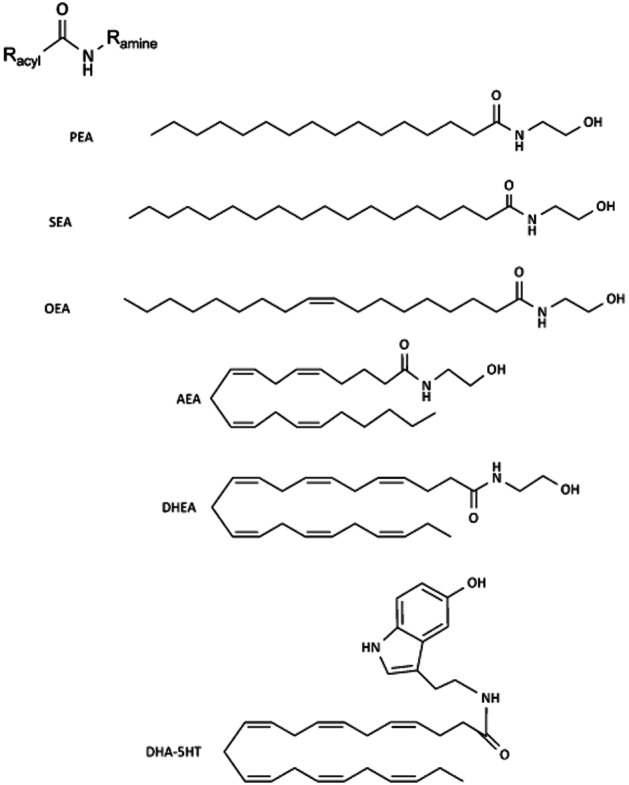
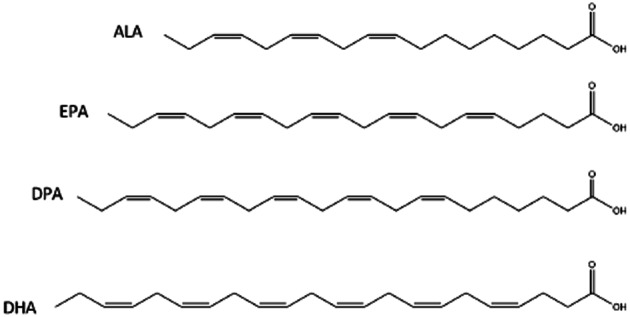
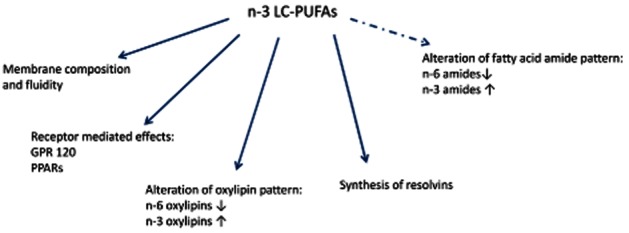
N-3 Long-chain polyunsaturated fatty acids (n-3 LC-PUFAs), in particular α-linolenic acid (18:3n-3), eicosapentaenoic acid (EPA; 20:5n-3) and docosahexaenoic acid (DHA; 22:6n-3) are receiving much attention because of their presumed beneficial health effects. To explain these, a variety of mechanisms have been proposed, but their interactions with the endocannabinoid system have received relatively little attention so far. However, it has already been shown some time ago that consumption of n-3 LC-PUFAs not only affects the synthesis of prototypic endocannabinoids like anandamide but also stimulates the formation of specific n-3 LC-PUFA-derived conjugates with ethanolamine, dopamine, serotonin or other amines. Some of these fatty amides show overlapping biological activities with those of typical endocannabinoids, whereas others possess distinct and sometimes largely unknown receptor affinities and other properties. The ethanolamine and dopamine conjugates of DHA have been the most investigated thus far. These mediators may provide promising new leads to the field of inflammatory and neurological disorders and for other pharmacological applications, including their use as carrier molecules for neurotransmitters to target the brain. Furthermore, combinations of n-3 LC-PUFA-derived fatty acid amides, their precursors and FAAH inhibitors offer possibilities to optimise their effects in health and disease.
© 2012 The Authors. British Journal of Pharmacology © 2012 The British Pharmacological Society.
Figures
References
-
- Adams IB, Ryan W, Singer M, Thomas BF, Compton DR, Razdan RK, et al. Evaluation of cannabinoid receptor binding and in vivo activities for anandamide analogs. J Pharmacol Exp Ther. 1995;273:1172–1181. - PubMed
-
- Artmann A, Petersen G, Hellgren LI, Boberg J, Skonberg C, Nellemann C, et al. Influence of dietary fatty acids on endocannabinoid and N-acylethanolamine levels in rat brain, liver and small intestine. Biochim Biophys Acta. 2008;1781:200–212. - PubMed
-
- Balvers MGJ, Verhoeckx KCM, Plastina P, Wortelboer HM, Meijerink J, Witkamp RF. Docosahexaenoic acid and eicosapentaenoic acid are converted by 3T3-L1 adipocytes to N-acyl ethanolamines with anti-inflammatory properties. Biochim Biophys Acta. 2010;1801:1107–1114. - PubMed
Publication types
MeSH terms
Substances
LinkOut - more resources
Full Text Sources
Other Literature Sources
Medical
Research Materials
