


Geometric evaluation of systematic transrectal ultrasound guided prostate biopsy
- PMID: 23088974
- PMCID: PMC3876458
- DOI: 10.1016/j.juro.2012.07.107
Geometric evaluation of systematic transrectal ultrasound guided prostate biopsy
Abstract
Purpose: Transrectal ultrasound guided prostate biopsy results rely on physician ability to target the gland according to the biopsy schema. However, to our knowledge it is unknown how accurately the freehand, transrectal ultrasound guided biopsy cores are placed in the prostate and how the geometric distribution of biopsy cores may affect the prostate cancer detection rate.
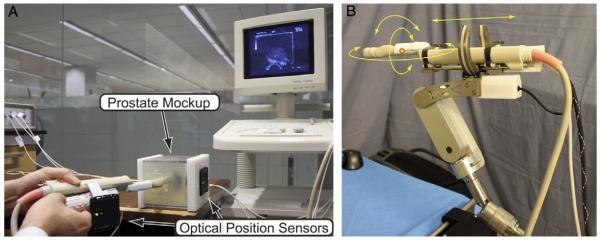
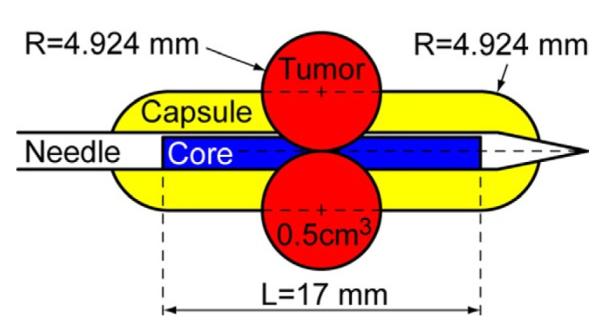
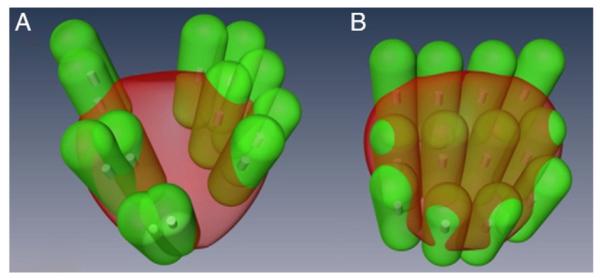
Materials and methods: To determine the geometric distribution of cores, we developed a biopsy simulation system with pelvic mock-ups and an optical tracking system. Mock-ups were biopsied in a freehand manner by 5 urologists and by our transrectal ultrasound robot, which can support and move the transrectal ultrasound probe. We compared 1) targeting errors, 2) the accuracy and precision of repeat biopsies, and 3) the estimated significant prostate cancer (0.5 cm(3) or greater) detection rate using a probability based model.
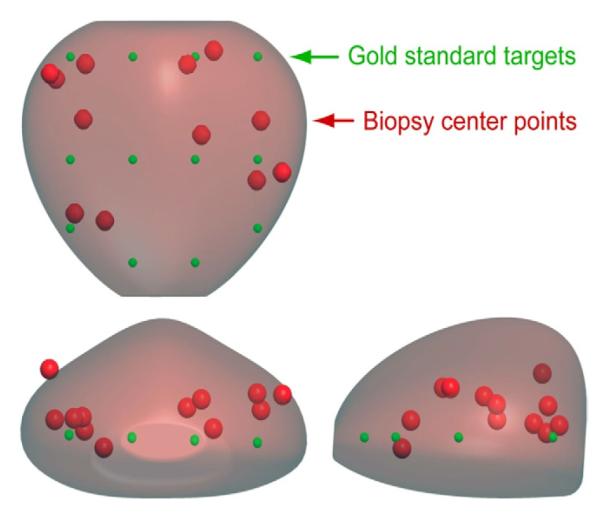
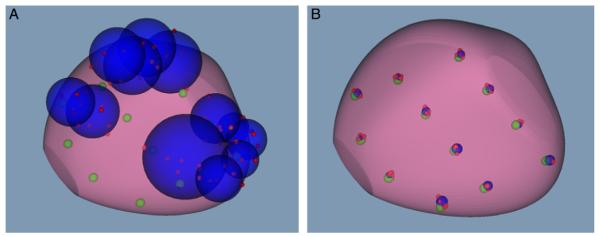
Results: Urologists biopsied cores in clustered patterns and under sampled a significant portion of the prostate. The robot closely followed the predefined biopsy schema. The mean targeting error of the urologists and the robot was 9.0 and 1.0 mm, respectively. Robotic assistance significantly decreased repeat biopsy errors with improved accuracy and precision. The mean significant prostate cancer detection rate of the urologists and the robot was 36% and 43%, respectively (p <0.0001).
Conclusions: Systematic biopsy with freehand transrectal ultrasound guidance does not closely follow the sextant schema and may result in suboptimal sampling and cancer detection. Repeat freehand biopsy of the same target is challenging. Robotic assistance with optimized biopsy schemas can potentially improve targeting, precision and accuracy. A clinical trial is needed to confirm the additional benefits of robotic assistance.
Copyright © 2012 American Urological Association Education and Research, Inc. Published by Elsevier Inc. All rights reserved.
Figures
Comment in
-
Re: Geometric evaluation of systematic transrectal ultrasound guided prostate biopsy: M. Han, D. Chang, C. Kim, B. J. Lee, Y. Zuo, H.-J. Kim, D. Petrisor, B. Trock, A. W. Partin, R. Rodriguez, H. B. Carter, M. Allaf, J. Kim and D. Stoianovici. J Urol 2012; 188: 2404-2409.J Urol. 2013 Jul;190(1):363-4. doi: 10.1016/j.juro.2013.02.001. Epub 2013 Feb 8. J Urol. 2013. PMID: 23399648 No abstract available.
References
-
- Rabbani F, Stroumbakis N, Kava BR, et al. Incidence and clinical significance of false-negative sextant prostate biopsies. J Urol. 1998;159:1247. - PubMed
-
- Norberg M, Egevad L, Holmberg L, et al. The sextant protocol for ultrasound-guided core biopsies of the prostate underestimates the presence of cancer. Urology. 1997;50:562. - PubMed
-
- Svetec D, McCabe K, Peretsman S, et al. Prostate rebiopsy is a poor surrogate of treatment efficacy in localized prostate cancer. J Urol. 1998;159:1606. - PubMed
Publication types
MeSH terms
Grants and funding
LinkOut - more resources
Full Text Sources
Other Literature Sources
