


Alteration of the oxygen-dependent reactivity of de novo Due Ferri proteins
- PMID: 23089864
- PMCID: PMC3568993
- DOI: 10.1038/nchem.1454
Alteration of the oxygen-dependent reactivity of de novo Due Ferri proteins
Erratum in
- Nat Chem. 2012 Dec;4(12):1050. Szyperski, Thomas G [corrected to Szyperski, Thomas]
Abstract
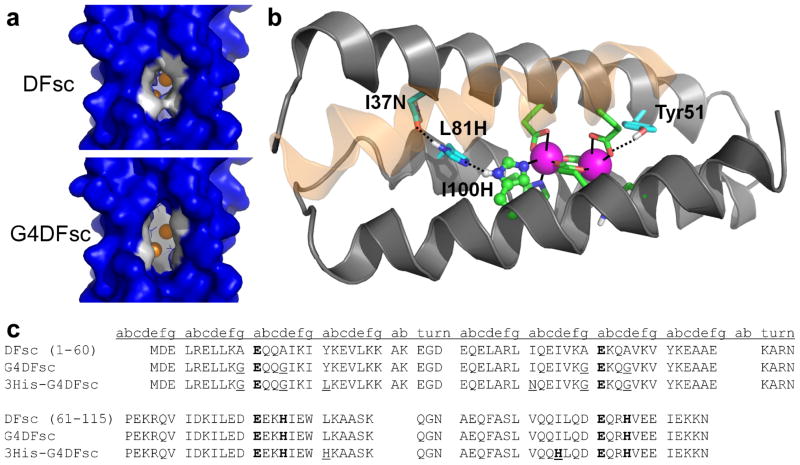
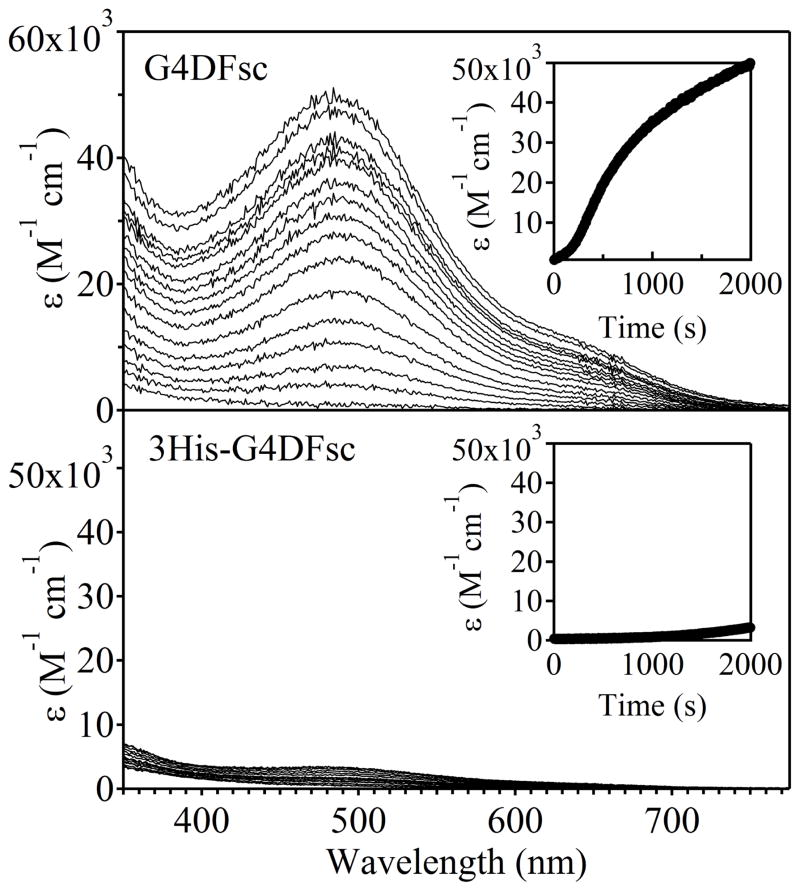
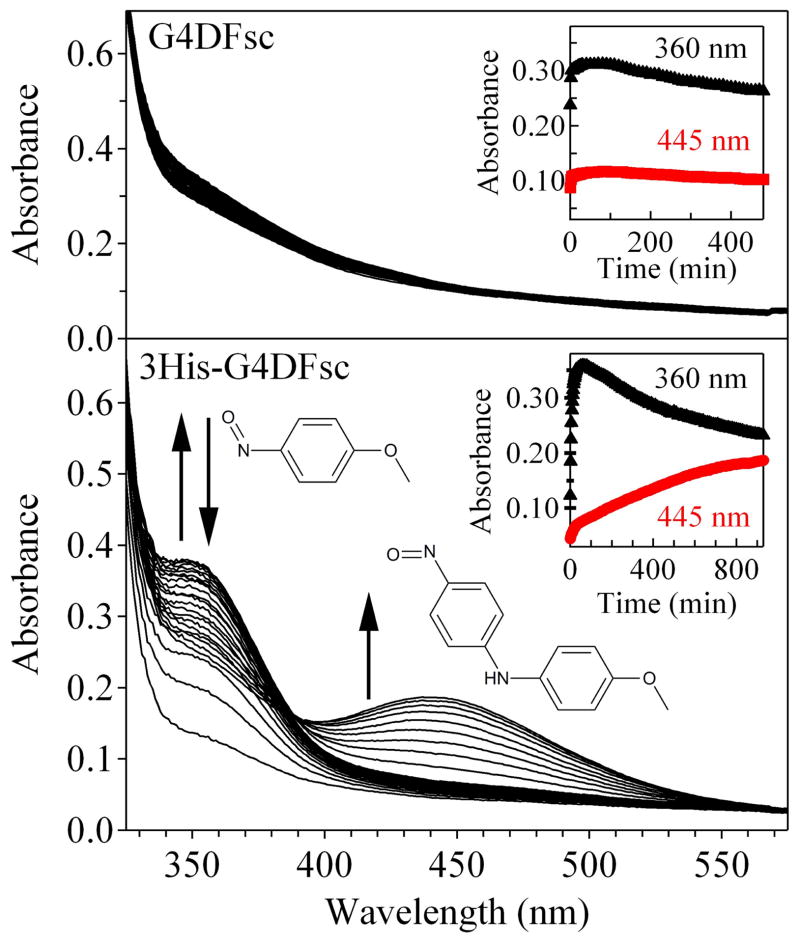
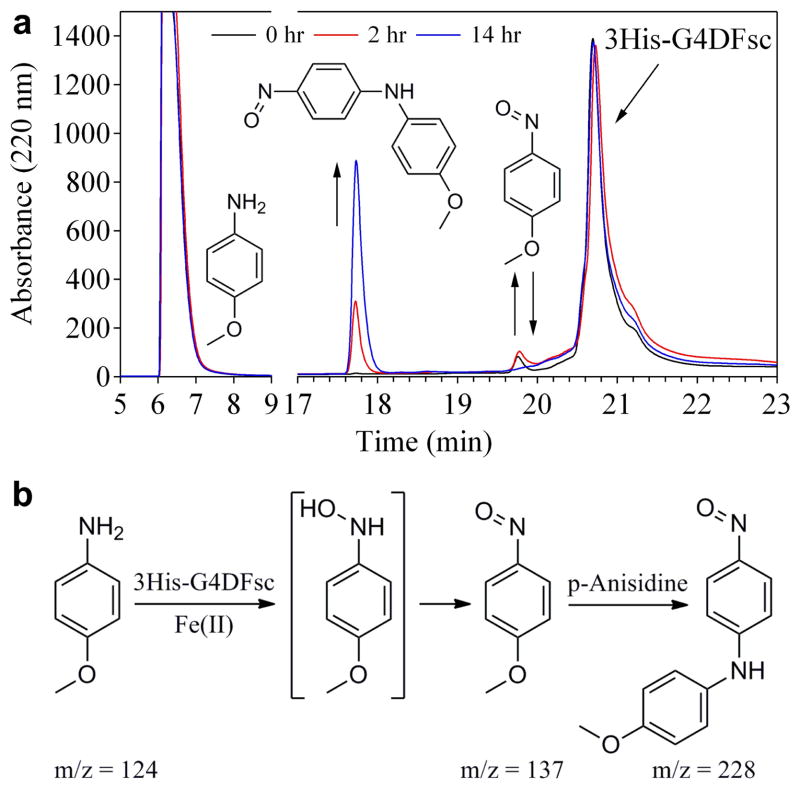
De novo proteins provide a unique opportunity to investigate the structure-function relationships of metalloproteins in a minimal, well-defined and controlled scaffold. Here, we describe the rational programming of function in a de novo designed di-iron carboxylate protein from the Due Ferri family. Originally created to catalyse the O(2)-dependent, two-electron oxidation of hydroquinones, the protein was reprogrammed to catalyse the selective N-hydroxylation of arylamines by remodelling the substrate access cavity and introducing a critical third His ligand to the metal-binding cavity. Additional second- and third-shell modifications were required to stabilize the His ligand in the core of the protein. These structural changes resulted in at least a 10(6)-fold increase in the relative rate between the arylamine N-hydroxylation and hydroquinone oxidation reactions. This result highlights the potential for using de novo proteins as scaffolds for future investigations of the geometric and electronic factors that influence the catalytic tuning of di-iron active sites.
Figures


Comment in
-
Protein design: Engineering di-iron enzymes.Nat Chem. 2012 Nov;4(11):868-9. doi: 10.1038/nchem.1483. Nat Chem. 2012. PMID: 23089858 No abstract available.
References
-
- Kolberg M, Strand KR, Graff P, Andersson KK. Structure, function, and mechanism of ribonucleotide reductases. BBA-Proteins Proteom. 2004;1699:1–34. - PubMed
-
- Berthold DA, Stenmark P. Membrane-bound diiron carboxylate proteins. Annu Rev Plant Biol. 2003;54:497–517. - PubMed
-
- Solomon EI, et al. Geometric and electronic structure/function correlations in non-heme iron enzymes. Chem Rev. 2000;100:235–350. - PubMed
-
- Lippard SJ. Hydroxylation of C–H bonds at carboxylate-bridged diiron centres. Philos T R Soc A. 2005;363:861–877. - PubMed
Publication types
MeSH terms
Substances
Grants and funding
LinkOut - more resources
Full Text Sources
Other Literature Sources
