Review
. 2013 Mar;22 Suppl 2(Suppl 2):S265-75.
doi: 10.1007/s00586-012-2525-3. Epub 2012 Oct 23.

Pelvic fixation for adult scoliosis

Affiliations
Review

Pelvic fixation for adult scoliosis

Francis H Shen et al. Eur Spine J. 2013 Mar.

Abstract

Introduction: Obtaining a fusion, especially to the sacrum for adult deformity correction remains a challenge. Prior to modern fixation techniques, the reported fusion rates for adult scoliotic deformities were low. However sacropelvic fixation techniques for adult deformity continue to evolve. As a result, modern day pelvic fixation techniques have improved fusion rates at the base of long constructs. The purpose of this article is to discuss the history, indications, and modern fixation techniques for pelvic fixation in the surgical management of adult scoliosis patients.

Methods: We searched PUBMED using the search terms pelvic fixation, deformity, lumbopelvic, sacropelvic, and iliac fixation. Linkage or association studies published in English and available full-text were analyzed specifically regarding techniques and innovations in pelvic fixation.

Results: Sacropelvic fixation should be considered in any patient with a long construct ending in the sacrum, those patients with associated risk factors for loss of distal fixation or high risk for pseudarthrosis at L5-S1, and those undergoing three column osteotomies or vertebral body resections in the low lumbar spine. Current pelvic fixation techniques with iliac screws, multiple screw/rod constructs, and S2-alar-iliac screws are all viable techniques for achieving pelvic fixation.

Conclusions: There is growing evidence that pelvic fixation may become the standard for obtaining long fusions in adult scoliosis. Although technically challenging, in selected cases the use of four pelvic screws and/or four rods across the lumbosacral pelvis can help address pseudarthroses, implant breakage, and screw pullout secondary to osteoporosis. Ultimately, indications and techniques should be individualized to the patient and based on surgeon preference and experience.


Figures
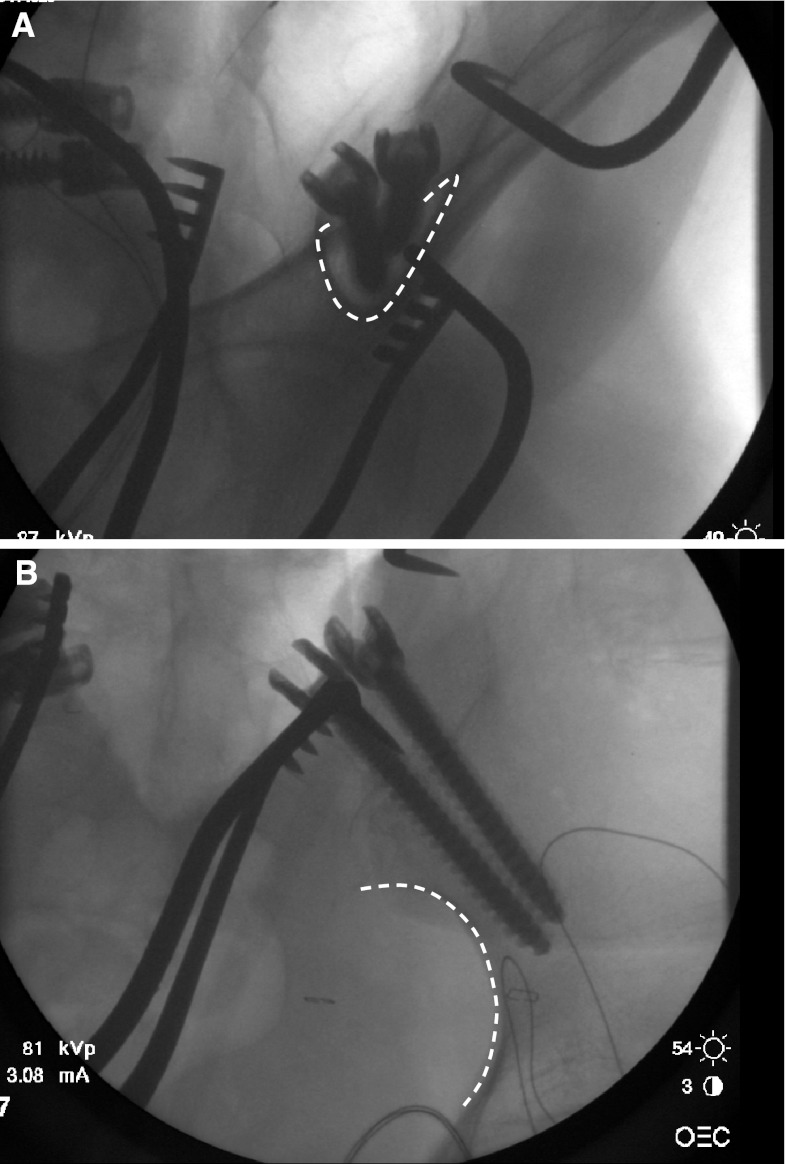
Fig. 1
Fig. 1
a Obturator oblique radiograph demonstrating two iliac screws. Dotted line outlines the “tear drop,” which is the thick supra-acetabular column of bone. b Iliac oblique radiograph demonstrating two iliac screws in the supra-acetabular column of bone above the greater sciatic notch (dotted line)
Fig. 2
Fig. 2
Axial CT scan demonstrating path of S2-alar-iliac screw. Notice the more medial starting point in the S2 pedicle with the screw traversing the SI joint into the ilium laterally
Fig. 3
Fig. 3
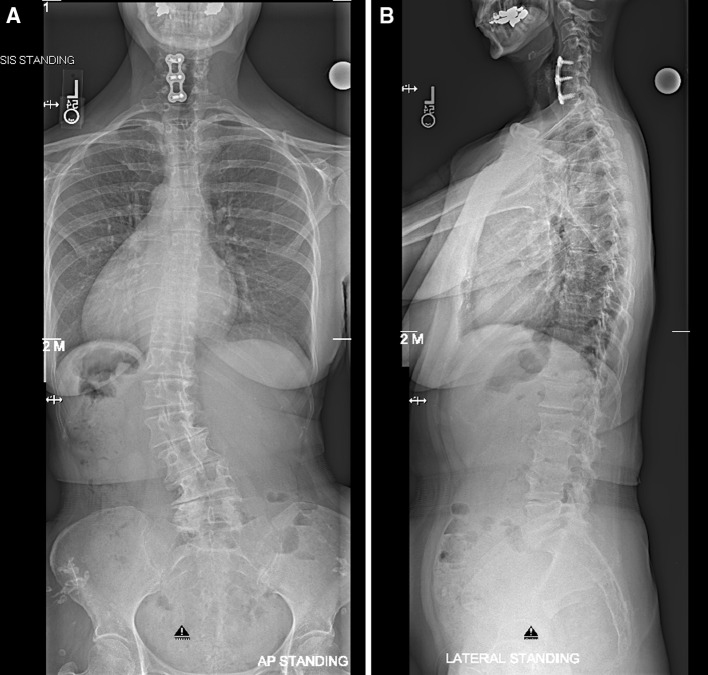
Preoperative a AP and b lateral 36-inch standing scoliosis films demonstrating an adult scoliosis with loss of lumbar lordosis. Patient had four previous decompressions with in situ fusions
Fig. 4
Fig. 4
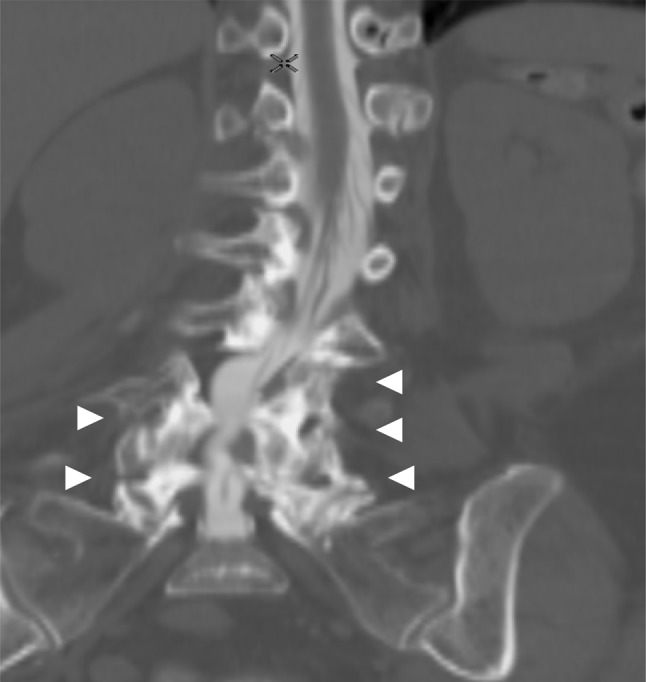
Coronal CT reconstruction view demonstrating solid posterior lateral fusion mass (arrowheads) from L3 to sacrum confirms a rigid, stiff lumbar curve
Fig. 5
Fig. 5
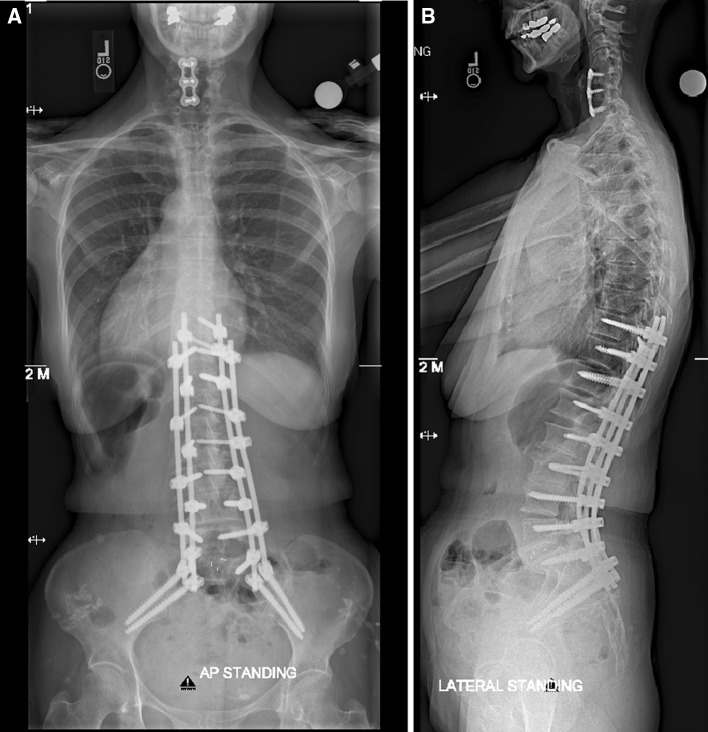
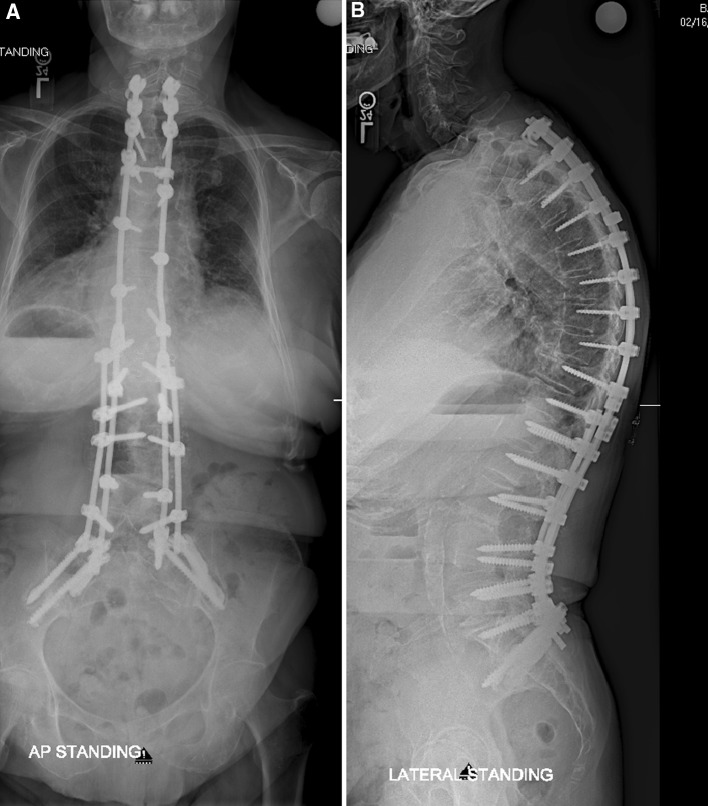
Postoperative a AP and b lateral 36-inch standing scoliosis films demonstrating four-rod with four pelvic screw fixation for restoration of coronal alignment and lumbar lordosis
Fig. 6
Fig. 6
a AP and b lateral 36-inch standing radiographs demonstrating marked loosening of pelvic fixation with loss of both coronal and sagittal alignment
Fig. 7
Fig. 7
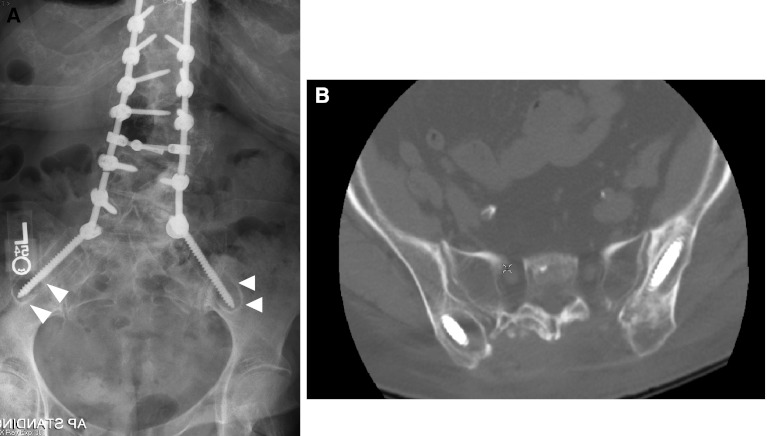
a AP lumbar radiograph confirming lucency around pelvic screw with surrounding “halo” (arrowheads). b Axial CT scan confirming loose pelvic fixation
Fig. 8
Fig. 8
Postoperative a AP and b lateral 36-inch standing radiographs with four-rod technique demonstrating restoration of coronal and sagittal alignment. Notice that 4 pelvic screws were cement augmented to increase purchase within the ilium
Fig. 9
Fig. 9
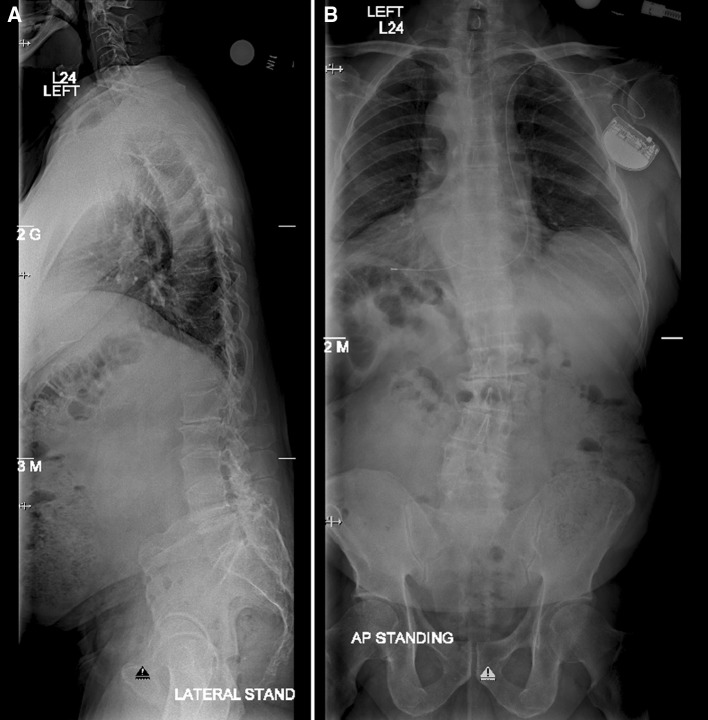
Preoperative a AP and b lateral 36-inch standing scoliosis films demonstrating an adult scoliosis with loss of lumbar lordosis and positive sagittal balance
Fig. 10
Fig. 10
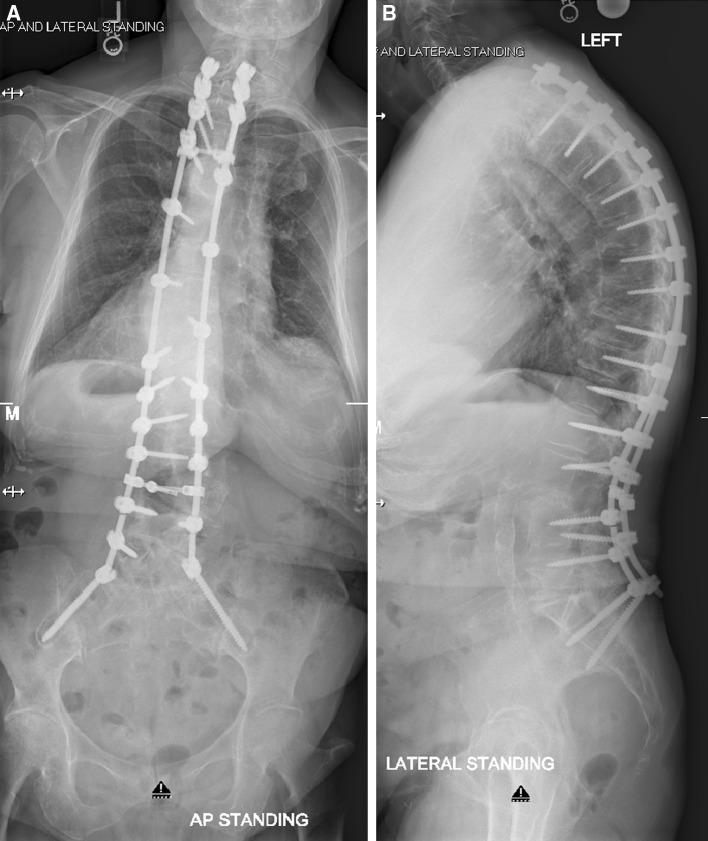
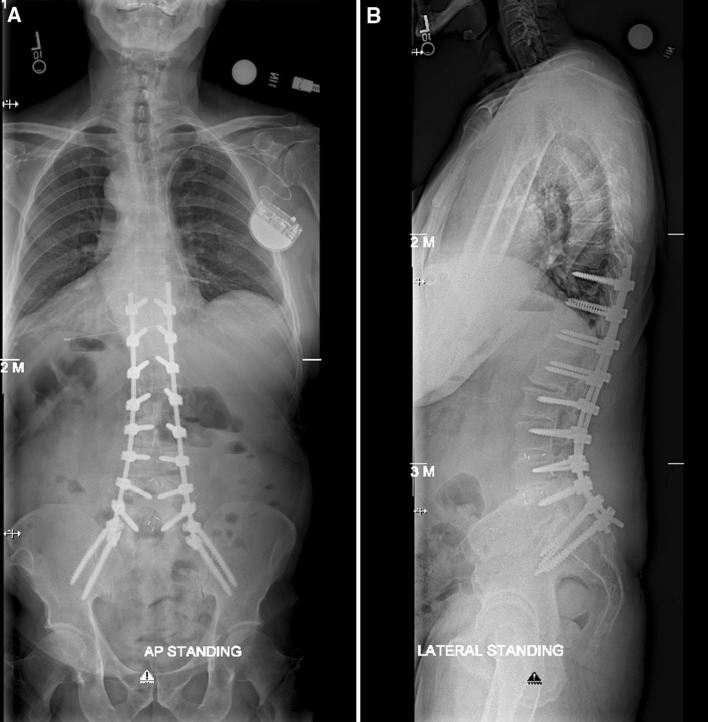
Postoperative a AP and b lateral 36-inch standing scoliosis films demonstrating standard two-rod with four pelvic screw fixation for restoration of coronal and sagittal alignment. Four pelvic anchors were utilized distally secondary to extensive osteoporosis

References

    1. Kostuik JP. Spinopelvic fixation. Neurol India. 2005;53:483–488. doi: 10.4103/0028-3886.22618. - DOI - PubMed
    1. Boos N, Webb JK. Pedicle screw fixation in spinal disorders: a European view. Eur Spine J. 1997;6(1):2–18. doi: 10.1007/BF01676569. - DOI - PMC - PubMed
    1. Kebaish KM. Sacropelvic fixation: techniques and complications. Spine. 2010;35(25):2245–2251. doi: 10.1097/BRS.0b013e3181f5cfae. - DOI - PubMed
    1. Bridwell KH, Kuklo T, Edwards CC, II, et al. Sacropelvic Fixation. Memphis: Medtronic Sofamor Danek; 2004.
    1. Balderston RA, Winter RB, Moe JH, et al. Fusion to the sacrum for non paralytic scoliosis in the adult. Spine (Phila Pa 1976) 1986;11:824–829. doi: 10.1097/00007632-198610000-00017. - DOI - PubMed