


An epithelial-mesenchymal transition gene signature predicts resistance to EGFR and PI3K inhibitors and identifies Axl as a therapeutic target for overcoming EGFR inhibitor resistance
- PMID: 23091115
- PMCID: PMC3567921
- DOI: 10.1158/1078-0432.CCR-12-1558
An epithelial-mesenchymal transition gene signature predicts resistance to EGFR and PI3K inhibitors and identifies Axl as a therapeutic target for overcoming EGFR inhibitor resistance
Abstract
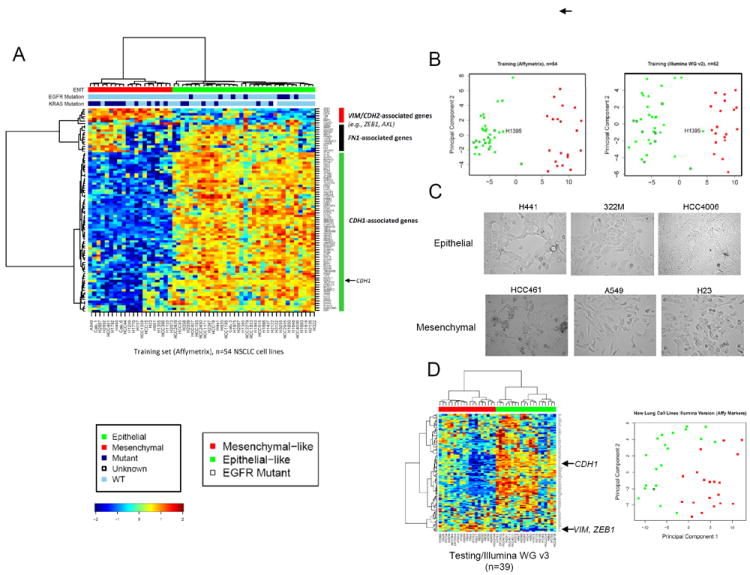
Purpose: Epithelial-mesenchymal transition (EMT) has been associated with metastatic spread and EGF receptor (EGFR) inhibitor resistance. We developed and validated a robust 76-gene EMT signature using gene expression profiles from four platforms using non-small cell lung carcinoma (NSCLC) cell lines and patients treated in the Biomarker-Integrated Approaches of Targeted Therapy for Lung Cancer Elimination (BATTLE) study.
Experimental design: We conducted an integrated gene expression, proteomic, and drug response analysis using cell lines and tumors from patients with NSCLC. A 76-gene EMT signature was developed and validated using gene expression profiles from four microarray platforms of NSCLC cell lines and patients treated in the BATTLE study, and potential therapeutic targets associated with EMT were identified.
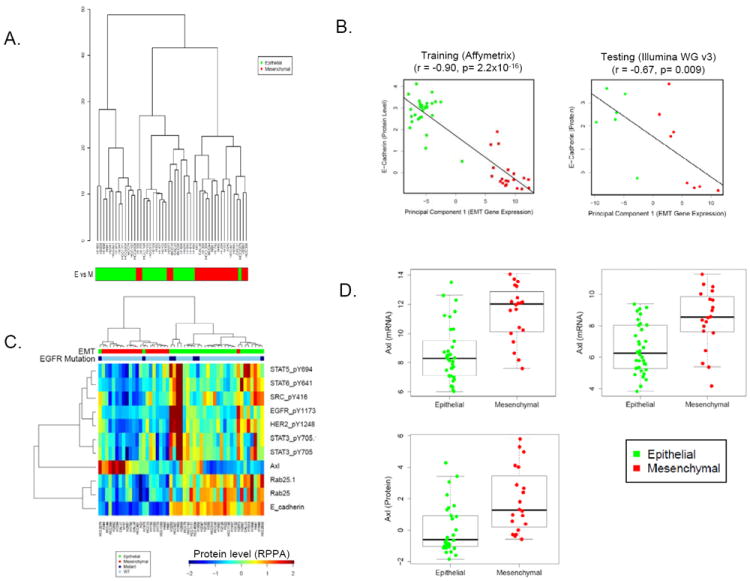
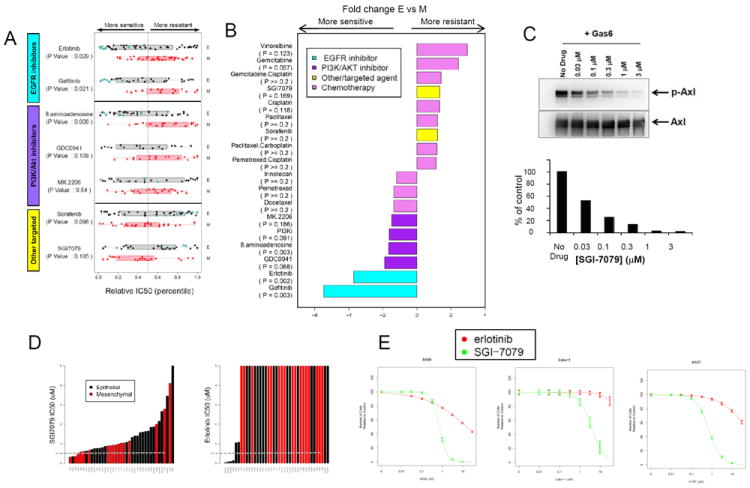
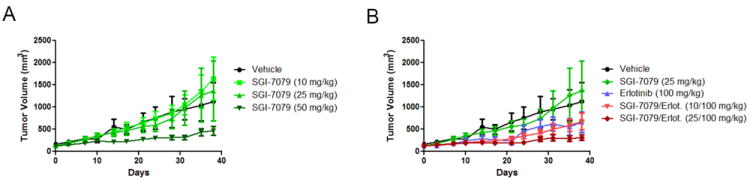
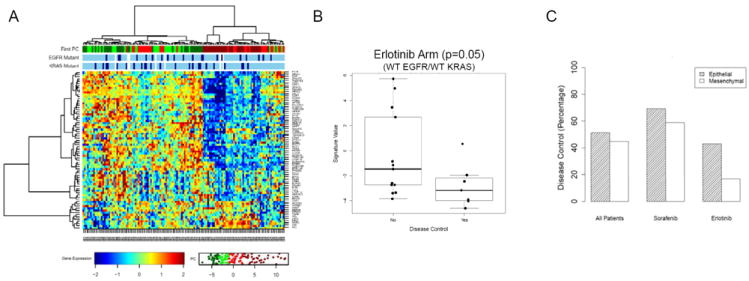
Results: Compared with epithelial cells, mesenchymal cells showed significantly greater resistance to EGFR and PI3K/Akt pathway inhibitors, independent of EGFR mutation status, but more sensitivity to certain chemotherapies. Mesenchymal cells also expressed increased levels of the receptor tyrosine kinase Axl and showed a trend toward greater sensitivity to the Axl inhibitor SGI-7079, whereas the combination of SGI-7079 with erlotinib reversed erlotinib resistance in mesenchymal lines expressing Axl and in a xenograft model of mesenchymal NSCLC. In patients with NSCLC, the EMT signature predicted 8-week disease control in patients receiving erlotinib but not other therapies.
Conclusion: We have developed a robust EMT signature that predicts resistance to EGFR and PI3K/Akt inhibitors, highlights different patterns of drug responsiveness for epithelial and mesenchymal cells, and identifies Axl as a potential therapeutic target for overcoming EGFR inhibitor resistance associated with the mesenchymal phenotype.
Conflict of interest statement
Conflict of Interest: DJB and SLW are employed by Tolero Pharmaceuticals, Inc. JMK is employed by and has ownership interest in Astex Pharmaceuticals, Inc. SBK is employed by Astex Pharmaceuticals, Inc.
Figures
Comment in
-
Secrets of drug resistance in NSCLC exposed by new molecular definition of EMT.Clin Cancer Res. 2013 Jan 1;19(1):3-5. doi: 10.1158/1078-0432.CCR-12-3232. Epub 2012 Nov 21. Clin Cancer Res. 2013. PMID: 23172883 Free PMC article.
References
-
- Lynch TJ, Bell DW, Sordella R, Gurubhagavatula S, Okimoto RA, Brannigan BW, et al. Activating mutations in the epidermal growth factor receptor underlying responsiveness of non-small-cell lung cancer to gefitinib. N Engl J Med. 2004;350:2129–39. - PubMed
-
- Paez JG, Janne PA, Lee JC, Tracy S, Greulich H, Gabriel S, et al. EGFR mutations in lung cancer: correlation with clinical response to gefitinib therapy. Science. 2004;304:1497–500. - PubMed
-
- Tokumo M, Toyooka S, Kiura K, Shigematsu H, Tomii K, Aoe M, et al. The relationship between epidermal growth factor receptor mutations and clinicopathologic features in non-small cell lung cancers. Clin Cancer Res. 2005;11:1167–73. - PubMed
Publication types
MeSH terms
Substances
Associated data
- Actions
- Actions
- Actions
- Actions
Grants and funding
LinkOut - more resources
Full Text Sources
Other Literature Sources
Medical
Molecular Biology Databases
Research Materials
Miscellaneous
