


Training partnership dyads for community-based participatory research: strategies and lessons learned from the Community Engaged Scholars Program
- PMID: 23091303
- PMCID: PMC4175920
- DOI: 10.1177/1524839912461273
Training partnership dyads for community-based participatory research: strategies and lessons learned from the Community Engaged Scholars Program
Abstract
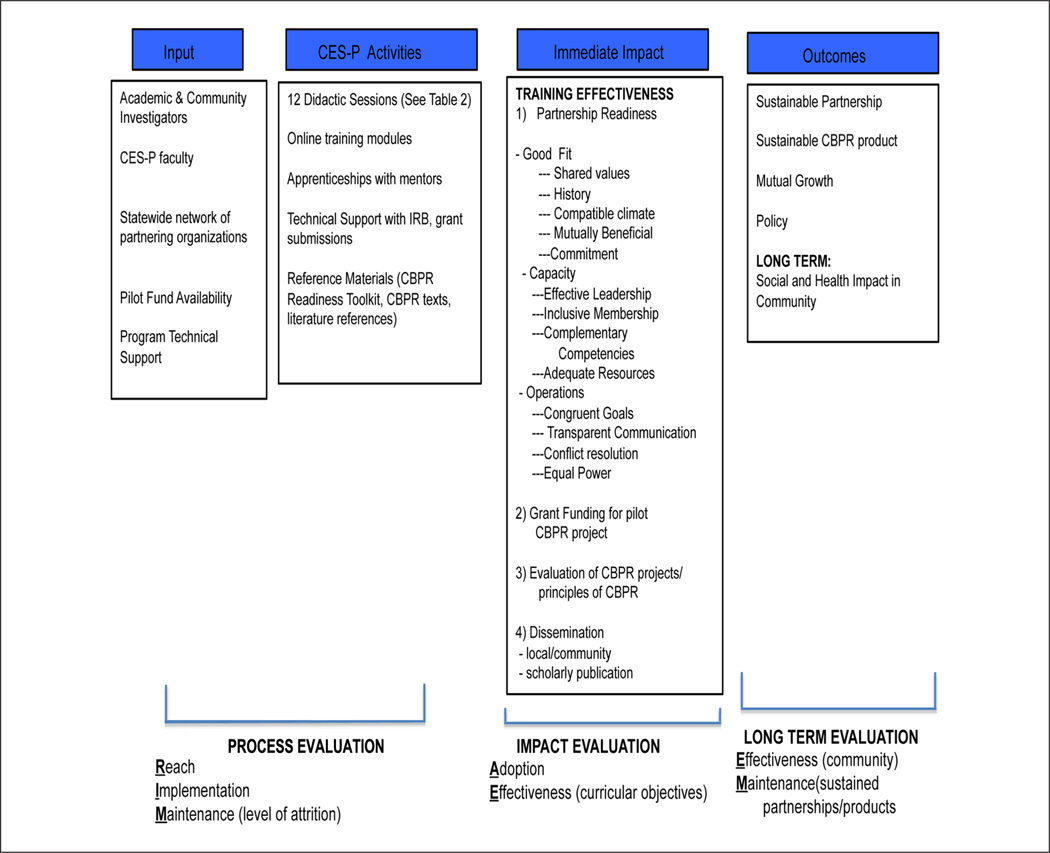
This article describes the development, implementation, evaluation framework, and initial outcomes of a unique campus-community training initiative for community-based participatory research (CBPR). The South Carolina Clinical & Translational Research Center for Community Health Partnerships, which functions as the institution's Clinical Translational and Science Award Community Engagement Program, leads the training initiative known as the Community Engaged Scholars Program (CES-P). The CES-P provides simultaneous training to CBPR teams, with each team consisting of at least one community partner and one academic partner. Program elements include 12 months of monthly interactive group sessions, mentorship with apprenticeship opportunities, and funding for a CBPR pilot project. A modified RE-AIM (Reach, Effectiveness, Adoption, Implementation, Maintenance) framework guides the process, impact, and outcome evaluation plan. Lessons learned include challenges of group instruction with varying levels of readiness among the CBPR partners, navigating the institutional review board process with community co-investigators, and finding appropriate academic investigators to match community research interests. Future directions are recommended for this promising and unique dyadic training of academic and community partners.
Keywords: college/community partnerships; community-based participatory research; health research; partnerships/coalitions; program planning and evaluation; training; university/college health.
Figures
References
Publication types
MeSH terms
Grants and funding
LinkOut - more resources
Full Text Sources
