Prostaglandin E2: from clinical applications to its potential role in bone- muscle crosstalk and myogenic differentiation
- PMID: 23092433
- PMCID: PMC3732468
- DOI: 10.2174/1872208311206030223
Prostaglandin E2: from clinical applications to its potential role in bone- muscle crosstalk and myogenic differentiation
Abstract
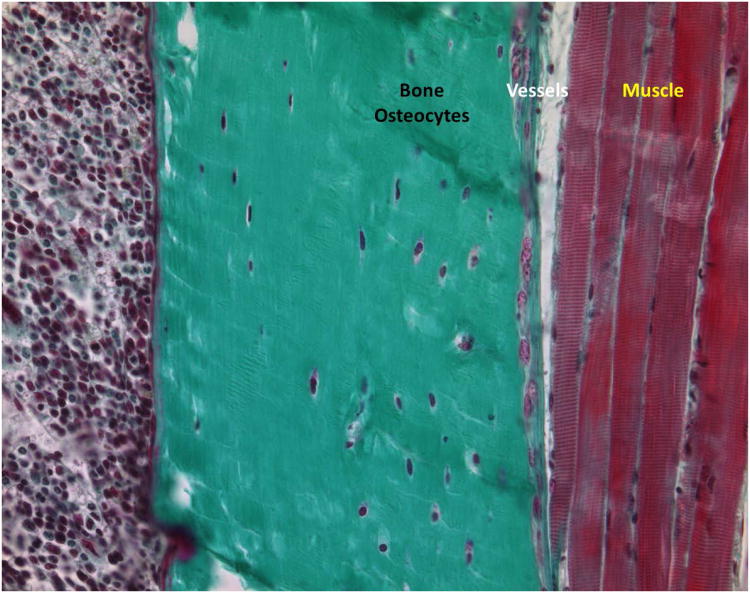
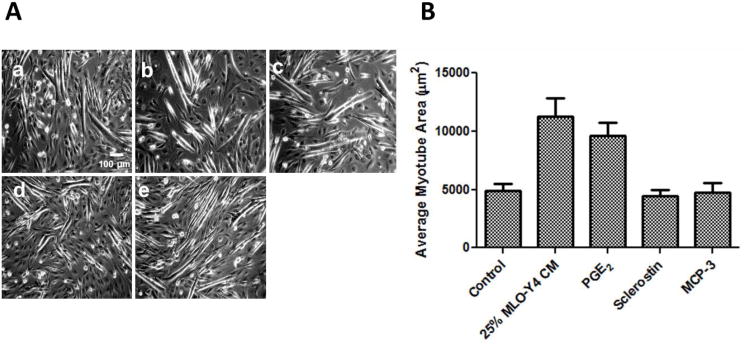
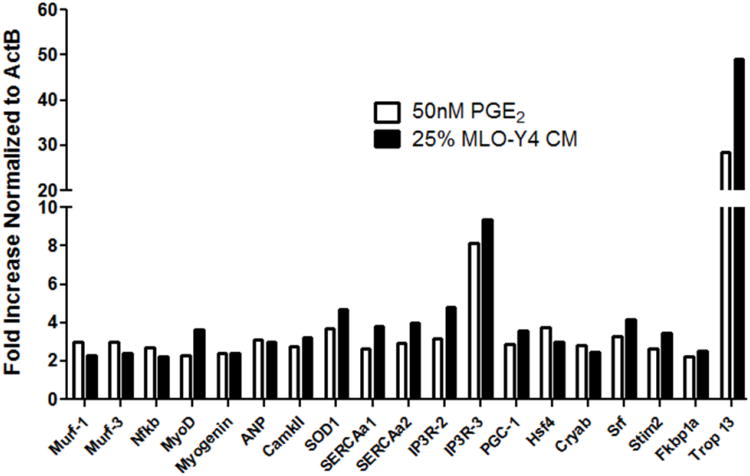
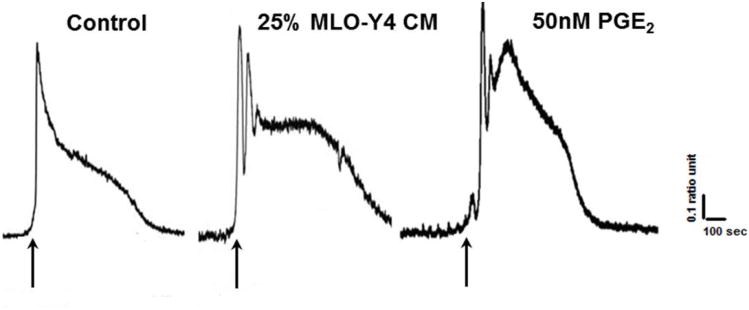
Prostaglandin E(2) (PGE(2)), a prostanoid synthesized from arachidonic acid via the cyclooxygenase pathway, is a modulator of physiological responses including inflammation, fever, and muscle regeneration. Several patents have been filed that are related to PGE(2), one of them being directly related to skeletal muscles. In this report, we first summarize the key patents describing inventions for the utilization of PGE(2) for either diagnostic or therapeutic purposes, including skeletal muscle. In the second part of our work we present new and exciting data that demonstrates that PGE(2) accelerates skeletal muscle myogenic differentiation. Our discovery resulted from our recent and novel concept of bone-muscle crosstalk. Bone and muscle are anatomically intimate endocrine organs and we aimed to determine whether this anatomical intimacy also translates into a biochemical communication from bone cells to muscle cells at the in vitro level. The effects of MLOY4 osteocyte-like cell conditioned medium (CM) and three osteocyte-secreted factors, PGE(2), sclerostin and monocyte chemotactic protein (MCP-3), on C2C12 myogenic differentiation were evaluated using morphological analyses, a customized 96-gene PCR array, and measurements of intracellular calcium levels. MLO-Y4 CM and PGE(2), but not sclerostin and MCP-3, induced acceleration of myogenesis of C2C12 myoblasts that was linked with significant modifications in intracellular calcium homeostasis. This finding should further stimulate the pursuit of new patents to explore the use of PGE(2) and the new concept of bone-muscle crosstalk for the development and application of inventions designed to treat muscle diseases characterized by enhanced muscle wasting, such as sarcopenia.
Conflict of interest statement
Figures
References
-
- Scott NE. Prostaglandin E1/F2 in combination with prostaglandin F2.alpha for enhancing female sexual arousal. US6291528. 2001
-
- Stjernschantz J. Method and composition for treatment of erectile dysfunction. US6476074. 2002
-
- Klimko PG, Sharif NA, Griffin BW. Prostaglandin E agonists for treatment of glaucoma. US6545045. 2003
-
- Llewellyn WC. Use of arachidonic acid as a method of increasing skeletal muscle mass. US6841573. 2005
-
- Paralkar VM, Thompson DD. Use of prostaglandin (PGE2) receptor a (EP4) selective agonists for the treatment of acute and chronic renal failure. US6610719. 2003
Publication types
MeSH terms
Substances
Grants and funding
LinkOut - more resources
Full Text Sources
Other Literature Sources
Miscellaneous