


Long-term differences in extinction risk among the seven forms of rarity
- PMID: 23097507
- PMCID: PMC3497235
- DOI: 10.1098/rspb.2012.1902
Long-term differences in extinction risk among the seven forms of rarity
Abstract
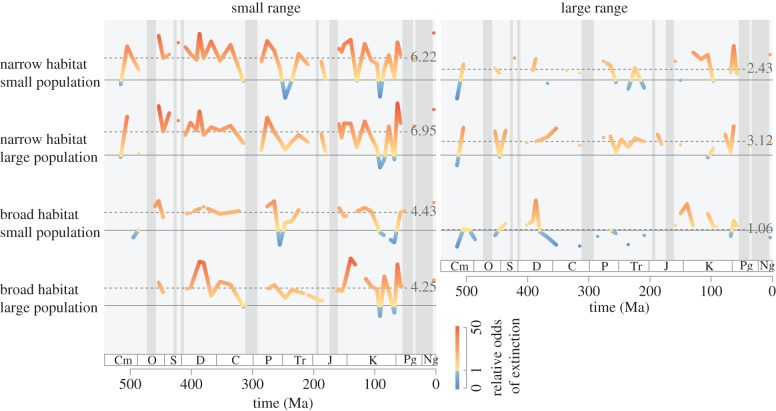
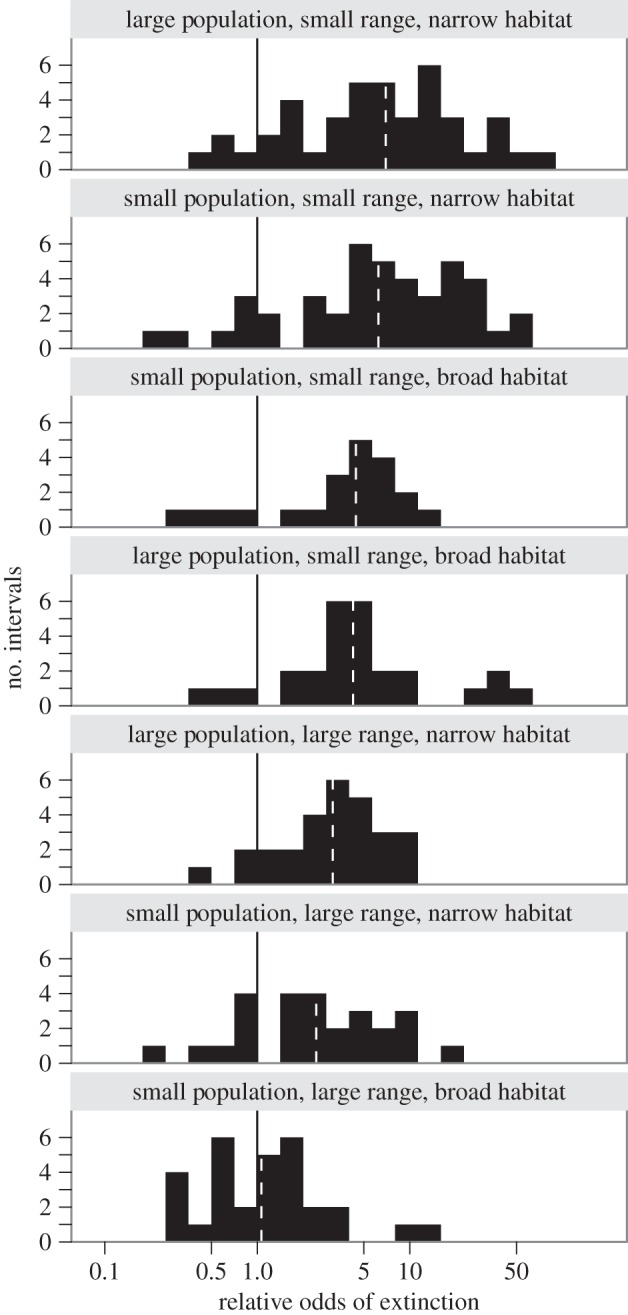
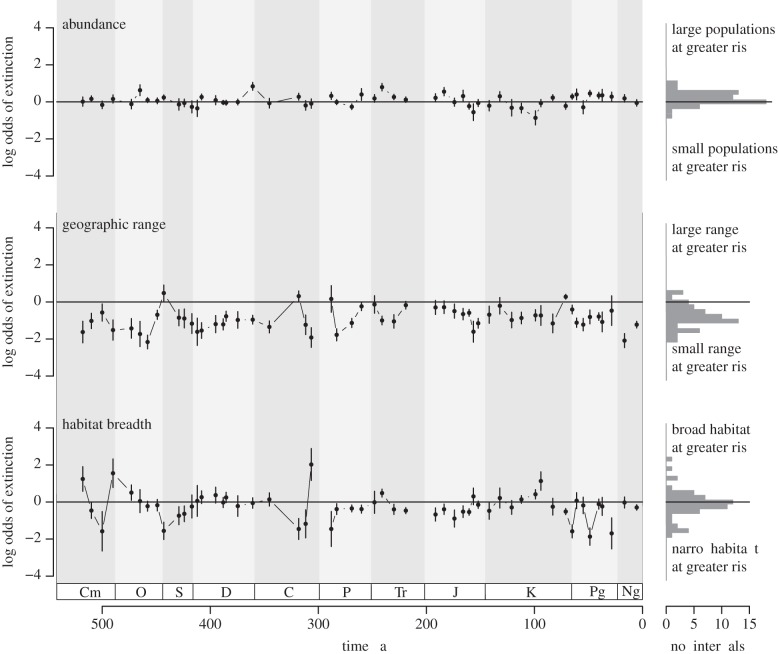
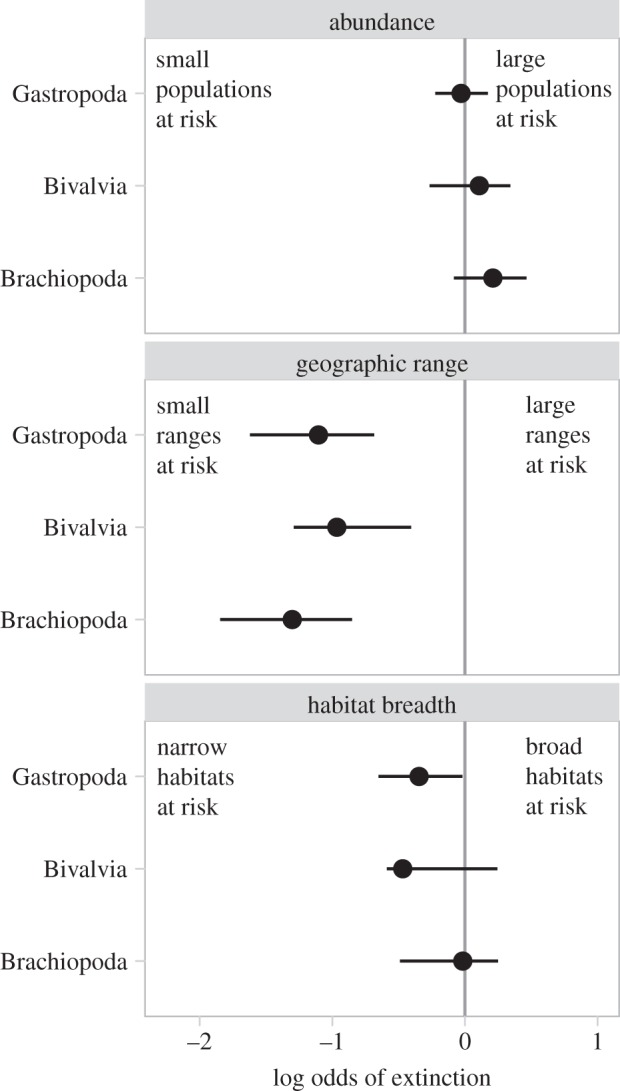
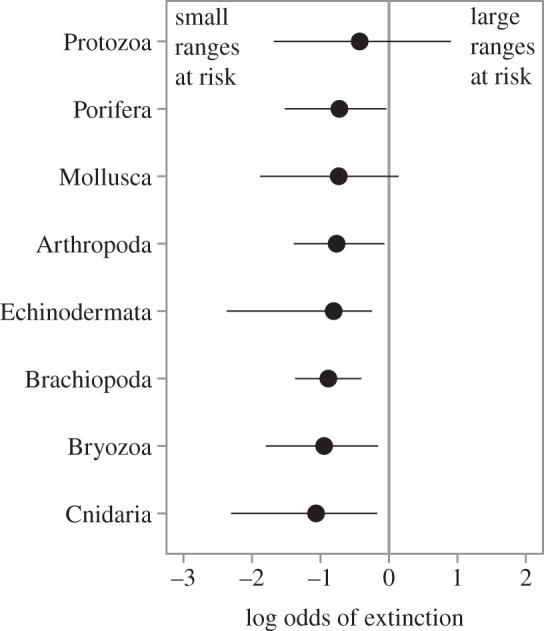
Rarity is widely used to predict the vulnerability of species to extinction. Species can be rare in markedly different ways, but the relative impacts of these different forms of rarity on extinction risk are poorly known and cannot be determined through observations of species that are not yet extinct. The fossil record provides a valuable archive with which we can directly determine which aspects of rarity lead to the greatest risk. Previous palaeontological analyses confirm that rarity is associated with extinction risk, but the relative contributions of different types of rarity to extinction risk remain unknown because their impacts have never been examined simultaneously. Here, we analyse a global database of fossil marine animals spanning the past 500 million years, examining differential extinction with respect to multiple rarity types within each geological stage. We observe systematic differences in extinction risk over time among marine genera classified according to their rarity. Geographic range played a primary role in determining extinction, and habitat breadth a secondary role, whereas local abundance had little effect. These results suggest that current reductions in geographic range size will lead to pronounced increases in long-term extinction risk even if local populations are relatively large at present.
Figures
References
-
- IUCN 2001. Red list categories and criteria, version 3.1. IUCN Species Survival Commission. Gland, Switzerland: IUCN
-
- McKinney M. L. 1997. Extinction vulnerability and selectivity: combining ecological and paleontological views. Annu. Rev. Ecol. Syst. 28, 495–516 10.1146/annurev.ecolsys.28.1.495 (doi:10.1146/annurev.ecolsys.28.1.495) - DOI
-
- Harnik P. G. 2011. Direct and indirect effects of biological factors on extinction risk in fossil bivalves. Proc. Natl Acad. Sci. USA 108, 13 594–13 599 10.1073/pnas.1100572108 (doi:10.1073/pnas.1100572108) - DOI - PMC - PubMed
-
- Payne J. L., Truebe S., Nützel A., Chang E. T. 2011. Local and global abundance associated with extinction risk in late Paleozoic and early Mesozoic gastropods. Paleobiology 37, 616–632 10.1666/10037.1 (doi:10.1666/10037.1) - DOI
-
- Kiessling W., Aberhan M. 2007. Geographical distribution and extinction risk: lessons from Triassic–Jurassic marine benthic organisms. J. Biogeogr. 34, 1473–1489 10.1111/j.1365-2699.2007.01709.x (doi:10.1111/j.1365-2699.2007.01709.x) - DOI
Publication types
MeSH terms
LinkOut - more resources
Full Text Sources
Other Literature Sources
Miscellaneous
