


National outbreak of type a foodborne botulism associated with a widely distributed commercially canned hot dog chili sauce
- PMID: 23097586
- PMCID: PMC4538949
- DOI: 10.1093/cid/cis901
National outbreak of type a foodborne botulism associated with a widely distributed commercially canned hot dog chili sauce
Abstract
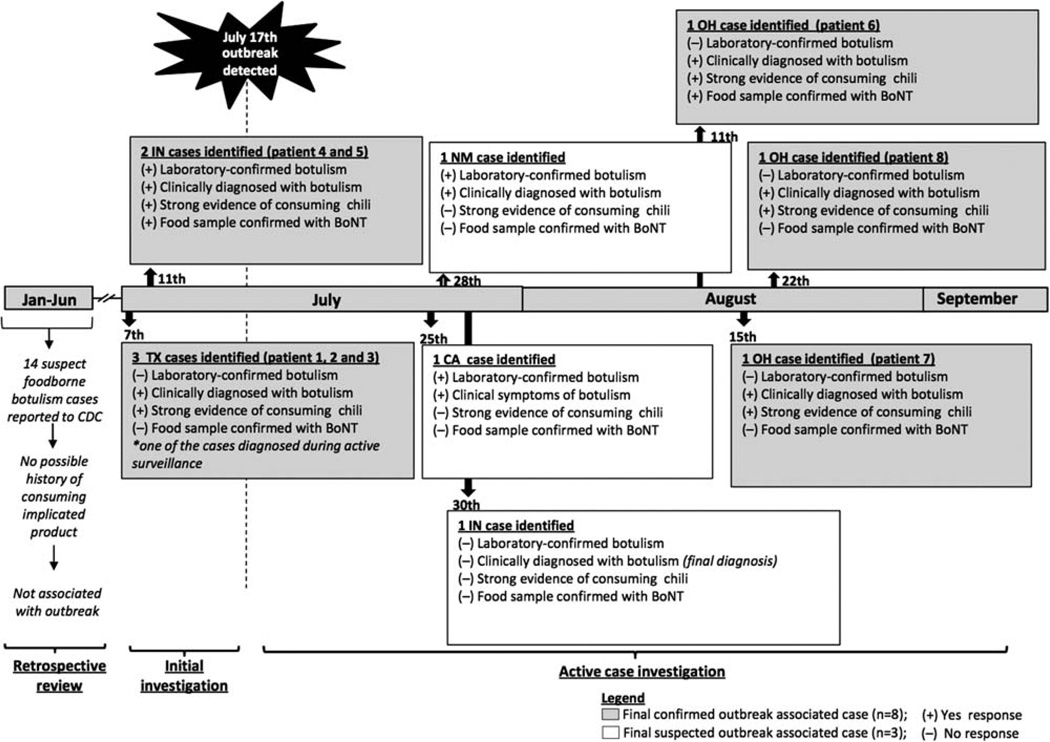
Background: On 7 and 11 July 2007, health officials in Texas and Indiana, respectively, reported 4 possible cases of type A foodborne botulism to the US Centers for Disease Control and Prevention. Foodborne botulism is a rare and sometimes fatal illness caused by consuming foods containing botulinum neurotoxin.
Methods: Investigators reviewed patients' medical charts and food histories. Clinical specimens and food samples were tested for botulinum toxin and neurotoxin-producing Clostridium species. Investigators conducted inspections of the cannery that produced the implicated product.
Results: Eight confirmed outbreak associated cases were identified from Indiana (n = 2), Texas (n = 3), and Ohio (n = 3). Botulinum toxin type A was identified in leftover chili sauce consumed by the Indiana patients and 1 of the Ohio patients. Cannery inspectors found violations of federal canned-food regulations that could have led to survival of Clostridium botulinum spores during sterilization. The company recalled 39 million cans of chili. Following the outbreak, the US Food and Drug Administration inspected other canneries with similar canning systems and issued warnings to the industry about the danger of C. botulinum and the importance of compliance with canned food manufacturing regulations.
Conclusions: Commercially produced hot dog chili sauce caused these cases of type A botulism. This is the first US foodborne botulism outbreak involving a commercial cannery in >30 years. Sharing of epidemiologic and laboratory findings allowed for the rapid identification of implicated food items and swift removal of potentially deadly products from the market by US food regulatory authorities.
Conflict of interest statement
All authors have submitted the ICMJE Form for Disclosure of Potential Conflicts of Interest. Conflicts that the editors consider relevant to the content of the manuscript have been disclosed.
Figures
References
-
- Yu PA, Maslanka SE, Louis MESt, et al. Bacterial infections of humans. epidemiology and control. New York, NY: Springer Science; 2009. Botulism; pp. 159–176.
-
- Sobel J, Maslanka S. Botulism. In: Longo DL, Kasper KL, Jameson JL, Fauci AS, Hauser SL, Loscalzo J, editors. Harrison’s principles of internal medicine. 18th ed. New York: McGraw-Hill; 2012. pp. 1200–1203.
-
- US Food and Drug Administration. 21 CFR 113. Chapter I Food and Drug Administration. Subchapter B. Food for human consumption. Part 113. Thermally processed low-acid foods packaged in hermetically sealed container. [Accessed 28 October 2012]; Revised 1 April 2012. Available at: www.accessdata.fda.gov/scripts/cdrh/cfdocs/cfcfr/CFRSearch.cfm?CFRPart=1....
-
- Centers for Disease Control and Prevention. Handbook for epidemiologist, clinicians, and laboratory workers. Atlanta, GA: Centers for Disease Control and Prevention; 1998. Botulism in the United States, 1899–1996.
Publication types
MeSH terms
Substances
Grants and funding
LinkOut - more resources
Full Text Sources
Other Literature Sources
Medical
