


Tricuspid valve regurgitation after orthotopic heart transplantation: prevalence and etiology
- PMID: 23097690
- PMCID: PMC3477771
- DOI: 10.1155/2012/120702
Tricuspid valve regurgitation after orthotopic heart transplantation: prevalence and etiology
Abstract
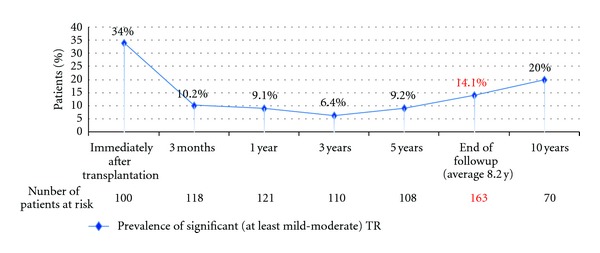
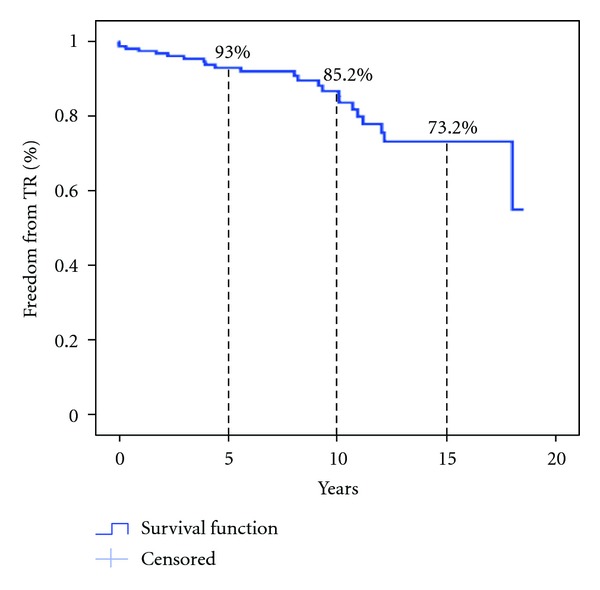
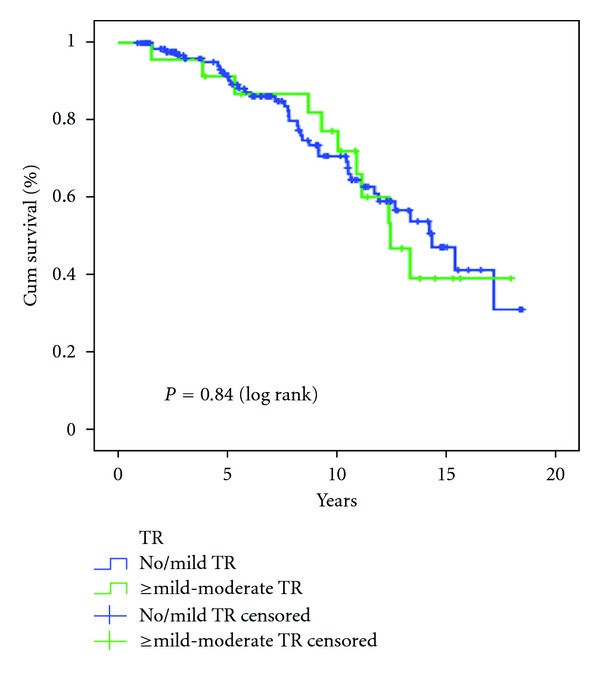
Background. Tricuspid valve regurgitation (TR) after orthotopic heart transplantation (OHT) is common. The aims of this study were to determine the prevalence of TR after OHT, to examine the correlation between its development and various variables, and to determine its outcomes. Methods. All 163 OHT patients who were followed up between 1988 and 2009 for a minimal period of 12 months were divided into those with no TR/mild TR and those with at least mild-moderate TR, as assessed by doppler echocardiography. These groups were compared regarding preoperative hemodynamic variables, surgical technique employed, number of endomyocardial biopsies, number of acute cellular rejections, incidence of graft vasculopathy, and clinical outcomes. Results. At the end of the followup (average 8.2 years) significant TR was evident in 14.1% of the patients. The development of late TR was found by univariate, but not multivariate, analysis to be significantly correlated with the biatrial surgical technique (P < 0.01) and the presence of graft vasculopathy (P < 0.001). TR development was found to be correlated with the need for tricuspid valve surgery but not with an increased mortality. Conclusions. The development of TR after OHT may be related to the biatrial anastomosis technique and to graft vasculopathy.
Figures

References
-
- Wong RCC, Abrahams Z, Hanna M, et al. Tricuspid regurgitation after cardiac transplantation: an old problem revisited. Journal of Heart and Lung Transplantation. 2008;27(3):247–252. - PubMed
-
- Aziz TM, Saad RA, Burgess MI, Campbell CS, Yonan NA. Clinical significance of tricuspid valve dysfunction after orthotopic heart transplantation. Journal of Heart and Lung Transplantation. 2002;21(10):1101–1108. - PubMed
-
- Chan MCY, Giannetti N, Kato T, et al. Severe tricuspid regurgitation after heart transplantation. Journal of Heart and Lung Transplantation. 2001;20(7):709–717. - PubMed
-
- Marelli D, Esmailian F, Wong SY, et al. Tricuspid valve regurgitation after heart transplantation. Journal of Thoracic and Cardiovascular Surgery. 2009;137(6):1557–1559. - PubMed
-
- Sahar G, Stamler A, Erez E, et al. Etiological factors influencing the development of atrioventricular valve incompetence after heart transplantation. Transplantation Proceedings. 1997;29(6):2675–2676. - PubMed
LinkOut - more resources
Full Text Sources
