


The role of DNA methylation in aging, rejuvenation, and age-related disease
- PMID: 23098078
- PMCID: PMC3482848
- DOI: 10.1089/rej.2012.1324
The role of DNA methylation in aging, rejuvenation, and age-related disease
Abstract
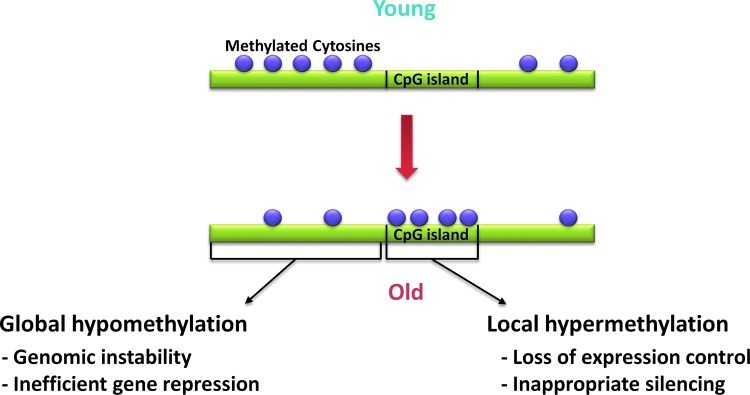
DNA methylation is a major control program that modulates gene expression in a plethora of organisms. Gene silencing through methylation occurs through the activity of DNA methyltransferases, enzymes that transfer a methyl group from S-adenosyl-L-methionine to the carbon 5 position of cytosine. DNA methylation patterns are established by the de novo DNA methyltransferases (DNMTs) DNMT3A and DNMT3B and are subsequently maintained by DNMT1. Aging and age-related diseases include defined changes in 5-methylcytosine content and are generally characterized by genome-wide hypomethylation and promoter-specific hypermethylation. These changes in the epigenetic landscape represent potential disease biomarkers and are thought to contribute to age-related pathologies, such as cancer, osteoarthritis, and neurodegeneration. Some diseases, such as a hereditary form of sensory neuropathy accompanied by dementia, are directly caused by methylomic changes. Epigenetic modifications, however, are reversible and are therefore a prime target for therapeutic intervention. Numerous drugs that specifically target DNMTs are being tested in ongoing clinical trials for a variety of cancers, and data from finished trials demonstrate that some, such as 5-azacytidine, may even be superior to standard care. DNMTs, demethylases, and associated partners are dynamically shaping the methylome and demonstrate great promise with regard to rejuvenation.
Figures
References
-
- Morgan HD. Santos F. Green K. Dean W. Reik W. Epigenetic reprogramming in mammals. Hum Mol Genet. 2005;14(Spec No 1):R47–R58. - PubMed
-
- Okano M. Bell DW. Haber DA. Li E. DNA methyltransferases Dnmt3a and Dnmt3b are essential for de novo methylation and mammalian development. Cell. 1999;99:247–257. - PubMed
-
- Zemach A. McDaniel IE. Silva P. Zilberman D. Genome-wide evolutionary analysis of eukaryotic DNA methylation. Science. 2010;328:916–919. - PubMed
-
- Bird AP. Wolffe AP. Methylation-induced repression—belts, braces, and chromatin. Cell. 1999;99:451–454. - PubMed
Publication types
MeSH terms
Substances
Grants and funding
LinkOut - more resources
Full Text Sources
Other Literature Sources
Medical
