


Extensive genetics of ALS: a population-based study in Italy
- PMID: 23100398
- PMCID: PMC3484987
- DOI: 10.1212/WNL.0b013e3182735d36
Extensive genetics of ALS: a population-based study in Italy
Abstract
Objective: To assess the frequency and clinical characteristics of patients with mutations of major amyotrophic lateral sclerosis (ALS) genes in a prospectively ascertained, population-based epidemiologic series of cases.
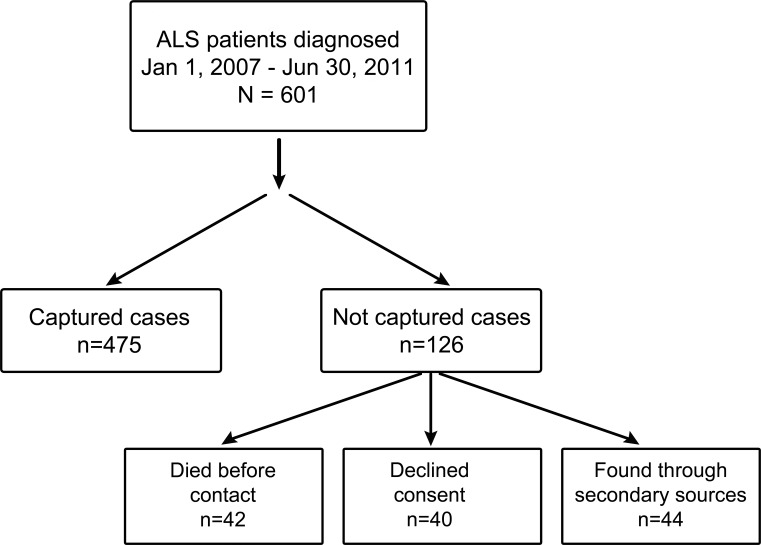
Methods: The study population includes all ALS cases diagnosed in Piemonte, Italy, from January 2007 to June 2011. Mutations of SOD1, TARDBP, ANG, FUS, OPTN, and C9ORF72 have been assessed.
Results: Out of the 475 patients included in the study, 51 (10.7%) carried a mutation of an ALS-related gene (C9ORF72, 32; SOD1, 10; TARDBP, 7; FUS, 1; OPTN, 1; ANG, none). A positive family history for ALS or frontotemporal dementia (FTD) was found in 46 (9.7%) patients. Thirty-one (67.4%) of the 46 familial cases and 20 (4.7%) of the 429 sporadic cases had a genetic mutation. According to logistic regression modeling, besides a positive family history for ALS or FTD, the chance to carry a genetic mutation was related to the presence of comorbid FTD (odds ratio 3.5; p = 0.001), and age at onset ≤54 years (odds ratio 1.79; p = 0.012).
Conclusions: We have found that ∼11% of patients with ALS carry a genetic mutation, with C9ORF72 being the commonest genetic alteration. Comorbid FTD or a young age at onset are strong indicators of a possible genetic origin of the disease.
Figures
References
-
- Logroscino G, Traynor BJ, Hardiman O, et al. Descriptive epidemiology of amyotrophic lateral sclerosis: new evidence and unsolved issues. J Neurol Neurosurg Psychiatry 2008;79:6–11. - PubMed
-
- Byrne S, Walsh C, Lynch C, et al. Rate of familial amyotrophic lateral sclerosis: a systematic review and meta-analysis. J Neurol Neurosurg Psychiatry 2011;82:623–627. - PubMed
-
- Rosen DR, Siddique T, Patterson D, et al. Mutations in Cu/Zn superoxide dismutase gene are associated with familial amyotrophic lateral sclerosis. Nature 1993;362:59–62. - PubMed
-
- Greenway MJ, Andersen PM, Russ C, et al. ANG mutations segregate with familial and ‘sporadic' amyotrophic lateral sclerosis. Nature Genet 2006;38:411–413. - PubMed
Publication types
MeSH terms
Substances
Grants and funding
LinkOut - more resources
Full Text Sources
Other Literature Sources
Medical
Miscellaneous
