pncA Mutations in the Specimens from Extrapulmonary Tuberculosis
- PMID: 23101013
- PMCID: PMC3475457
- DOI: 10.4046/trd.2012.72.6.475
pncA Mutations in the Specimens from Extrapulmonary Tuberculosis
Abstract
Background: Pyrazinamide (PZA) is an effective antitubercular drug that becomes toxic to Mycobacterium tuberculosis when converted to pyrazinoic acid by pyrazinamidase (PZase), encoded by mycobacterial pncA. A strong association was noted between the loss of PZase activity and PZA resistance. The causative organisms in extrapulmonary tuberculosis are rarely cultured and isolated. To detect pncA mutations in specimens from extrapulmonary tuberculosis as confirmative diagnosis of mycobacterial infection and alternative susceptibility test to PZA.
Methods: Specimens were collected from clinically proven extrapulmonary tuberculosis. pncA was sequenced and compared with wild-type pncA.
Results: pncA from 30 specimens from 23 donors were successfully amplified (56.6% in specimens, 59% in donors). Six mutations in pncA were detected (20.0% in amplified specimens, 26.1% in specimen donors) at nucleotide positions of 169, 248 and 419. The mutation at position 169 results in substitution of aspartic acid for histidine, a possible allelic variation of M. bovis that have intrinsic PZA resistance. The mutation at position 248 changes proline into arginine and that at position 419, arginine into histidine.
Conclusion: DNA-based diagnosis using pncA may be simultaneously useful for the early diagnosis of mycobacterial infection and the rapid susceptibility to PZA in extrapulmonary tuberculosis. A potential implication of pncA allelic variation at 169 might be suggested as a rapid diagnostic test for M. bovis infection or Bacille Calmette-Guérin (BCG) reactivation.
Keywords: Amidohydrolases; Antitubercular Agents; Mycobacterium bovis; Pyrazinamide; Tuberculosis.
Figures
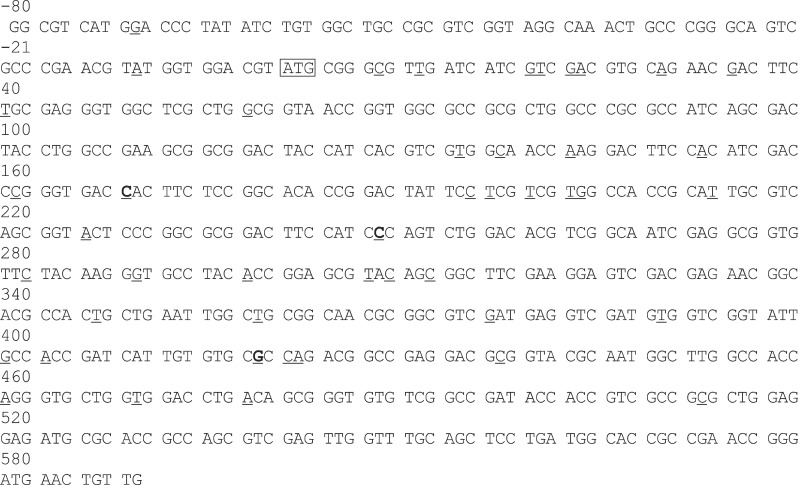
 of pncA. This figure is modified from those of the reference,.
References
-
- Bass JB, Jr, Farer LS, Hopewell PC, O'Brien R, Jacobs RF, Ruben F, et al. Treatment of tuberculosis and tuberculosis infection in adults and children. American Thoracic Society and The Centers for Disease Control and Prevention. Am J Respir Crit Care Med. 1994;149:1359–1374. - PubMed
-
- Scorpio A, Zhang Y. Mutations in pncA, a gene encoding pyrazinamidase/nicotinamidase, cause resistance to the antituberculous drug pyrazinamide in tubercle bacillus. Nat Med. 1996;2:662–667. - PubMed
-
- Hirano K, Takahashi M, Kazumi Y, Fukasawa Y, Abe C. Mutation in pncA is a major mechanism of pyrazinamide resistance in Mycobacterium tuberculosis. Tuber Lung Dis. 1997;78:117–122. - PubMed
-
- Shim TS, Kim YW, Chin JY, Lim CM, Lee SD, Koh Y, et al. Detection of pyrazinamide-resistant Mycobacterium tuberculosis by PCR-SSCP of pncA gene. Tuberc Respir Dis. 1998;45:1178–1187.
LinkOut - more resources
Full Text Sources
Molecular Biology Databases