


Qualitative application of the theory of planned behavior to understand beverage consumption behaviors among adults
- PMID: 23102176
- PMCID: PMC3500704
- DOI: 10.1016/j.jand.2012.06.368
Qualitative application of the theory of planned behavior to understand beverage consumption behaviors among adults
Abstract
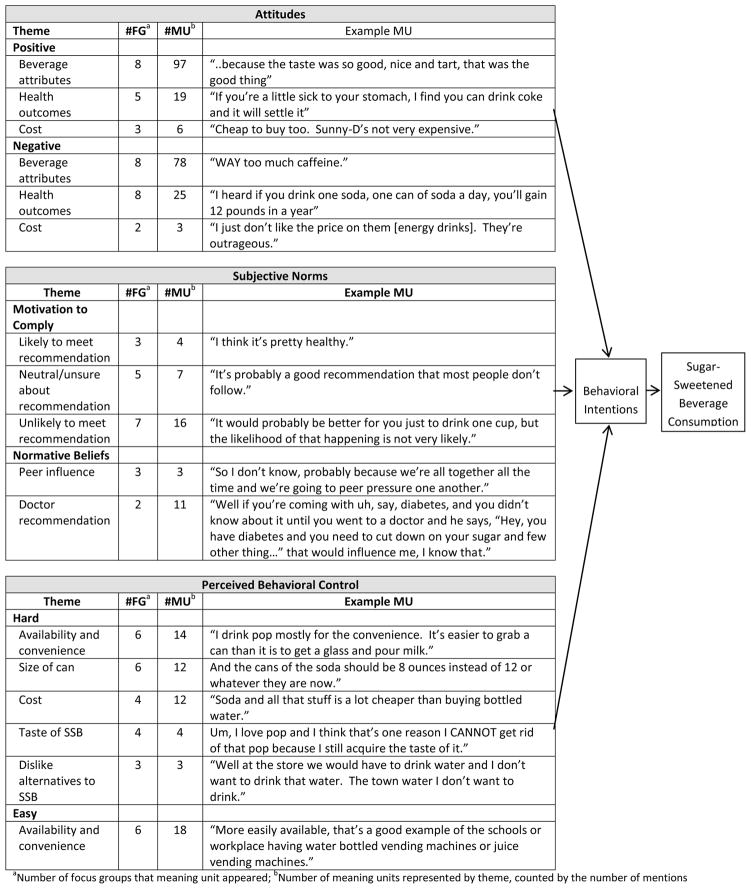
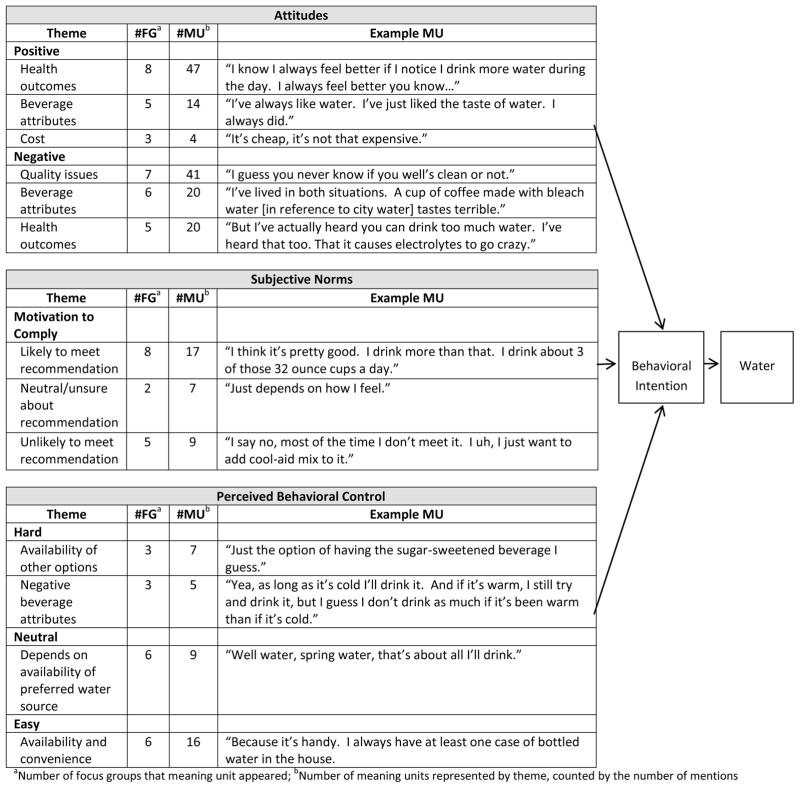
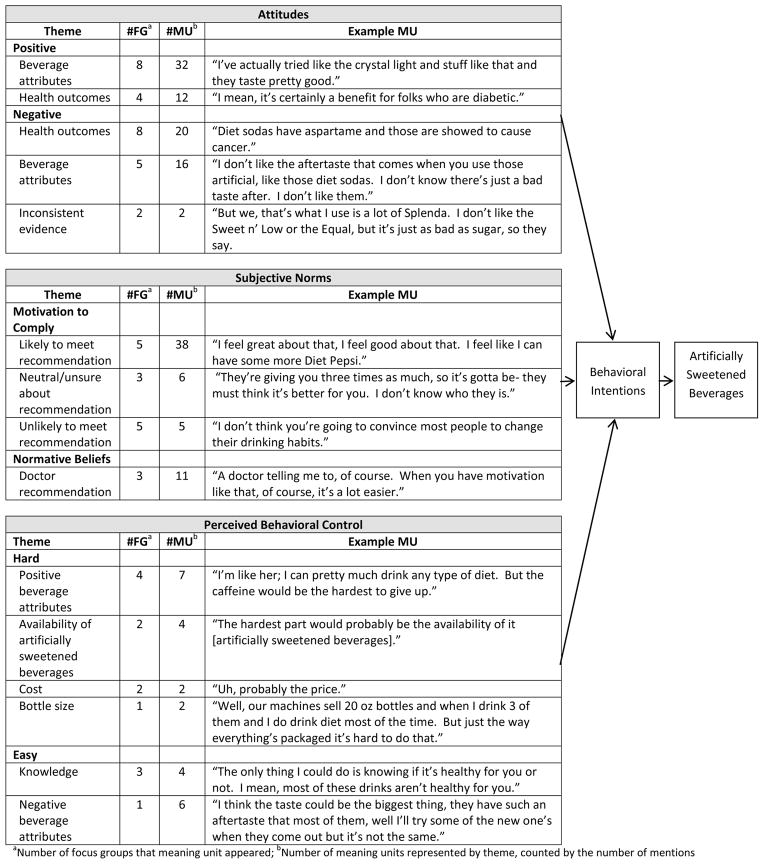
Despite strong scientific data indicating associations among sugar-sweetened beverages (SSB) and numerous adverse health outcomes, little is known about culturally specific beliefs and potential individual-level behavioral strategies to reduce SSB intake. The primary objective of this formative study targeting adults residing in rural southwest Virginia was to apply the Theory of Planned Behavior to investigate culturally specific attitudes, subjective norms, and perceived behavioral control constructs related to the consumption of SSB, water, and artificially sweetened beverages. Using a homogenous sampling strategy, eight focus groups were conducted with 54 adult participants who exceeded recommendations of <1 cup of SSB/day. An experienced moderator and co-moderator utilized a semi-structured script, grounded in the Theory of Planned Behavior, to execute the focus group. All focus groups were audiotaped and transcribed verbatim. Three researchers independently coded meaning units to the major themes and subsequently met to gain consensus in coding. Important beverage-specific themes emerged for attitudes, subjective norms, perceived behavioral control, and intentions. Across all beverages, the most notable themes included taste (n=161 meaning units), availability/convenience (n=95 meaning units), habit/addiction (n=57 meaning units), and cost (n=28 meaning units). Health consequences associated with beverages and water-quality issues also surfaced, as well as normative beliefs, including the influence of doctors and peers. The identified themes and subthemes provide critical insight into understanding culturally relevant context and beliefs associated with beverage consumption behaviors and helps inform the development and evaluation of future intervention efforts targeting SSB consumption in the health disparate region of southwest Virginia.
Copyright © 2012 Academy of Nutrition and Dietetics. Published by Elsevier Inc. All rights reserved.
Figures
References
-
- Duffey KJ, Popkin BM. Shifts in patterns and consumption of beverages between 1965 and 2002. Obesity. 2007;15(11):2739–2747. - PubMed
-
- Nielsen SJ, Popkin BM. Changes in beverage intake between 1977 and 2001. Am J Prev Med. 2004;27(3):205–210. - PubMed
-
- Drewnowski A, Bellisle F. Liquid calories, sugar, and body weight. Am J Clin Nutr. 2007;85(3):651–661. - PubMed
-
- Schulze MB, Manson JE, Ludwig DS, Colditz GA, Stampfer MJ, Hu FB. Sugar-sweetened beverages, weight gain, and incidence of type 2 diabetes in young and middle-aged women. J Am Med Assoc. 2004;292(8):927–934. - PubMed
Publication types
MeSH terms
Substances
Grants and funding
LinkOut - more resources
Full Text Sources
Medical
Miscellaneous
