


Loss of endoplasmic reticulum Ca2+ homeostasis: contribution to neuronal cell death during cerebral ischemia
- PMID: 23103622
- PMCID: PMC4086488
- DOI: 10.1038/aps.2012.139
Loss of endoplasmic reticulum Ca2+ homeostasis: contribution to neuronal cell death during cerebral ischemia
Abstract
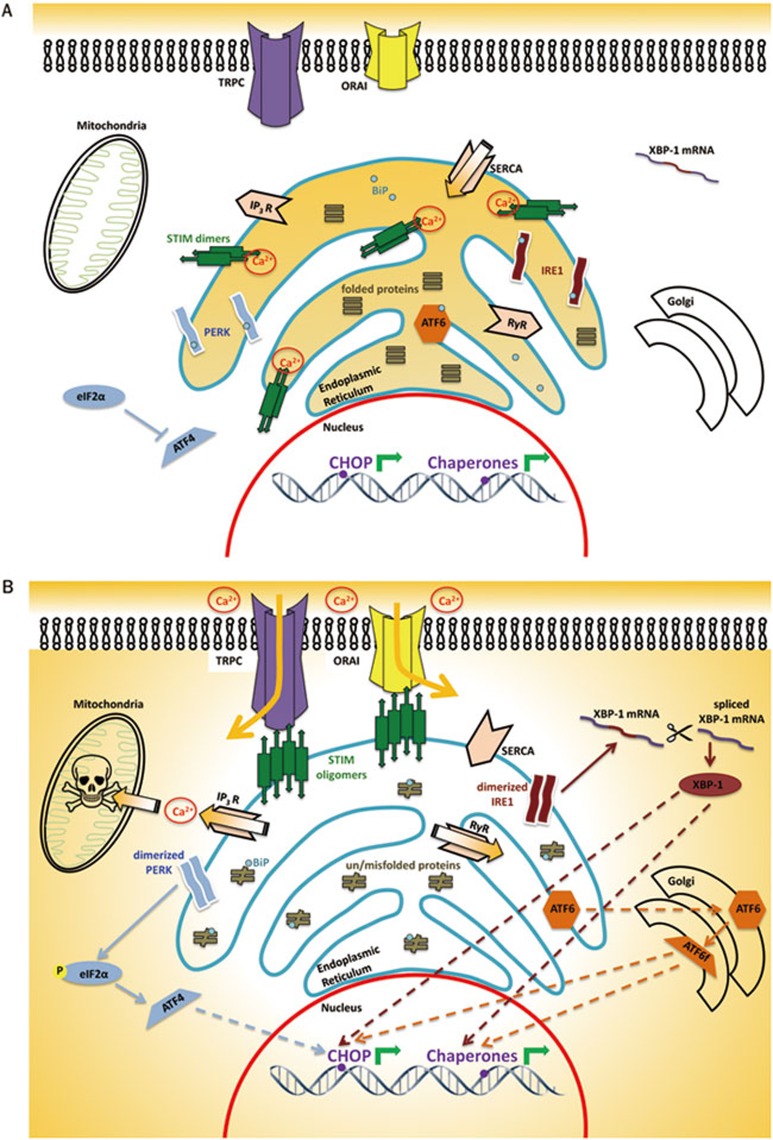
The loss of Ca(2+) homeostasis during cerebral ischemia is a hallmark of impending neuronal demise. Accordingly, considerable cellular resources are expended in maintaining low resting cytosolic levels of Ca(2+). These include contributions by a host of proteins involved in the sequestration and transport of Ca(2+), many of which are expressed within intracellular organelles, including lysosomes, mitochondria as well as the endoplasmic reticulum (ER). Ca(2+) sequestration by the ER contributes to cytosolic Ca(2+) dynamics and homeostasis. Furthermore, within the ER Ca(2+) plays a central role in regulating a host of physiological processes. Conversely, impaired ER Ca(2+) homeostasis is an important trigger of pathological processes. Here we review a growing body of evidence suggesting that ER dysfunction is an important factor contributing to neuronal injury and loss post-ischemia. Specifically, the contribution of the ER to cytosolic Ca(2+) elevations during ischemia will be considered, as will the signalling cascades recruited as a consequence of disrupting ER homeostasis and function.
Figures
References
-
- Berridge MJ. Neuronal calcium signaling. Neuron. 1998;21:13–26. - PubMed
-
- Verkhratsky A, Petersen OH. The endoplasmic reticulum as an integrating signalling organelle: from neuronal signalling to neuronal death. Eur J Pharmacol. 2002;447:141–54. - PubMed
-
- Verkhratsky A. Physiology and pathophysiology of the calcium store in the endoplasmic reticulum of neurons. Physiol Rev. 2005;85:201–79. - PubMed
-
- Kohno K, Higuchi T, Ohta S, Kohno K, Kumon Y, Sakaki S. Neuroprotective nitric oxide synthase inhibitor reduces intracellular calcium accumulation following transient global ischemia in the gerbil. Neurosci Lett. 1997;224:17–20. - PubMed
-
- Kirino T. Delayed neuronal death in the gerbil hippocampus following ischemia. Brain Res. 1982;239:57–69. - PubMed
Publication types
MeSH terms
Substances
LinkOut - more resources
Full Text Sources
Miscellaneous
