


Perceived burden and neuropsychiatric morbidities in adults with 22q11.2 deletion syndrome
- PMID: 23106770
- PMCID: PMC4516411
- DOI: 10.1111/j.1365-2788.2012.01639.x
Perceived burden and neuropsychiatric morbidities in adults with 22q11.2 deletion syndrome
Abstract
Background: 22q11.2 deletion syndrome (22q11.2DS) is a common genetic subtype of intellectual disability (ID) remarkable for its constellation of congenital, developmental and later-onset features. Survival to adulthood is now the norm, and serious psychiatric illness is common in adults. However, little is known about the experiences and perceived needs of individuals with 22q11.2DS and their caregivers at time of transition from paediatric to adult models of care and beyond.
Method: We administered a mail survey to 84 caregivers of adults with 22q11.2DS and 34 adult patients themselves, inquiring about medical and social services, perceived burden and major challenges in adulthood in 22q11.2DS. Standard quantitative and qualitative methods were used to analyse the responses.
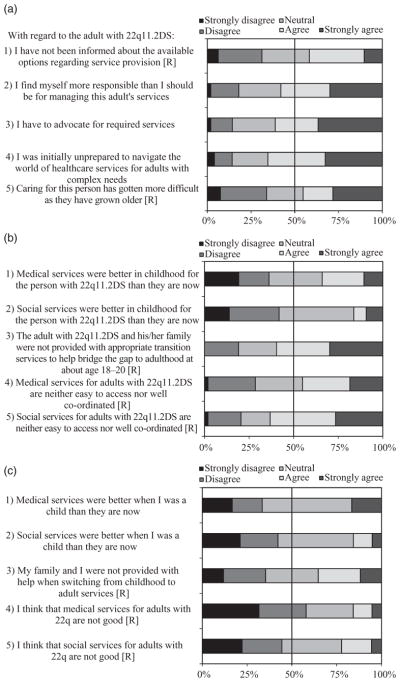
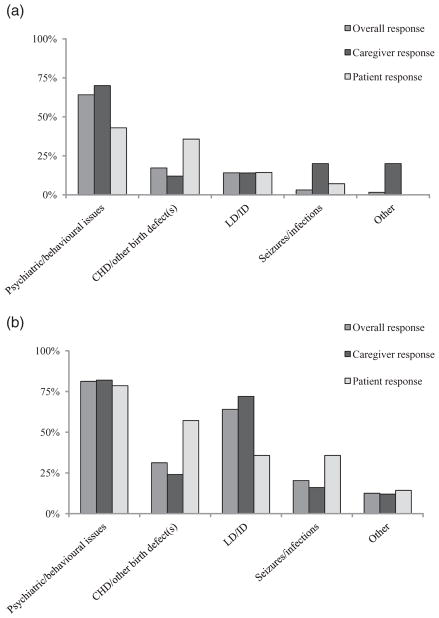
Results: Fifty-three (63.1%) caregivers and 20 (58.8%) adults with 22q11.2DS completed the survey. Perceived burden was high, with psychiatric illness and/or behavioural issues considered the most challenging aspects of adulthood in 22q11.2DS by the majority of caregivers (70.0%) and many patients themselves (42.9%). Irrespective of the extent of ID and the presence or absence of other major features, caregivers expressed dissatisfaction with medical and social services for adults, including at time of transition from paediatric care.
Conclusions: To our knowledge, this is the first study to examine the subjective experiences of adults with 22q11.2DS and their caregivers and to identify their perceived needs for services. Better awareness of 22q11.2DS and its later-onset manifestations, early diagnosis and treatment of psychiatric illness, additional support at time of transition and dedicated clinics for adults with 22q11.2DS may help to improve patient outcomes and reduce caregiver burden.
Keywords: 22q11.2 deletion syndrome; adult; burden; caregivers; intellectual disability; schizophrenia.
© 2012 The Authors. Journal of Intellectual Disability Research © 2012 John Wiley & Sons Ltd, MENCAP & IASSIDD.
Figures
References
-
- Awad AG, Voruganti LN. The burden of schizophrenia on caregivers: a review. Pharmacoeconomics. 2008;26:149–62. - PubMed
-
- Barnhart RC. Aging adult children with developmental disabilities and their families: challenges for occupational therapists and physical therapists. Physical and Occupational Therapy in Pediatrics. 2001;21:69–81. - PubMed
-
- Bassett AS, Chow EWC, Hodgkinson KA. Genetics of schizophrenia and psychotic disorders. In: Smoller JW, Sheidley BR, Tsuang MT, editors. Psychiatric Genetics: Applications in Clinical Practice. American Psychiatric Publishing; Washington, DC: 2008a. pp. 99–130.
Publication types
MeSH terms
Grants and funding
LinkOut - more resources
Full Text Sources
Medical
