


Prevalence, treatment, and outcomes of coexistent ocular surface squamous neoplasia and pterygium
- PMID: 23107578
- PMCID: PMC3562397
- DOI: 10.1016/j.ophtha.2012.08.010
Prevalence, treatment, and outcomes of coexistent ocular surface squamous neoplasia and pterygium
Abstract
Purpose: The purpose of this study was to determine the prevalence of ocular surface squamous neoplasia (OSSN) coexisting with pterygia in South Florida and to study the treatment and related outcomes.
Design: Noninterventional retrospective study.
Participants: A total of 2005 patients with surgically excised pterygia at the Bascom Palmer Eye Institute from 2000 to 2010.
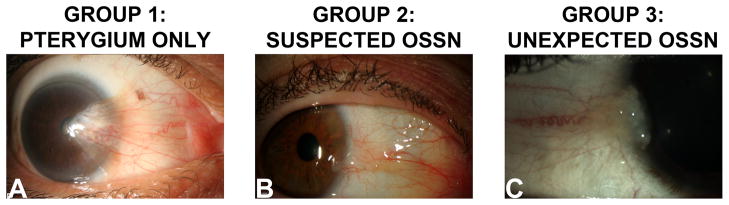
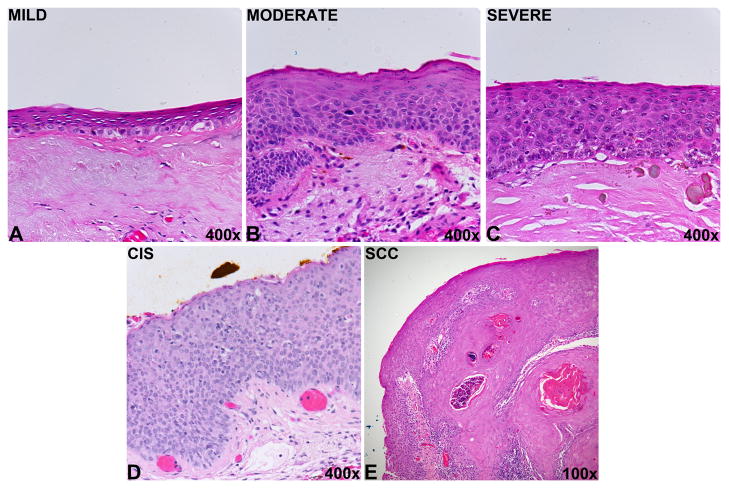
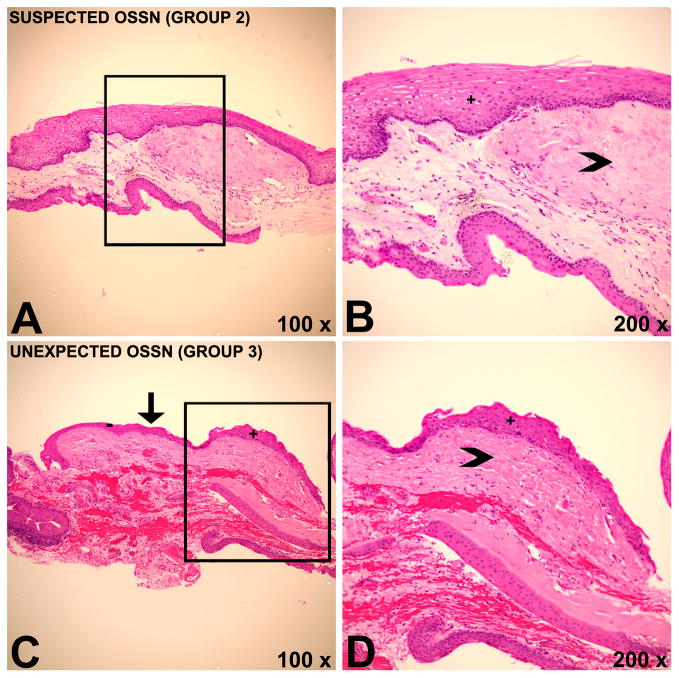
Methods: Pathology reports of patients with pterygia were reviewed for evidence of OSSN. Patients were divided into the following groups: pterygium and no OSSN (group 1), clinically suspected OSSN with pterygium (group 2), and unexpected OSSN with pterygium found on histopathology (group 3). Clinical charts of patients in groups 2 and 3 were reviewed.
Main outcome measures: Period prevalence, treatment, and outcome.
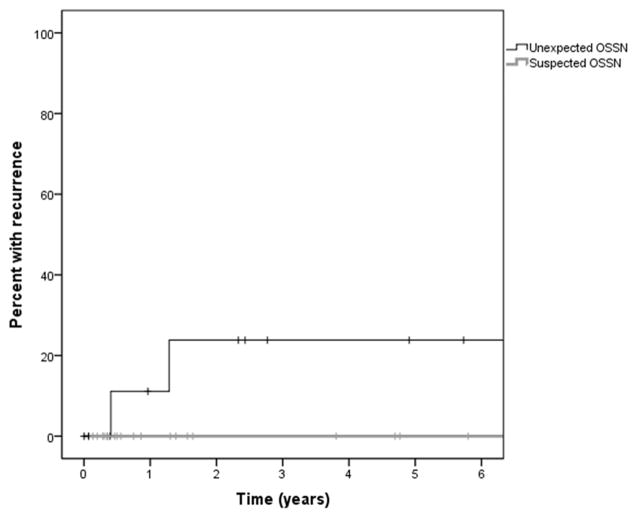
Results: In surgically excised pterygia, the prevalence of coexistent OSSN was 1.7% (n = 34), of which 41% (n = 14) were clinically suspected preoperatively (group 2) and 59% (n = 20) were unexpectedly found on histopathology (group 3). Clinically suspected OSSN with pterygia was generally treated with wide surgical margins and cryotherapy, whereas unexpected OSSN with pterygia was treated with simple excision, followed by adjuvant interferon treatment in 30% (n = 6). After a mean follow-up of 2 years, there were no recurrences in the suspected OSSN group and 2 recurrences in the unexpected OSSN group. The recurrence rate in the latter group was 11% at 1 year and 24% at 2 years.
Conclusions: Ocular surface squamous neoplasia is uncommonly found to coexist with pterygium. The prognosis in suspected OSSN cases is excellent, with no recurrences noted despite positive margins in 50% of cases. The recurrence rates of unexpected OSSN mirrors that of OSSN not associated with pterygium, and thus vigilance for recurrence is important.
Copyright © 2013 American Academy of Ophthalmology. Published by Elsevier Inc. All rights reserved.
Conflict of interest statement
Figures
References
-
- Basti S, Macsai MS. Ocular surface squamous neoplasia: a review. Cornea. 2003;22:687–704. - PubMed
-
- Grossniklaus HE, Green WR, Luckenbach M, Chan CC. Conjunctival lesions in adults. A clinical and histopathologic review. Cornea. 1987;6:78–116. - PubMed
-
- Pizzarello LD, Jakobiec FA. Bowen’s disease of the conjunctiva: a misnomer. In: Jakobiec FA, editor. Ocular and Adnexal Tumors. Birmingham, AL: Aesculapius Pub; 1978. pp. 553–71.
-
- Lee GA, Hirst LW. Incidence of ocular surface epithelial dysplasia in metropolitan Brisbane. A 10-year survey. Arch Ophthalmol. 1992;110:525–7. - PubMed
-
- Newton R, Ferlay J, Reeves G, et al. Effect of ambient solar ultraviolet radiation on incidence of squamous-cell carcinoma of the eye. Lancet. 1996;347:1450–1. - PubMed
Publication types
MeSH terms
Substances
Grants and funding
LinkOut - more resources
Full Text Sources
Other Literature Sources
Medical
