


Medication exposure in pregnancy risk evaluation program: the prevalence of asthma medication use during pregnancy
- PMID: 23108737
- PMCID: PMC3797257
- DOI: 10.1007/s10995-012-1173-x
Medication exposure in pregnancy risk evaluation program: the prevalence of asthma medication use during pregnancy
Abstract
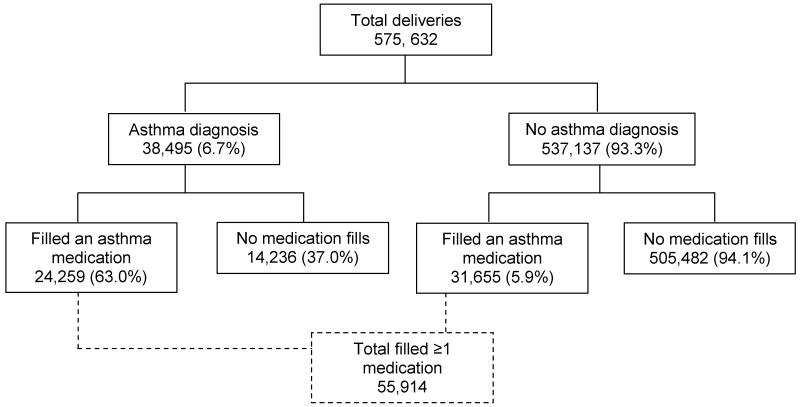
Asthma is one of the most common chronic diseases in women of reproductive age, occurring in up to 8 % of pregnancies. The objective of this study is to assess the prevalence of asthma medication use during pregnancy in a large diverse cohort. We identified women aged 15-45 years who delivered a live born infant between 2001 and 2007 across 11 U.S. health plans within the Medication Exposure in Pregnancy Risk Evaluation Program (MEPREP). Using health plans' administrative and claims data, and birth certificate data, we identified deliveries for which women filled asthma medications from 90 days before pregnancy through delivery. Prevalence (%) was calculated for asthma diagnosis and medication dispensing. There were 586,276 infants from 575,632 eligible deliveries in the MEPREP cohort. Asthma prevalence among mothers was 6.7 %, increasing from 5.5 % in 2001 to 7.8 % in 2007. A total of 9.7 % (n = 55,914) of women were dispensed asthma medications during pregnancy. The overall prevalence of maintenance-only medication, rescue-only medication, and combined maintenance and rescue medication was 0.6, 6.7, and 2.4 % respectively. The prevalence of maintenance-only use doubled during the study period from 0.4 to 0.8 %, while rescue-only use decreased from 7.4 to 5.8 %. In this large population-based pregnancy cohort, the prevalence of asthma diagnoses increased over time. The dispensing of maintenance-only medication increased over time, while rescue-only medication dispensing decreased over time.
Figures
References
-
- Kwon HL, Belanger K, Bracken MB. Asthma prevalence among pregnant and childbearing-aged women in the United States: estimates from national health surveys. Ann. Epidemiol. 2003;13(5):317–24. - PubMed
-
- Dombrowski MP, Schatz M. Asthma in pregnancy. Clin. Obstet. Gynecol. 2010;53(2):301–10. - PubMed
-
- National Asthma Education and Prevention Program Managing Asthma During Pregnancy: Recommendations for Pharmacologic Treatment: National Institutes of Health, National Heart, Lung, and Blood Institute. NIH Publication No. 055232005.
-
- Bakhireva LN, Schatz M, Chambers CD. Effect of maternal asthma and gestational asthma therapy on fetal growth. J. Asthma. 2007;44(2):71–6. - PubMed
-
- Namazy JA, Schatz M. Pregnancy and asthma: recent developments. Curr. Opin. Pulm. Med. 2005;11(1):56–60. - PubMed
Publication types
MeSH terms
Substances
Grants and funding
LinkOut - more resources
Full Text Sources
Medical
