


The entry of fetal and amniotic fluid components into the uterine vessel circulation leads to sterile inflammatory processes during parturition
- PMID: 23109934
- PMCID: PMC3478564
- DOI: 10.3389/fimmu.2012.00321
The entry of fetal and amniotic fluid components into the uterine vessel circulation leads to sterile inflammatory processes during parturition
Abstract
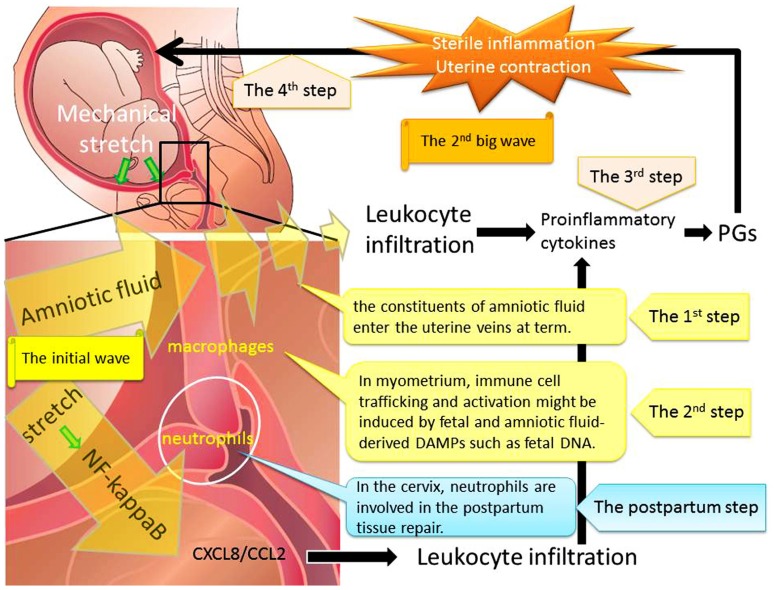
Pro-inflammatory cytokines play an important role during the process of human parturition. The focus of this review was to explore the contribution of biological, biochemical, and genetic changes in the onset of term labor. This article reviews the English-language literature on inflammatory, hormonal, and immunological factors in an effort to identify the molecular basis of human parturition. The majority of the genes and proteins up-regulated in parturition at term are related to four functional categories, mechanical stretch-mediated damage-associated molecular patterns (DAMPs) activation, response to immunity, induction of inflammatory signaling, and progressive uterine myometrial contractility and resultant term birth. Mechanical stretch could promote the entry of amniotic fluid components into the uterine vessel circulation that is the common physiologic mechanism at term prior to labor. The fetal or amniotic fluid-derived DAMPs could activate the immune system. The inflammatory mediators are produced by infiltrating activated leukocytes and by the reproductive tissues themselves such as myometrium, and subsequently lead to uterine contractions. This review supports the sterile inflammation hypothesis that there are at least two phases of human parturition: the initial wave of the entry of amniotic fluid components into uterine vasculatures would be followed by the second big wave of subsequent myometrial contraction.
Keywords: amniotic fluid; inflammation; myometrium; parturition; stretch.
Figures
References
-
- Abrahams V. M. (2011). The role of the Nod-like receptor family in trophoblast innate immune responses. J. Reprod. Immunol. 88 112–117 - PubMed
-
- Barber G. N. (2011). Cytoplasmic DNA innate immune pathways. Immunol. Rev. 243 99–108 - PubMed
-
- Benson M. D. (2007). A hypothesis regarding complement activation and amniotic fluid embolism. Med. Hypotheses 68 1019–1025 - PubMed
-
- Benson M. D., Kobayashi H., Sehgal L. R., Oi H., Haney E. I. (2006). Complement, fetal antigen, and shaking rigors in parturients. J. Matern. Fetal Neonatal Med. 19 31–34 - PubMed
LinkOut - more resources
Full Text Sources
Other Literature Sources
