. 2012;7(10):e48204.
doi: 10.1371/journal.pone.0048204. Epub 2012 Oct 26.

Luminal localization of α-tubulin K40 acetylation by cryo-EM analysis of fab-labeled microtubules

Affiliations

Luminal localization of α-tubulin K40 acetylation by cryo-EM analysis of fab-labeled microtubules

Virupakshi Soppina et al. PLoS One. 2012.

Abstract

The αβ-tubulin subunits of microtubules can undergo a variety of evolutionarily-conserved post-translational modifications (PTMs) that provide functional specialization to subsets of cellular microtubules. Acetylation of α-tubulin residue Lysine-40 (K40) has been correlated with increased microtubule stability, intracellular transport, and ciliary assembly, yet a mechanistic understanding of how acetylation influences these events is lacking. Using the anti-acetylated tubulin antibody 6-11B-1 and electron cryo-microscopy, we demonstrate that the K40 acetylation site is located inside the microtubule lumen and thus cannot directly influence events on the microtubule surface, including kinesin-1 binding. Surprisingly, the monoclonal 6-11B-1 antibody recognizes both acetylated and deacetylated microtubules. These results suggest that acetylation induces structural changes in the K40-containing loop that could have important functional consequences on microtubule stability, bending, and subunit interactions. This work has important implications for acetylation and deacetylation reaction mechanisms as well as for interpreting experiments based on 6-11B-1 labeling.


Conflict of interest statement

Competing Interests: The authors have declared that no competing interests exist.

Figures

Figure 1
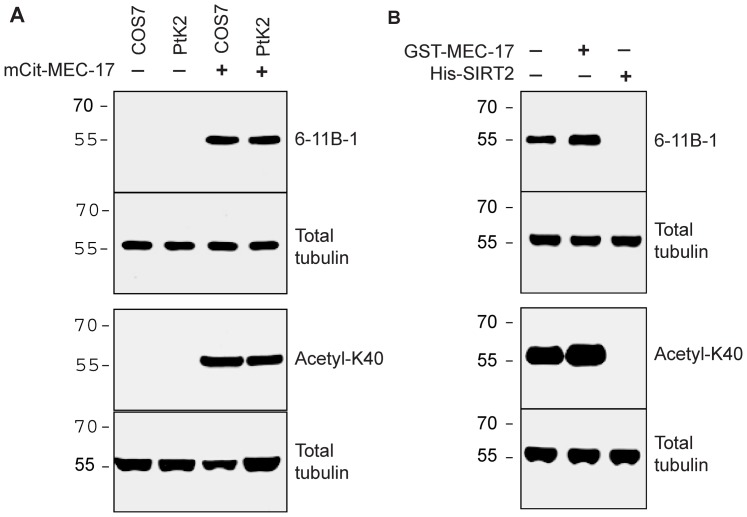
Figure 1. Generation of acetylated and deacetylated tubulins.
A) Lysates of COS7 and PtK2 cells either untransfected (lanes 1 and 2) or expressing the acetyltransferase MEC-17 (lanes 3 and 4) were immunoblotted for K40 acetylation of α-tubulin using monoclonal 6-11B-1 and polyclonal anti-acetyl-K40 antibodies. B) Purified brain tubulin was untreated (lane 1) or treated with recombinant MEC-17 (lane 2) or SIRT2 (lane 3) enzymes. The total tubulin in all samples was determined in parallel by blotting with an anti-β-tubulin antibody.
Figure 2
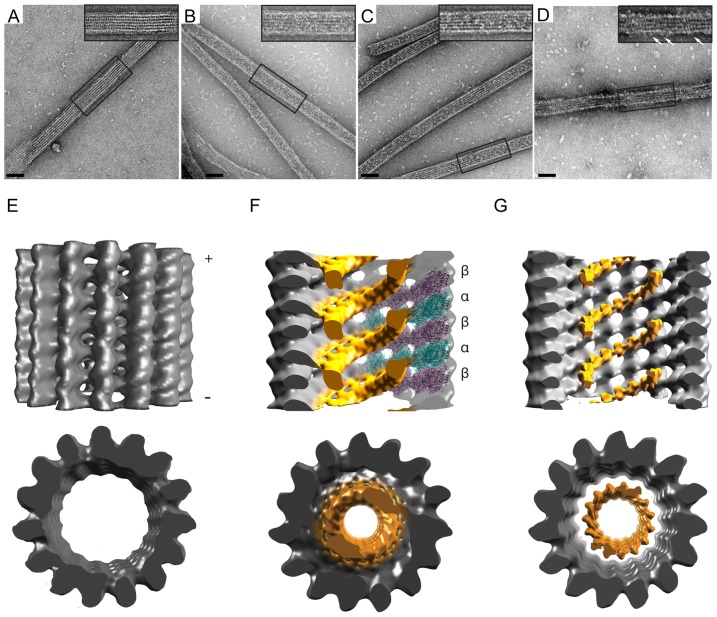
Figure 2. 2D and 3D EM visualization of the 6-11B-1 Fab within the microtubule lumen.
A-D) Microtubules polymerized from A,D) untreated B) MEC-17-treated (acetylated), or C) SIRT2-treated (deacetylated) tubulins were incubated with A-C) 6-11B-1 Fab fragments or D) GST-KHC motor domain and visualized after embedding in negative stain. The insets show expanded views of the boxed areas. White arrows in D) indicate kinesin-1 motors on the microtubule surface. Scale bars, 50 nm. E–G) Side and minus end views of 3D helical reconstructions of vitrified microtubules. Visible density thresholds have been adjusted to levels comparable to docked αβ-tubulin. All maps have been low-pass filtered to 22Å resolution. E) Control microtubule without Fab labeling. F) Cross section of acetylated microtubule decorated with 6-11B-1 Fab (orange). The structure of the αβ-tubulin dimer has been docked into the right side of the density map (α-tubulin is shown in teal, β-tubulin is shown in purple). G) Cross section of deacetylated microtubule decorated with 6-11B-1 Fab (orange).
Figure 3
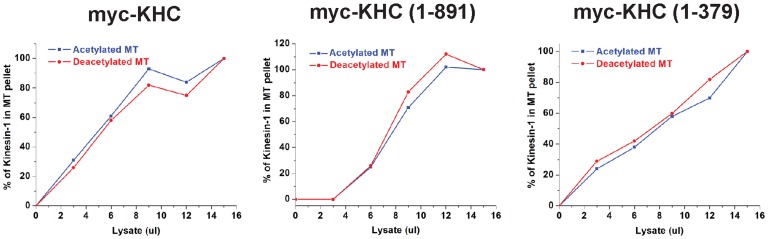
Figure 3. K40 acetylation does not directly influence the binding of Kinesin-1 to microtubules.
Myc-tagged versions of full-length kinesin-1 heavy chain (myc-KHC) or truncated, constitutively active constructs (1–891 and 1–379) were expressed in COS7 cells. Increasing amounts of cell lysates were used in microtubule binding assays with a constant amount of taxol-stabilized acetylated (blue lines) or deacetylated (red lines) microtubules and AMPPNP. The percentage of kinesin-1 motor copelleting with microtubules was quantified. Graphs indicate the average of four independent experiments.
Figure 4
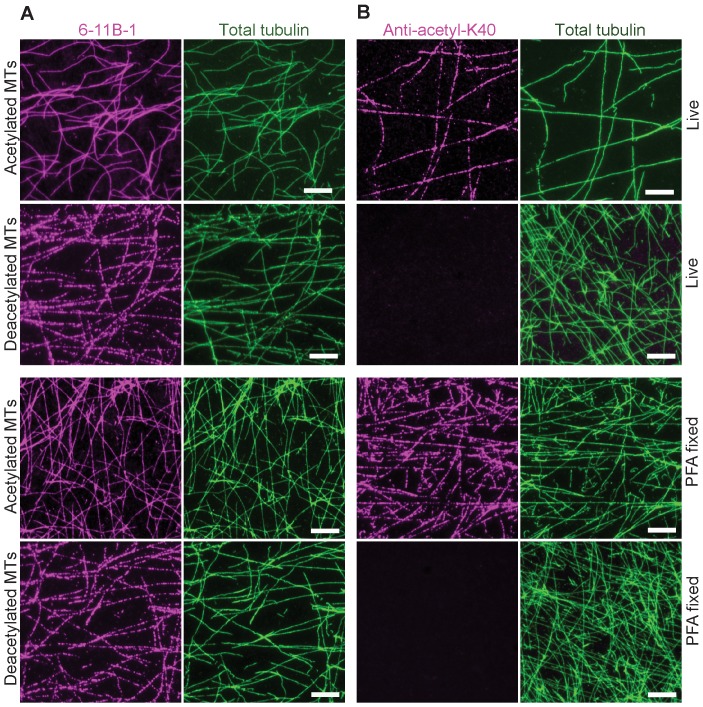
Figure 4. Monoclonal (6-11B-1) and polyclonal (anti-acetyl-K40) antibodies differ in their ability to recognize deacetylated microtubules in vitro.
Taxol-stabilized microtubules polymerized from acetylated or deacetylated tubulins were stained immediately (Live) or after fixation with paraformaldehyde (PFA fixed) with A) monoclonal 6-11B-1 antibody (magenta) or B) polyclonal anti-acetyl-K40 antibody (magenta). The total tubulin in each sample was detected with DM1A antibody (green). Scale bars, 20 µm.
Figure 5
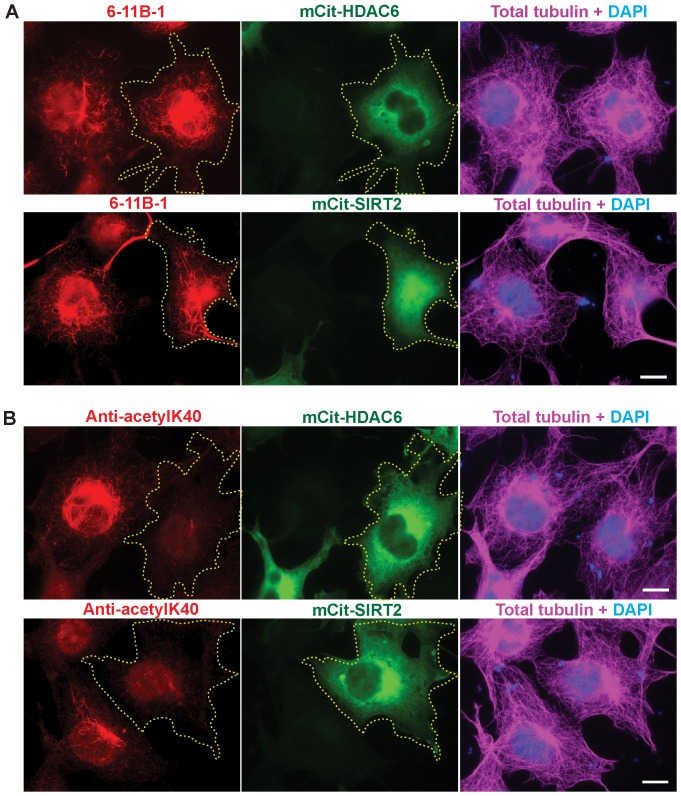
Figure 5. Monoclonal (6-11B-1) and polyclonal (anti-acetyl-K40) antibodies differ in their ability to recognize deacetylated microtubules in cells.
COS7 cells expressing the deacetylases mCit-HDAC6 or mCit-SIRT2 (green) were fixed and double stained using A) monoclonal 6-11B-1 (red) and total tubulin (magenta) antibodies or B) polyclonal anti-acetyl-K40 (red) and total tubulin (magenta) antibodies. Transfected cells are indicated by the yellow dotted outline. Scale bars, 20 µm.

References

    1. Downing KH, Nogales E (1999) Crystallographic structure of tubulin: implications for dynamics and drug binding. Cell Struct Funct 24: 269–275. - PubMed
    1. Janke C, Bulinski JC (2011) Post-translational regulation of the microtubule cytoskeleton: mechanisms and functions. Nat Rev Mol Cell Biol 12: 773–786. - PubMed
    1. L'Hernault SW, Rosenbaum JL (1985) Chlamydomonas alpha-tubulin is posttranslationally modified by acetylation on the epsilon-amino group of a lysine. Biochemistry 24: 473–478. - PubMed
    1. LeDizet M, Piperno G (1987) Identification of an acetylation site of Chlamydomonas alpha-tubulin. Proc Natl Acad Sci U S A 84: 5720–5724. - PMC - PubMed
    1. Piperno G, Fuller MT (1985) Monoclonal antibodies specific for an acetylated form of alpha-tubulin recognize the antigen in cilia and flagella from a variety of organisms. J Cell Biol 101: 2085–2094. - PMC - PubMed

Publication types