A pan-European study of the C9orf72 repeat associated with FTLD: geographic prevalence, genomic instability, and intermediate repeats
- PMID: 23111906
- PMCID: PMC3638346
- DOI: 10.1002/humu.22244
A pan-European study of the C9orf72 repeat associated with FTLD: geographic prevalence, genomic instability, and intermediate repeats
Abstract
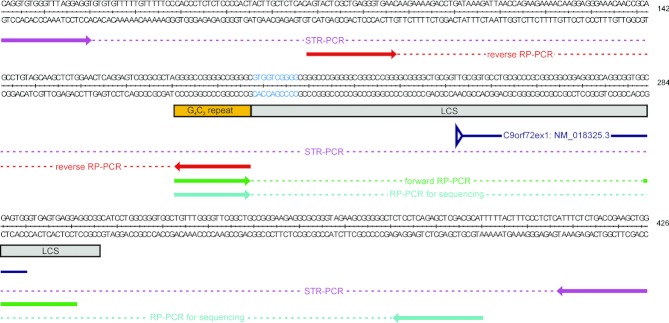
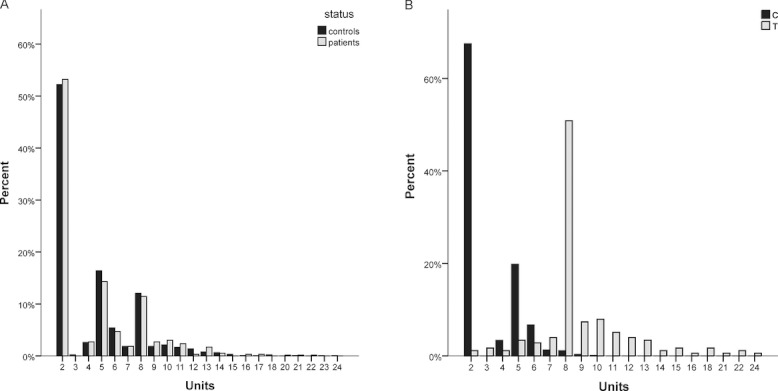
We assessed the geographical distribution of C9orf72 G(4) C(2) expansions in a pan-European frontotemporal lobar degeneration (FTLD) cohort (n = 1,205), ascertained by the European Early-Onset Dementia (EOD) consortium. Next, we performed a meta-analysis of our data and that of other European studies, together 2,668 patients from 15 Western European countries. The frequency of the C9orf72 expansions in Western Europe was 9.98% in overall FTLD, with 18.52% in familial, and 6.26% in sporadic FTLD patients. Outliers were Finland and Sweden with overall frequencies of respectively 29.33% and 20.73%, but also Spain with 25.49%. In contrast, prevalence in Germany was limited to 4.82%. In addition, we studied the role of intermediate repeats (7-24 repeat units), which are strongly correlated with the risk haplotype, on disease and C9orf72 expression. In vitro reporter gene expression studies demonstrated significantly decreased transcriptional activity of C9orf72 with increasing number of normal repeat units, indicating that intermediate repeats might act as predisposing alleles and in favor of the loss-of-function disease mechanism. Further, we observed a significantly increased frequency of short indels in the GC-rich low complexity sequence adjacent to the G(4) C(2) repeat in C9orf72 expansion carriers (P < 0.001) with the most common indel creating one long contiguous imperfect G(4) C(2) repeat, which is likely more prone to replication slippage and pathological expansion.
© 2012 Wiley Periodicals, Inc.
Figures

References
-
- Al-Sarraj S, King A, Troakes C, Smith B, Maekawa S, Bodi I, Rogelj B, Al-Chalabi A, Hortobagyi T, Shaw CE. p62 positive, TDP-43 negative, neuronal cytoplasmic and intranuclear inclusions in the cerebellum and hippocampus define the pathology of C9orf72-linked FTLD and MNDALS. Acta Neuropathol. 2011;122:691–702. - PubMed
-
- Arighi A, Fumagalli GG, Jacini F, Fenoglio C, Ghezzi L, Pietroboni AM, De RM, Serpente M, Ridolfi E, Bonsi R, Bresolin N, Scarpini E, et al. Early onset behavioral variant frontotemporal dementia due to the C9ORF72 hexanucleotide repeat expansion: psychiatric clinical presentations. J Alzheimers Dis. 2012;31:447–452. - PubMed
-
- Aziz NA, Jurgens CK, Landwehrmeyer GB, van Roon-Mom WM, van Ommen GJ, Stijnen T, Roos RA. Normal and mutant HTT interact to affect clinical severity and progression in Huntington disease. Neurology. 2009;73:1280–1285. - PubMed
-
- Boeve BF, Boylan KB, Graff-Radford NR, Dejesus-Hernandez M, Knopman DS, Pedraza O, Vemuri P, Jones D, Lowe V, Murray ME, Dickson DW, Josephs KA, et al. Characterization of frontotemporal dementia and/or amyotrophic lateral sclerosis associated with the GGGGCC repeat expansion in C9ORF72. Brain. 2012;135:765–783. - PMC - PubMed
Publication types
MeSH terms
Substances
LinkOut - more resources
Full Text Sources
Other Literature Sources
Miscellaneous