


Antidepressant-like activity of (4-phenylpiperazin-1-yl) (quinoxalin-2-yl) methanone (4a), a novel 5-HT(3) receptor antagonist: an investigation in behaviour-based rodent models of depression
- PMID: 23112413
- PMCID: PMC3480784
- DOI: 10.4103/0253-7613.100371
Antidepressant-like activity of (4-phenylpiperazin-1-yl) (quinoxalin-2-yl) methanone (4a), a novel 5-HT(3) receptor antagonist: an investigation in behaviour-based rodent models of depression
Abstract
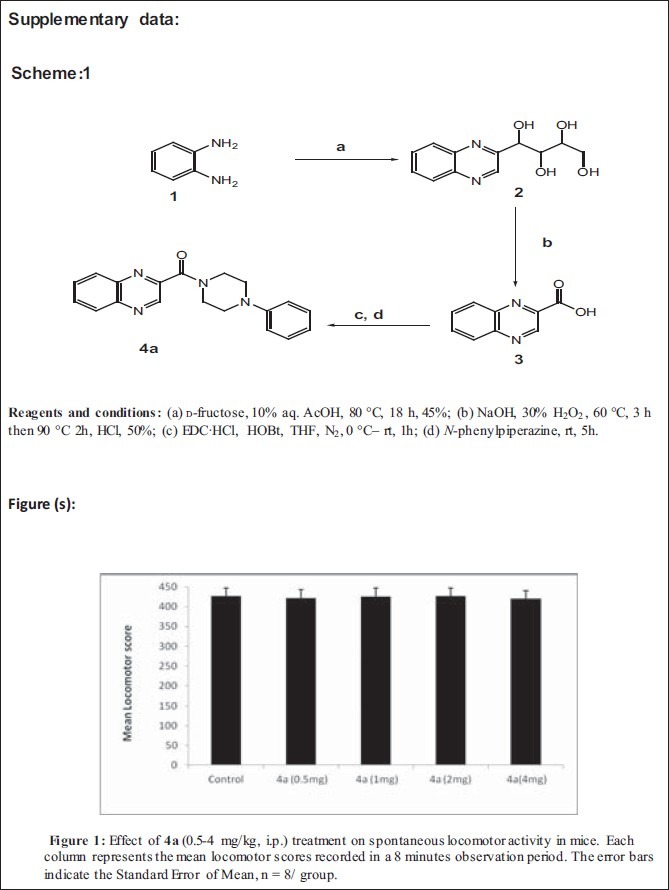
Aim: The present study was designed to investigate the antidepressant potential of (4-phenylpiperazin-1-yl) (quinoxalin-3-yl) methanone (4a), a novel 5-HT(3) receptor antagonist, with an optimal log P (2.84) and pA(2) value (7.3) greater than ondansetron (6.9) using rodent behavioural models of depression.
Materials and methods: Swiss albino mice were used in actophotometer test, forced swim test (FST) and 5-hydroxytryptophan (5-HTP) induced head twitch response. Reserpine induced hypothermia (RIH) and olfactory bulbectomy were performed in male Wistar rats. Statistical analysis was carried out by using one-way analysis of variance followed by Tukey's test.
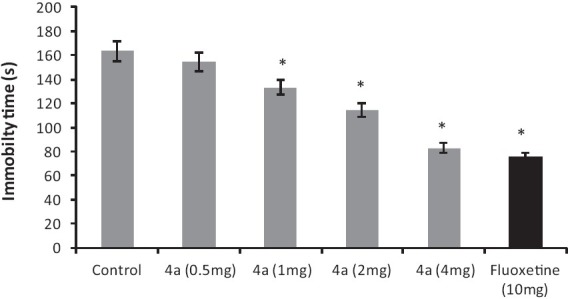
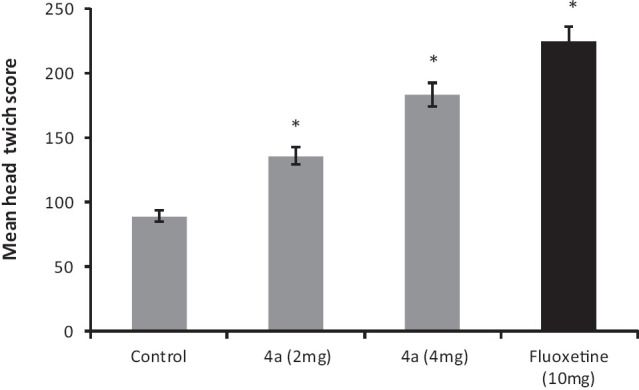
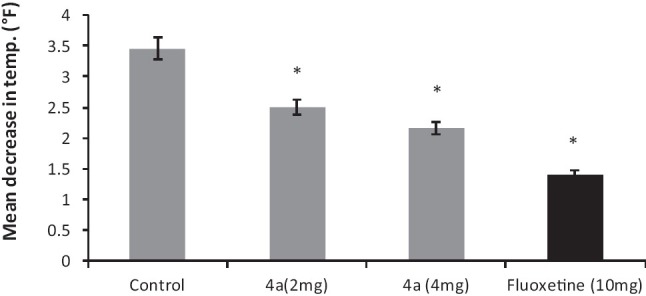
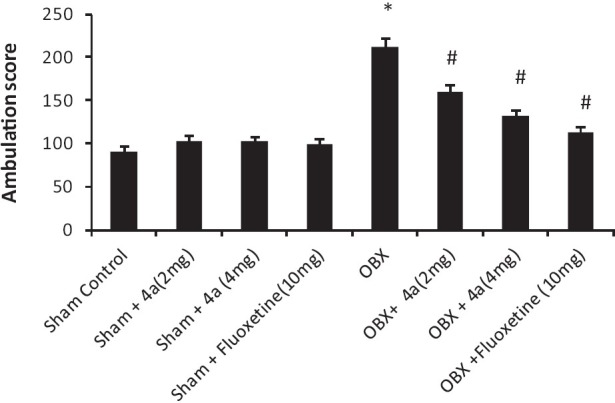
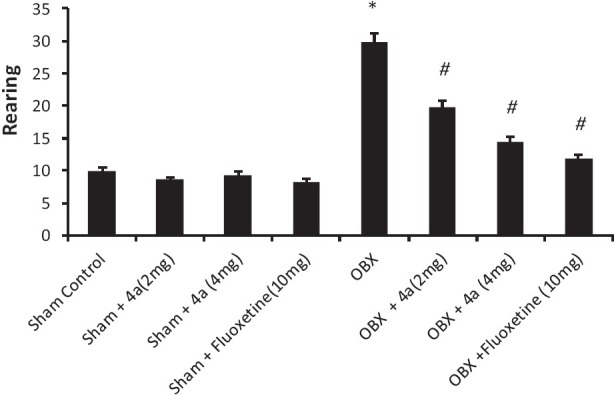
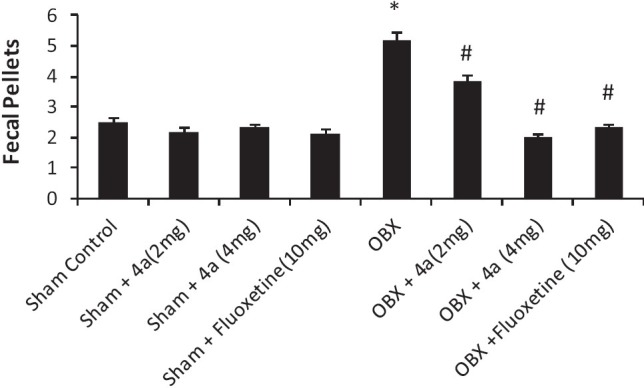
Results: Acute treatment of 4a (1-4 mg/kg, i.p.) in mice produced antidepressant-like effects in FST without affecting the baseline locomotion in actophotometer test. Further, 4a (2-4 mg/kg, i.p.) potentiated the 5-HTP induced head twitches response in mice and also antagonized RIH in rats. Furthermore, sub-chronic (14 days) treatment with 4a (2-4 mg/ kg, p.o.) significantly attenuated the behavioural anomalies induced by bilateral olfactory bulbectomy in rats in modified open field exploration.
Conclusions: These preliminary investigations confirm that 4a exhibits antidepressant-like activity in behaviour based rodent models of depression.
Keywords: (4-phenylpiperazin-1-yl) (quinoxalin-2-yl) methanone; 4a; 5-HT3 receptor antagonist; depression; forced swim test; olfactory bulbectomy.
Conflict of interest statement
Figures
References
-
- Yi LT, Li JM, Li YC, Pan Y, Xu Q, Kong LD. Antidepressant-like behavioral and neurochemical effects of the citrus-associated chemical apigenin. Life Sci. 2008;82:741–51. - PubMed
-
- Nestler EJ, Barrot M, DiLeone RJ, Eisch AJ, Gold SJ, Monteggia LM. Neurobiology of depression. Neuron. 2002;34:13–25. - PubMed
-
- Berton O, Nestler EJ. New approaches to antidepressant drug discovery: Beyond monoamines. Nat Rev Neurosci. 2006;7:137–51. - PubMed
-
- Adell A, Castro A, Celada P, Bortolozzi A, Pazos A, Artigas F. Strategies for producing faster acting antidepressants. Drug Discov Today. 2005;10:578–85. - PubMed
-
- Mahesh R, Perumal RV, Pandi PV. Cancer chemotherapy induced nausea and vomiting: Role of mediators, development of drugs and treatment methods. Pharmazie. 2005;60:83–96. - PubMed
MeSH terms
Substances
LinkOut - more resources
Full Text Sources
Other Literature Sources
Medical
Miscellaneous
