


Hyperspectral analysis of soil nitrogen, carbon, carbonate, and organic matter using regression trees
- PMID: 23112620
- PMCID: PMC3472848
- DOI: 10.3390/s120810639
Hyperspectral analysis of soil nitrogen, carbon, carbonate, and organic matter using regression trees
Abstract
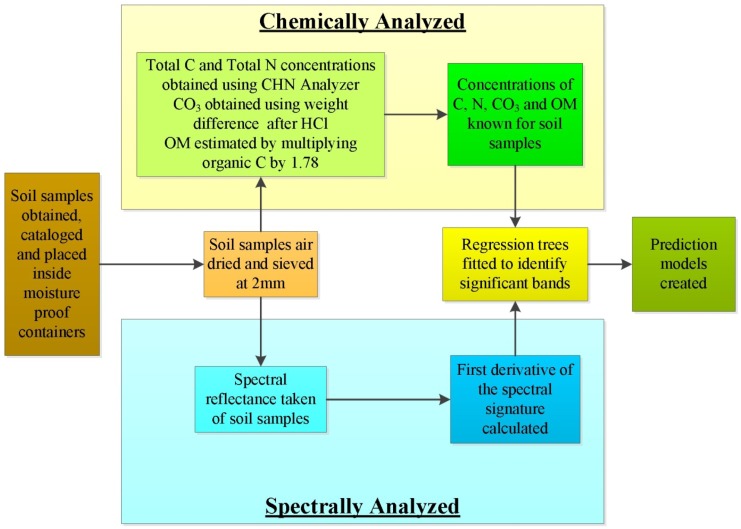
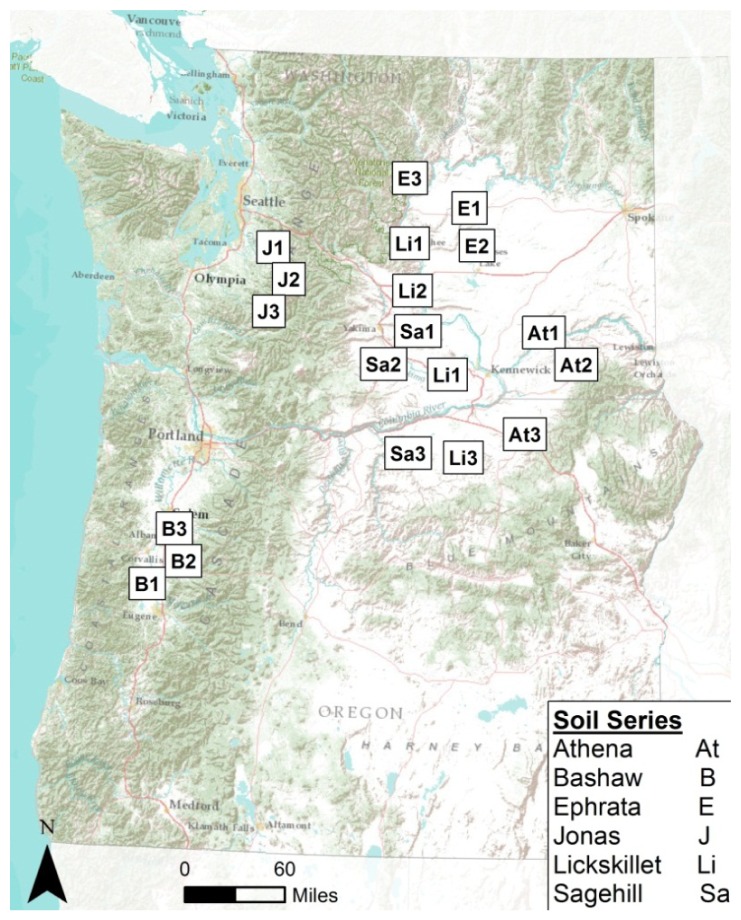
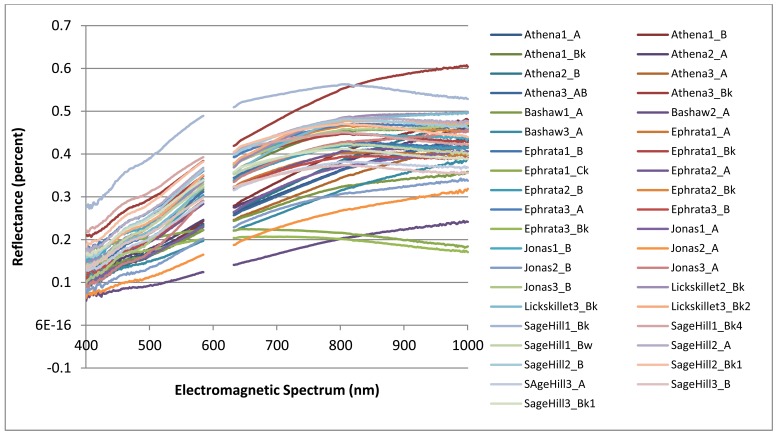
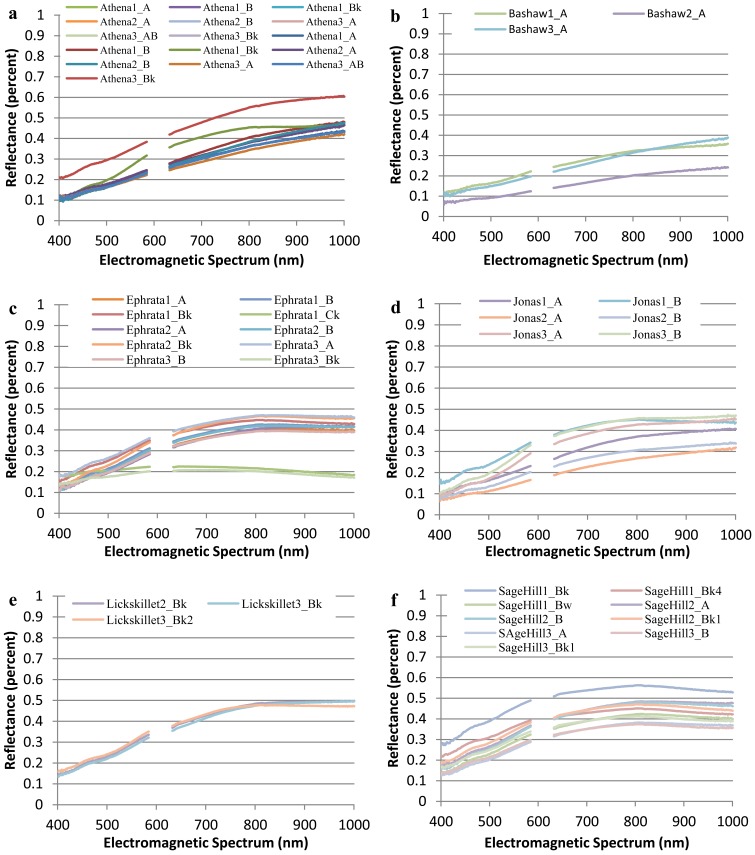
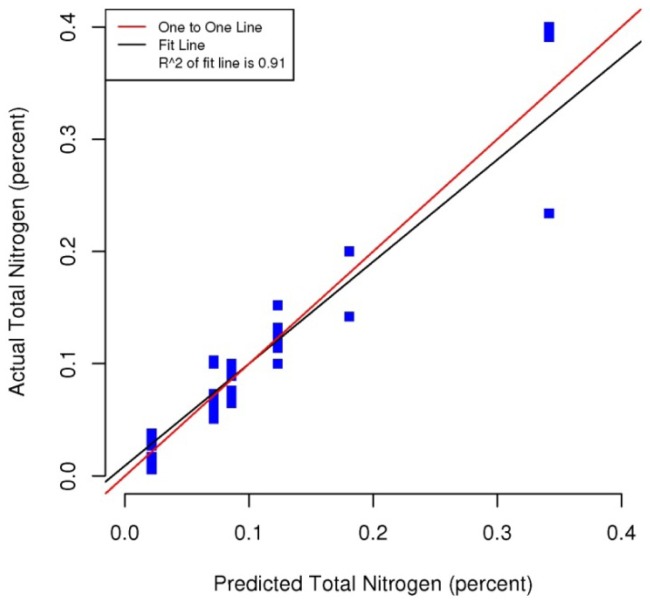
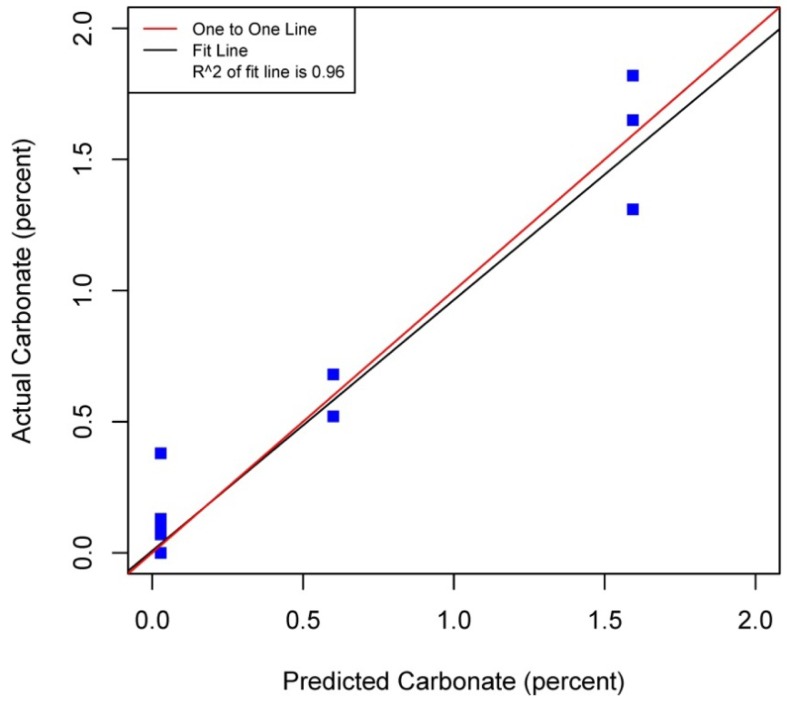
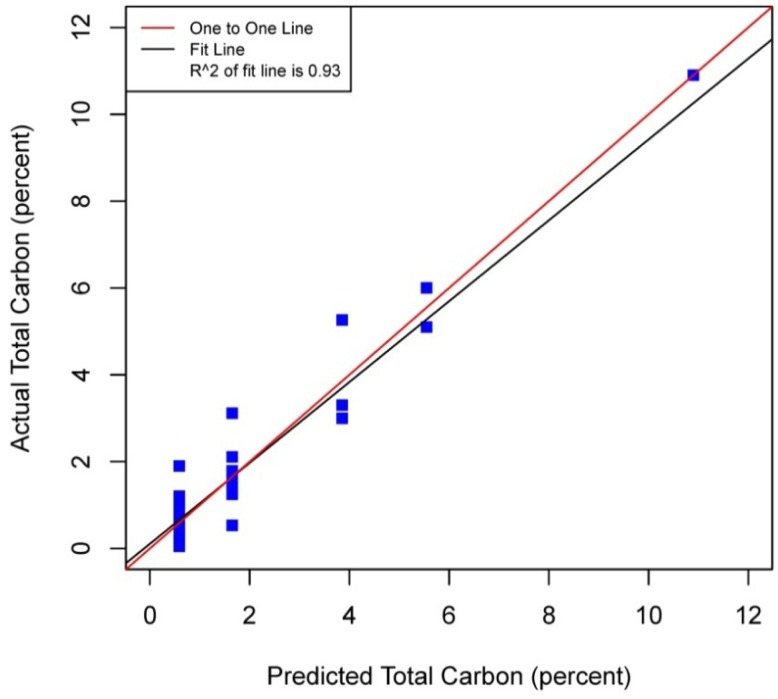
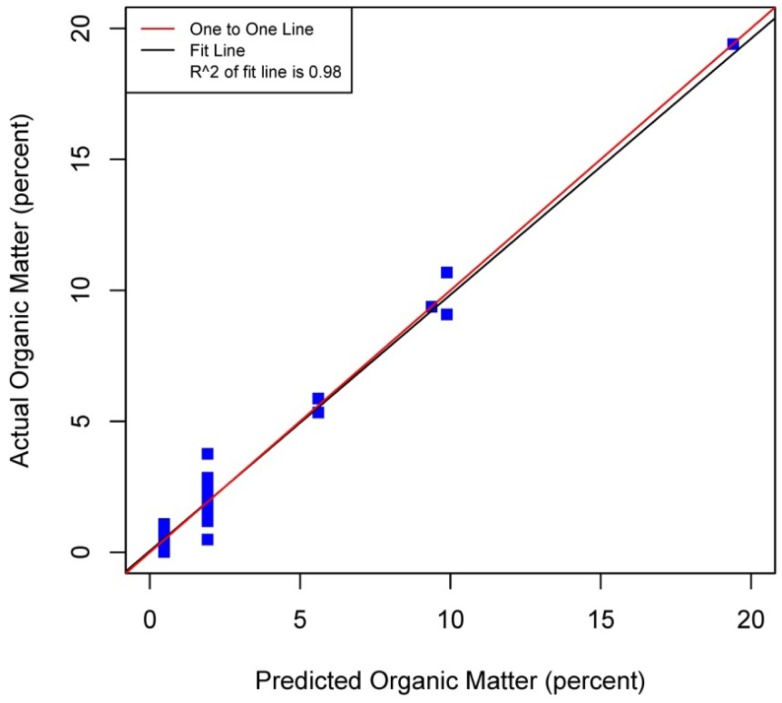
The characterization of soil attributes using hyperspectral sensors has revealed patterns in soil spectra that are known to respond to mineral composition, organic matter, soil moisture and particle size distribution. Soil samples from different soil horizons of replicated soil series from sites located within Washington and Oregon were analyzed with the FieldSpec Spectroradiometer to measure their spectral signatures across the electromagnetic range of 400 to 1,000 nm. Similarity rankings of individual soil samples reveal differences between replicate series as well as samples within the same replicate series. Using classification and regression tree statistical methods, regression trees were fitted to each spectral response using concentrations of nitrogen, carbon, carbonate and organic matter as the response variables. Statistics resulting from fitted trees were: nitrogen R(2) 0.91 (p < 0.01) at 403, 470, 687, and 846 nm spectral band widths, carbonate R(2) 0.95 (p < 0.01) at 531 and 898 nm band widths, total carbon R(2) 0.93 (p < 0.01) at 400, 409, 441 and 907 nm band widths, and organic matter R(2) 0.98 (p < 0.01) at 300, 400, 441, 832 and 907 nm band widths. Use of the 400 to 1,000 nm electromagnetic range utilizing regression trees provided a powerful, rapid and inexpensive method for assessing nitrogen, carbon, carbonate and organic matter for upper soil horizons in a nondestructive method.
Keywords: ASD; Oregon; Washington; soil horizons.
Figures
References
-
- Coleman D.C., Crossley D.A. Fundamentals of Soil Ecology. Academic Press; San Diego, CA, USA: 1996.
-
- Vogt K.A., Patel-Weynand T., Shelton M., Vogt D.J., Gordon J.C., Mukumoto C., Suntana A.S., Roads P.A. Sustainability Unpacked: Food, Energy and Water for Resilient Environments and Societies. Earthscan; London, UK: 2010.
-
- Cécillon L., Barthès B.G., Gomez C., Ertlen D., Genot V., Hedde M., Stevens A., Brun J.J. Assessment and monitoring of soil quality using near-infrared reflectance spectroscopy (NIRS) Eur. J. Soil Sci. 2009;60:770–784.
-
- Christy C.D. Real-time measurement of soil attributes using on-the-go near infrared reflectance spectroscopy. Comput. Electron. Agric. 2008;61:10–19.
-
- Shepherd K.D., Walsh M.G. Development of reflectance spectral libraries for characterization of soil properties. Soil Sci. Soc. Am. J. 2002;66:988–998.
Publication types
MeSH terms
Substances
LinkOut - more resources
Full Text Sources
