. 2013 Jan;81(1):216-25.
doi: 10.1128/IAI.00927-12. Epub 2012 Oct 31.

Identification and characterization of the first cholesterol-dependent cytolysins from Gram-negative bacteria

Affiliations

Identification and characterization of the first cholesterol-dependent cytolysins from Gram-negative bacteria

Eileen M Hotze et al. Infect Immun. 2013 Jan.

Abstract

The cholesterol-dependent cytolysins (CDCs) are pore-forming toxins that have been exclusively associated with a wide variety of bacterial pathogens and opportunistic pathogens from the Firmicutes and Actinobacteria, which exhibit a Gram-positive type of cell structure. We have characterized the first CDCs from Gram-negative bacterial species, which include Desulfobulbus propionicus type species Widdel 1981 (DSM 2032) (desulfolysin [DLY]) and Enterobacter lignolyticus (formerly Enterobacter cloacae) SCF1 (enterolysin [ELY]). The DLY and ELY primary structures show that they maintain the signature motifs of the CDCs but lack an obvious secretion signal. Recombinant, purified DLY (rDLY) and ELY (rELY) exhibited cholesterol-dependent binding and cytolytic activity and formed the typical large CDC membrane oligomeric pore complex. Unlike the CDCs from Gram-positive species, which are human- and animal-opportunistic pathogens, neither D. propionicus nor E. lignolyticus is known to be a pathogen or commensal of humans or animals: the habitats of both organisms appear to be restricted to anaerobic soils and/or sediments. These studies reveal for the first time that the genes for functional CDCs are present in bacterial species that exhibit a Gram-negative cell structure. These are also the first bacterial species containing a CDC gene that are not known to inhabit or cause disease in humans or animals, which suggests a role of these CDCs in the defense against eukaryote bacterial predators.


Figures
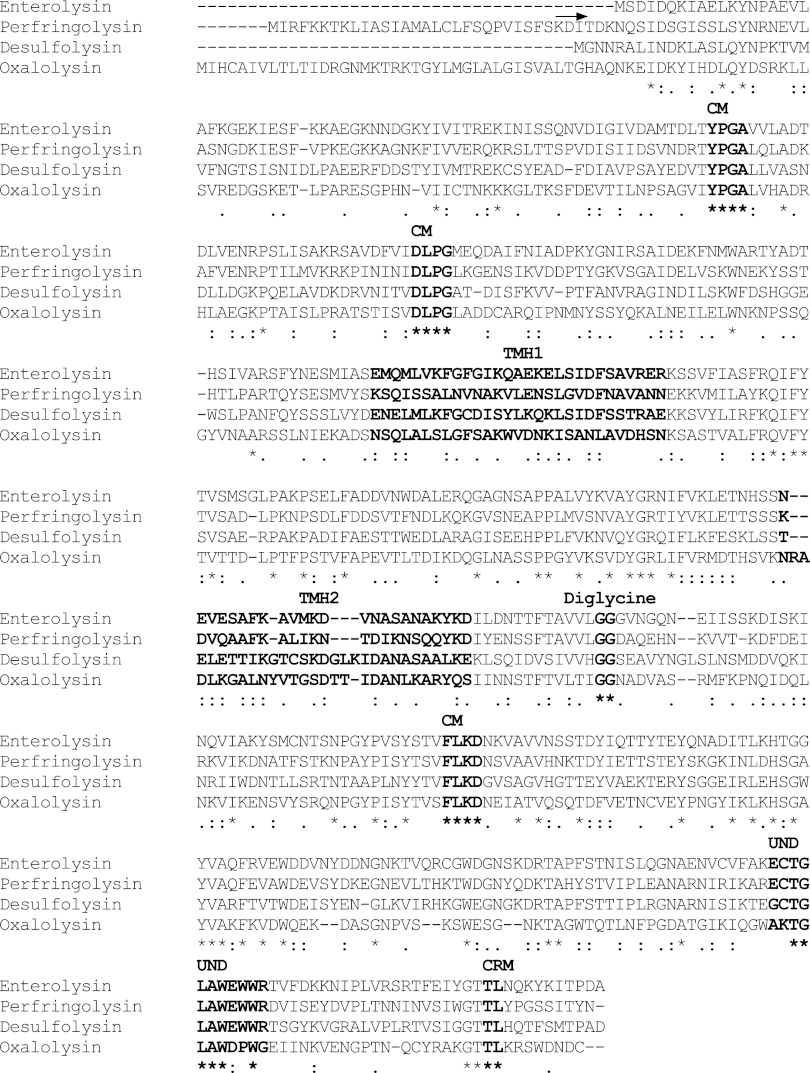
Fig 1
Fig 1
Primary structures of Gram-negative bacteria-derived CDCs. The primary structures of DLY, ELY, and OLY were compared with the primary structure of PFO. Homology comparison was carried out using Clustal X (49). The conserved undecapeptide (UND), cholesterol recognition motif (CRM), twin-glycine motif, and the transmembrane hairpins (TMH) are highlighted. Other conserved motifs (CM) are shown that are not associated with a specific CDC function but are highly conserved in the CDCs from Gram-positive bacteria. The arrow indicates the N terminus of the secreted PFO protein. Asterisk, conserved residues; colon, conservative substitutions.
Fig 2
Fig 2
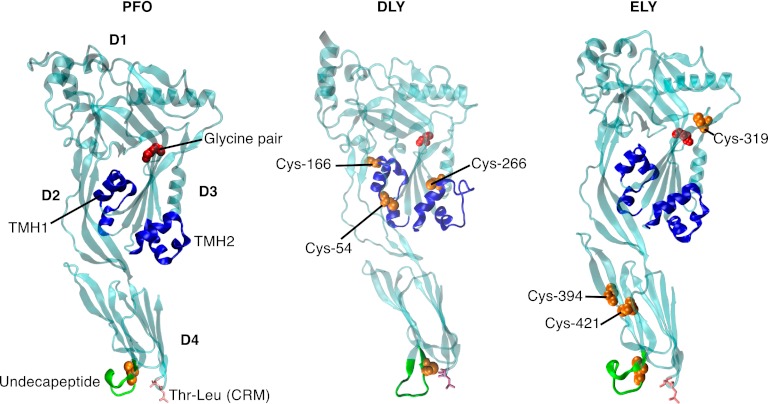
Molecular models of rDLY and rELY. Molecular models of the soluble monomers of DLY and ELY were generated using Swiss-Model (50) and the crystal structures of the Streptococcus intermedius CDC, intermedilysin (ILY) (18) and PFO (23) as templates, respectively. Shown are the locations of the conserved CDC motifs shown in Fig. 1 on the crystal structure of the PFO monomer (1PFO): undecapeptide, (green), CRM (magenta), diglycine motif (red, space-filled atoms), and the α-helical bundles that ultimately form the transmembrane β-hairpins (TMHs) (blue). The analogous motifs are color coded on the structural models of DLY and ELY. Also identified on the structures of DLY and ELY are the predicted locations of the cysteine residues (orange space-filled atoms) that are unique to ELY and DLY. D1-D4, domains 1 to 4.
Fig 3
Fig 3
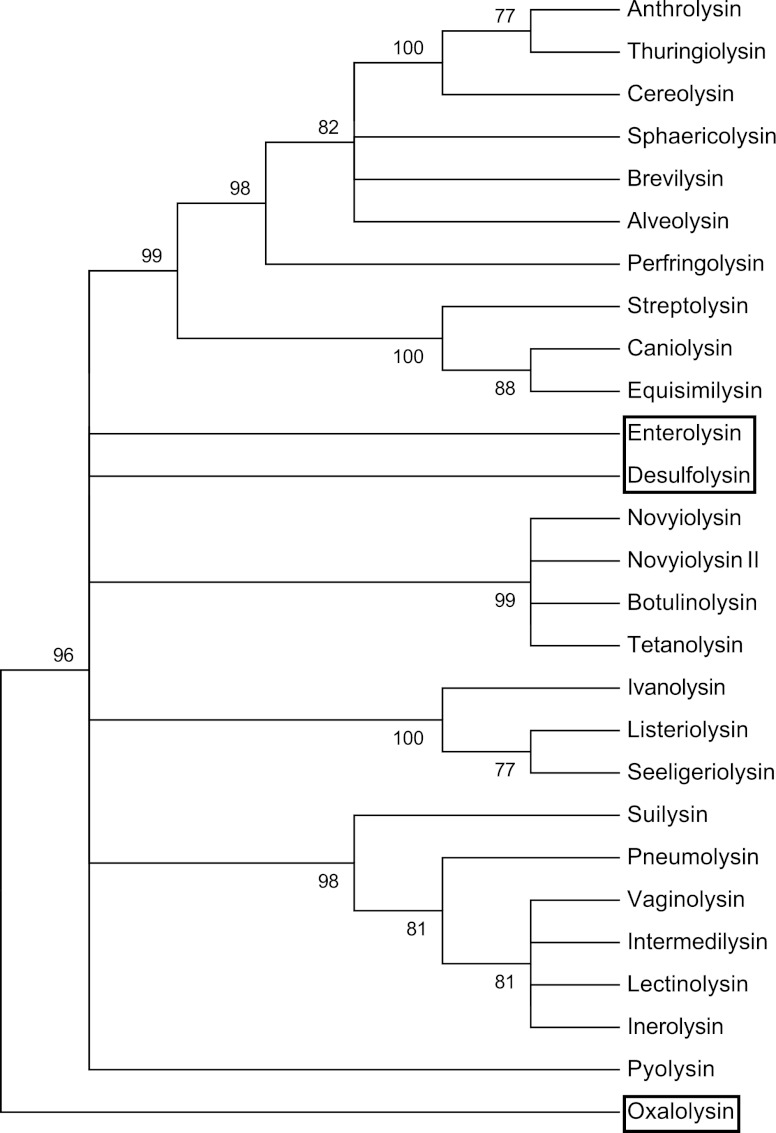
Maximum parsimony tree analysis of the CDCs. The evolutionary history of the CDC proteins was inferred using the maximum-parsimony (MP) method. Tree 1 out of 3 of the most parsimonious trees is shown. For parsimony-informative sites, the consistency index is 0.588558, the retention index is 0.648947, and the composite index is 0.381943. For all sites, the composite index is 0.386973. The percentages of replicate trees in which the associated taxa clustered together in the bootstrap test (500 replicates) are shown next to the branches (51). The MP tree was obtained using the close-neighbor interchange algorithm (52) with search level 1 in which the initial trees were obtained with the random addition of sequences (10 replicates). The analysis involved 27 amino acid sequences. All positions containing gaps and missing data were eliminated. There were a total of 432 positions in the final data set. Branches with bootstrap values of less than 75 were condensed. Evolutionary analyses were conducted in MEGA5 (53).
Fig 4
Fig 4
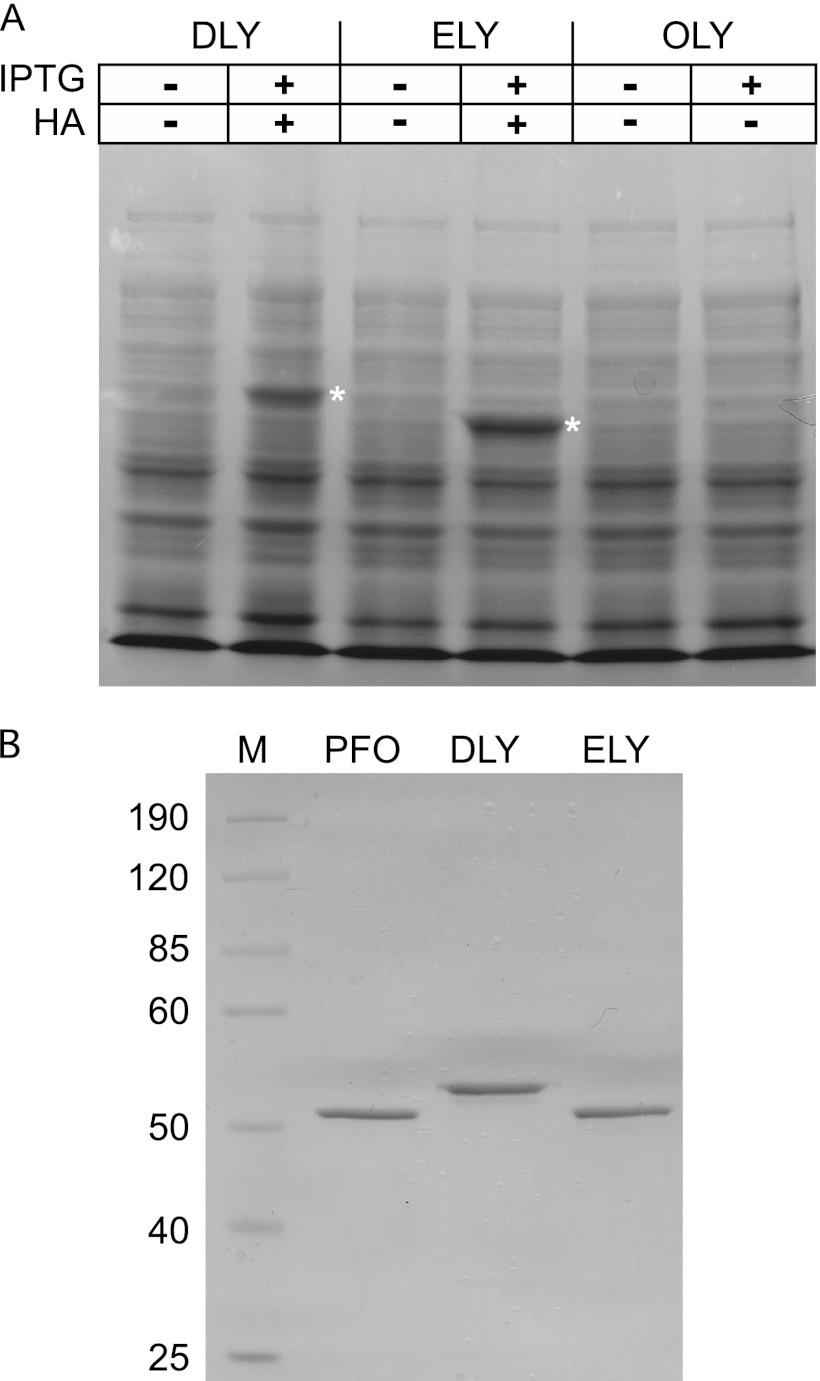
Expression of rDLY, rELY, and rOLY. (A) Whole-cell lysates of E. coli expressing the codon-optimized genes (+ IPTG) for the recombinant forms of DLY, ELY, and OLY. Detection of hemolytic activity (HA) was determined for the crude cell lysate. (B) SDS-PAGE analysis of purified recombinant DLY (lane 2) and ELY (lane 3) compared to purified PFO (lane 1). The proteins were separated on a 10% SDS-PAGE gel and visualized by Coomassie stain. Densitometry analysis using ImageJ software (54) was used to estimate the purity of the proteins (data not shown). Lane M, molecular mass markers (values at left in kDa). The white asterisks denote the positions of the rDLY and rELY protein bands that were overexpressed in the crude lysates.
Fig 5
Fig 5
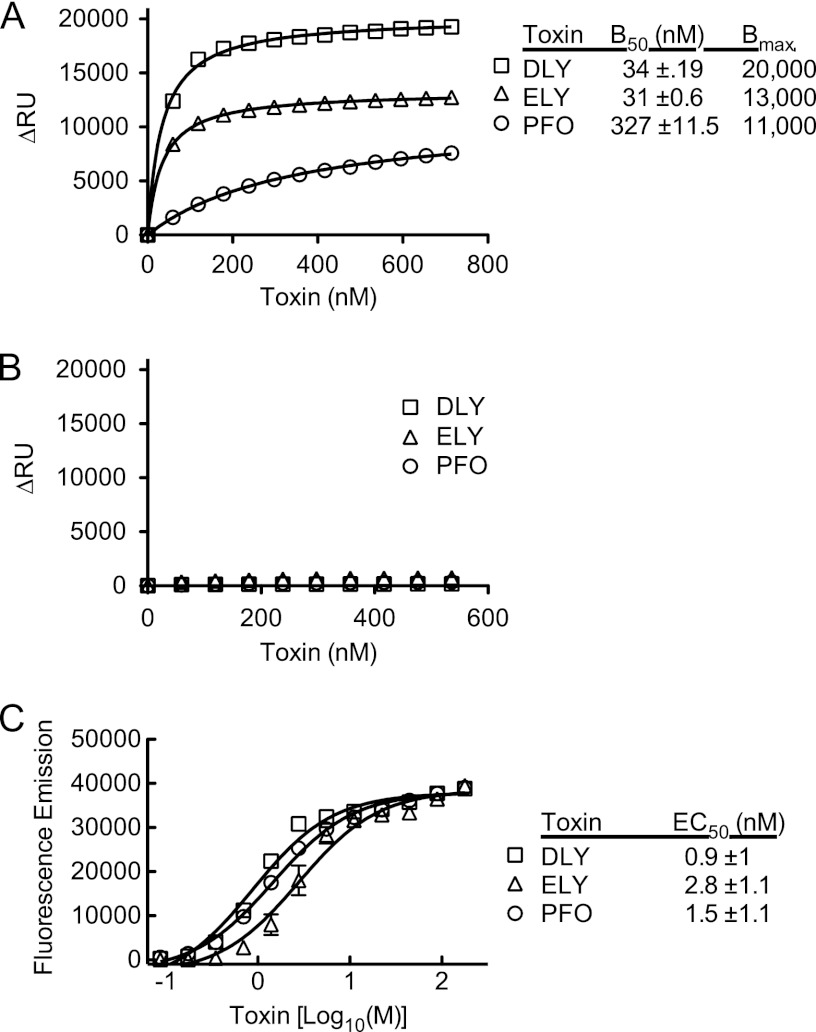
SPR analysis of cholesterol-dependent binding of rDLY and rELY. (A) SPR was used to analyze the binding of rDLY, rELY, and rPFO to an L1 chip loaded with cholesterol/POPC liposomes. (B) Binding to POPC-only liposomes. The binding to the cholesterol-POPC liposomes shown in panel A is the net binding obtained after the nonspecific binding to the POPC liposomes shown in panel B was subtracted. In panel C the EC50 (effective concentration of toxin required for 50% marker release from liposomes) for each toxin was determined for marker release from liposomes loaded with carboxyfluorescein.
Fig 6
Fig 6
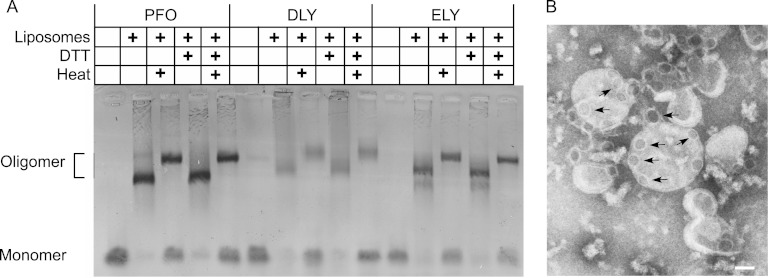
Membrane oligomer formation by rDLY and rELY. (A) Purified rPFO, rDLY, and rELY were incubated in the presence or absence of cholesterol-rich liposomes, and then the monomer and oligomer species were separated by SDS-AGE. Also shown is whether the sample was heated at 95°C (Heat). Shown is the Coomassie-stained gel. (B) Electron micrograph of rDLY oligomer. rDLY oligomers were formed on cholesterol-rich liposomes for 30 min at room temperature. The rDLY oligomers (examples of oligomeric pore complexes denoted by arrows) were imaged by electron microscopy. Magnification, ×100,000. Scale bar, 50 nm.
Fig 7
Fig 7
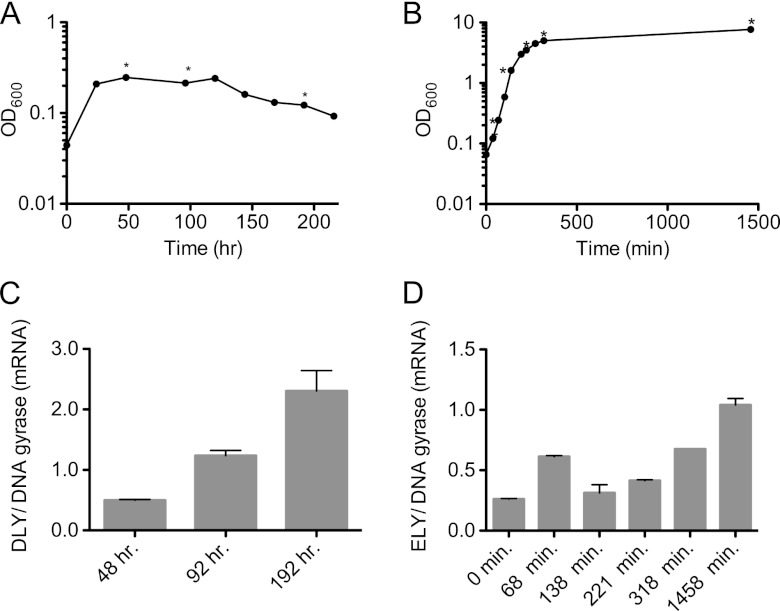
Expression of the ELY and DLY mRNAs. (A) Growth curve of D. propionicus (DSM 2032) that was grown in pure culture on pyruvate and sulfate medium. Graphed is the average OD at 600 nm (OD600) of 15 samples. Cultures were harvested in triplicate at the time points indicated with an asterisk (*). (C) The ratio of DLY mRNA to the mRNA for DNA gyrase is shown for 48 h, 92 h, and 192 h of growth. Panels B and D show data from experiments performed as described for panels A and C except that two cultures of E. lignolyticus SCF1 grown in Trypticase soy broth were used, and data reflect different time points, as indicated on the graphs.

References

    1. Hotze EM, Tweten RK. 2012. Membrane assembly of the cholesterol-dependent cytolysin pore complex. Biochim. Biophys. Acta 1818:1028–1038 - PMC - PubMed
    1. Madden JC, Ruiz N, Caparon M. 2001. Cytolysin-mediated translocation (CMT): a functional equivalent of type III secretion in Gram-positive bacteria. Cell 104:143–152 - PubMed
    1. Portnoy DA, Jacks PS, Hinrichs DJ. 1988. Role of hemolysin for the intracellular growth of Listeria monocytogenes. J. Exp. Med. 167:1459–1471 - PMC - PubMed
    1. O'Brien DK, Melville SB. 2004. Effects of Clostridium perfringens alpha-toxin (PLC) and perfringolysin O (PFO) on cytotoxicity to macrophages, on escape from the phagosomes of macrophages, and on persistence of C. perfringens in host tissues. Infect. Immun. 72:5204–5215 - PMC - PubMed
    1. Awad MM, Ellemor DM, Boyd RL, Emmins JJ, Rood JI. 2001. Synergistic effects of alpha-toxin and perfringolysin O in Clostridium perfringens-mediated gas gangrene. Infect. Immun. 69:7904–7910 - PMC - PubMed

Publication types

MeSH terms