


Copper signaling in the mammalian nervous system: synaptic effects
- PMID: 23115049
- PMCID: PMC3926505
- DOI: 10.1002/jnr.23143
Copper signaling in the mammalian nervous system: synaptic effects
Abstract
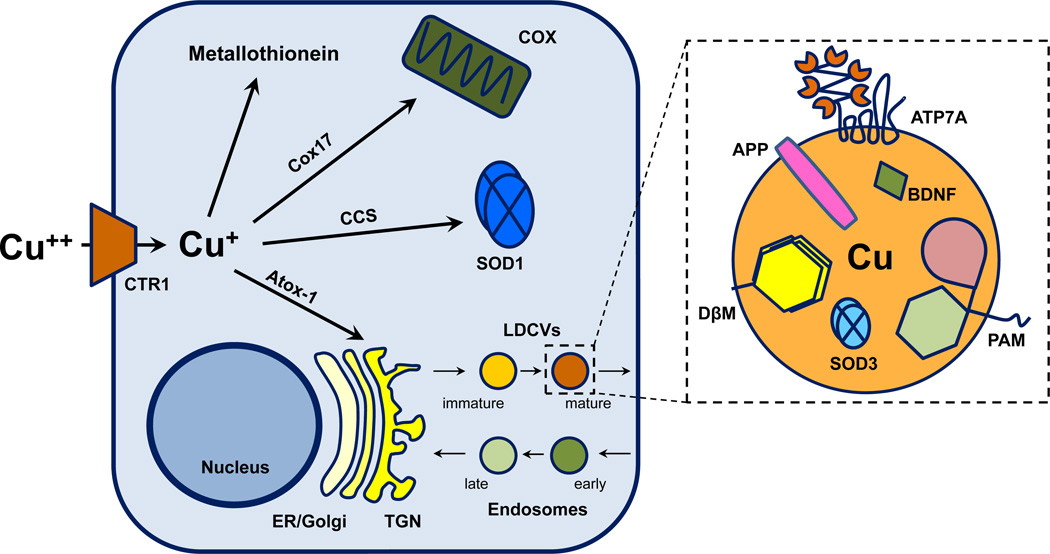
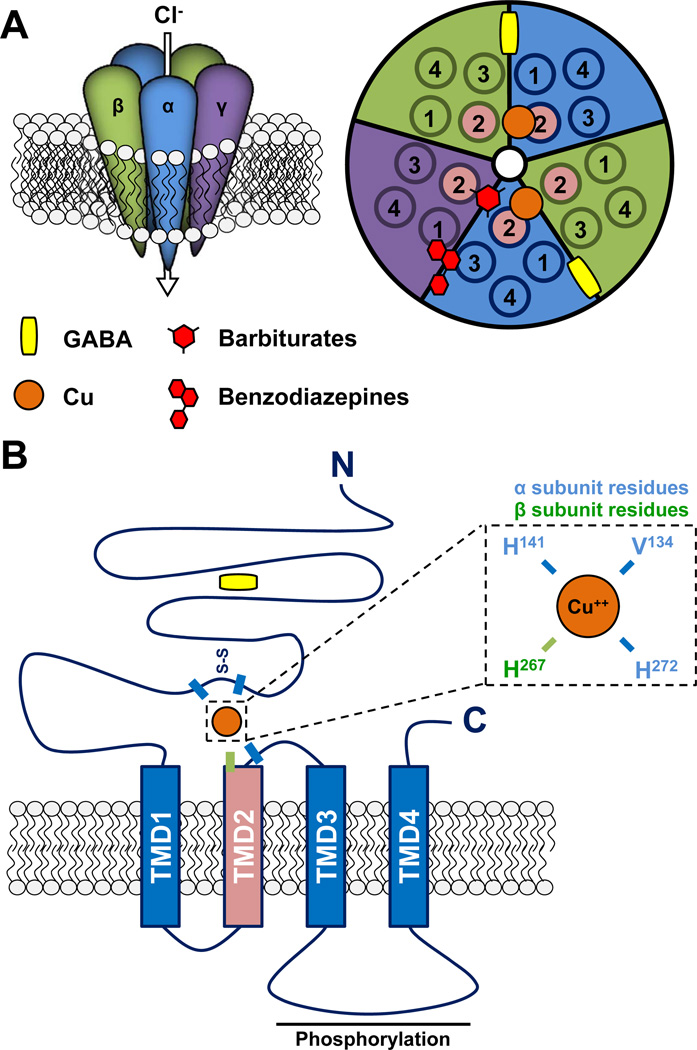
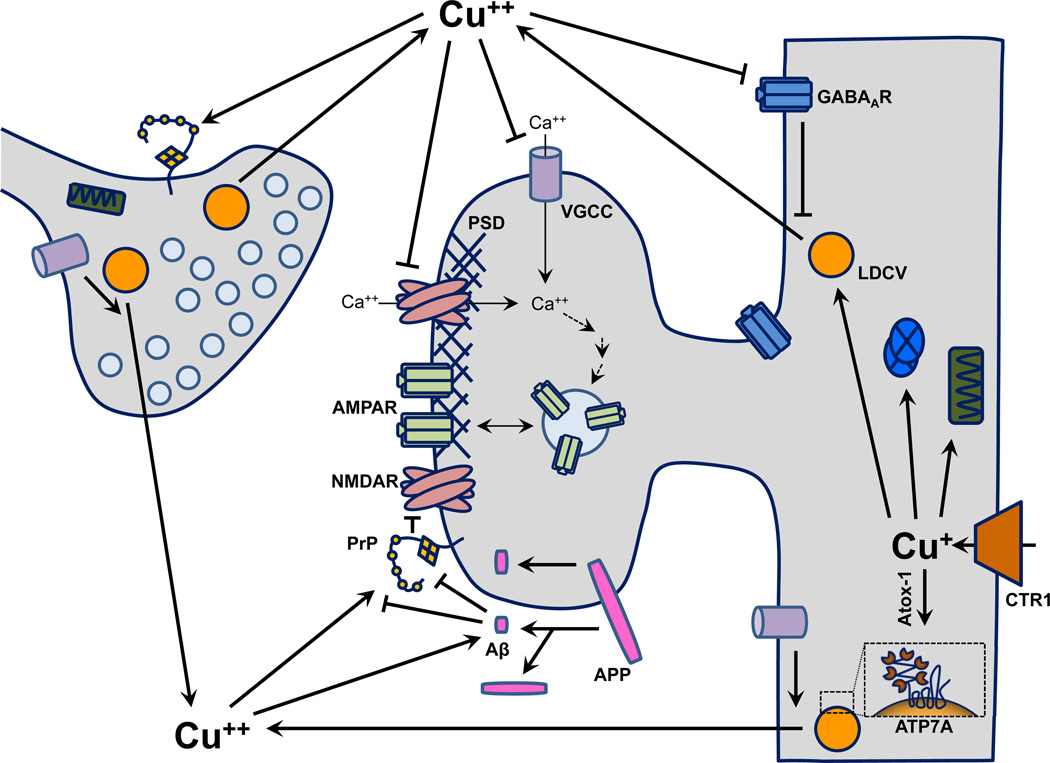
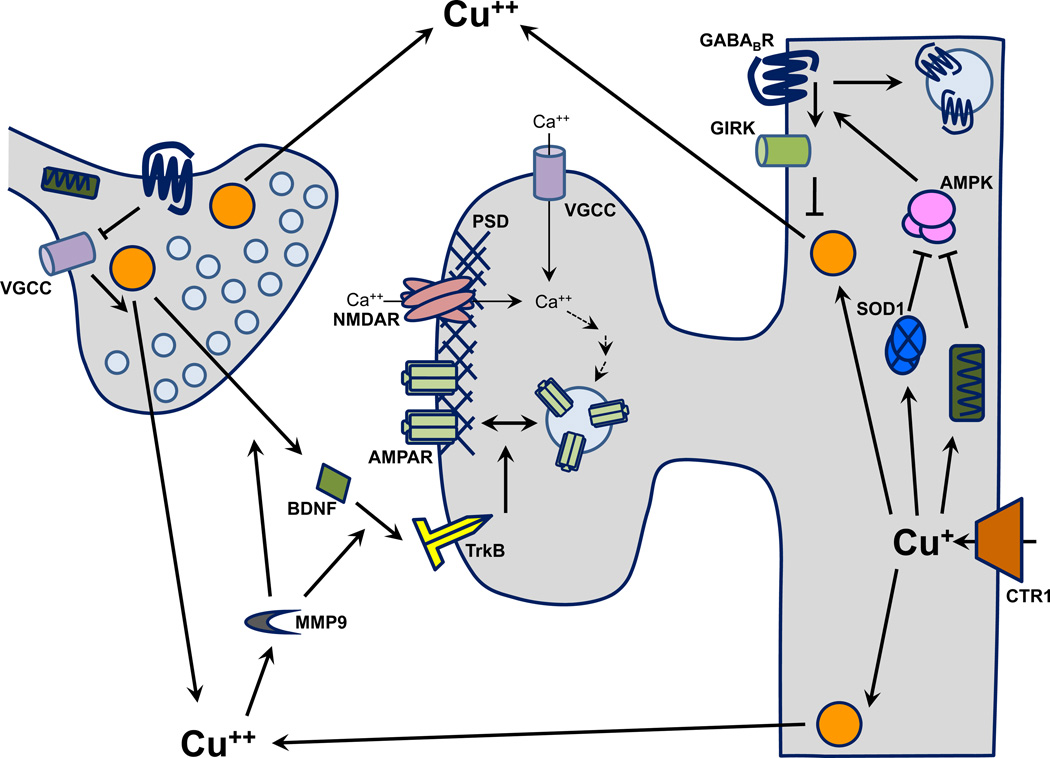
Copper is an essential metal present at high levels in the CNS. Its role as a cofactor in mitochondrial ATP production and in essential cuproenzymes is well defined. Menkes and Wilson's diseases are severe neurodegenerative conditions that demonstrate the importance of Cu transport into the secretory pathway. In the brain, intracellular levels of Cu, which is almost entirely protein bound, exceed extracellular levels by more than 100-fold. Cu stored in the secretory pathway is released in a Ca(2+)-dependent manner and can transiently reach concentrations over 100 μM at synapses. The ability of low micromolar levels of Cu to bind to and modulate the function of γ-aminobutyric acid type A (GABA(A)) receptors, N-methyl-D-aspartate (NMDA) receptors, and voltage-gated Ca(2+) channels contributes to its effects on synaptic transmission. Cu also binds to amyloid precursor protein and prion protein; both proteins are found at synapses and brain Cu homeostasis is disrupted in mice lacking either protein. Especially intriguing is the ability of Cu to affect AMP-activated protein kinase (AMPK), a monitor of cellular energy status. Despite this, few investigators have examined the direct effects of Cu on synaptic transmission and plasticity. Although the variability of results demonstrates complex influences of Cu that are highly method sensitive, these studies nevertheless strongly support important roles for endogenous Cu and new roles for Cu-binding proteins in synaptic function/plasticity and behavior. Further study of the many roles of Cu in nervous system function will reveal targets for intervention in other diseases in which Cu homeostasis is disrupted.
Copyright © 2012 Wiley Periodicals, Inc.
Figures
References
-
- Akil M, Brewer GJ. Psychiatric and behavioral abnormalities in Wilson's disease. Adv. Neurol. 1995;65:171–178. - PubMed
-
- Andreini C, Banci L, Bertini I, Rosato A. Occurrence of copper proteins through the three domains of life: a bioinformatic approach. J. Proteome. Res. 2008;7:209–216. - PubMed
-
- Attri S, Sharma N, Jahagirdar S, Thapa BR, Prasad R. Erythrocyte metabolism and antioxidant status of patients with Wilson disease with hemolytic anemia. Pediatr. Res. 2006;59:593–597. - PubMed
-
- Atwood CS, Scarpa RC, Huang X, Moir RD, Jones WD, Fairlie DP, Tanzi RE, Bush AI. Characterization of copper interactions with alzheimer amyloid beta peptides: identification of an attomolar-affinity copper binding site on amyloid beta1-42. J. Neurochem. 2000;75:1219–1233. - PubMed
Publication types
MeSH terms
Substances
Grants and funding
LinkOut - more resources
Full Text Sources
Miscellaneous
