Environmental contamination by carbapenem-resistant Enterobacteriaceae
- PMID: 23115260
- PMCID: PMC3536203
- DOI: 10.1128/JCM.01992-12
Environmental contamination by carbapenem-resistant Enterobacteriaceae
Abstract
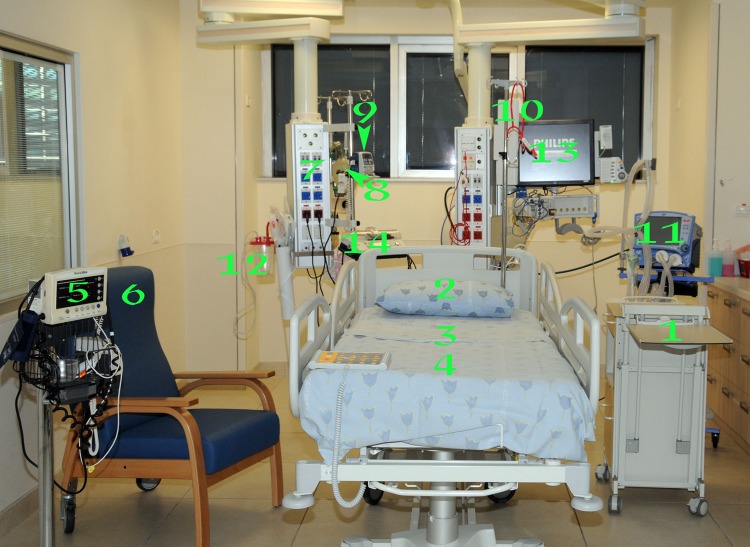
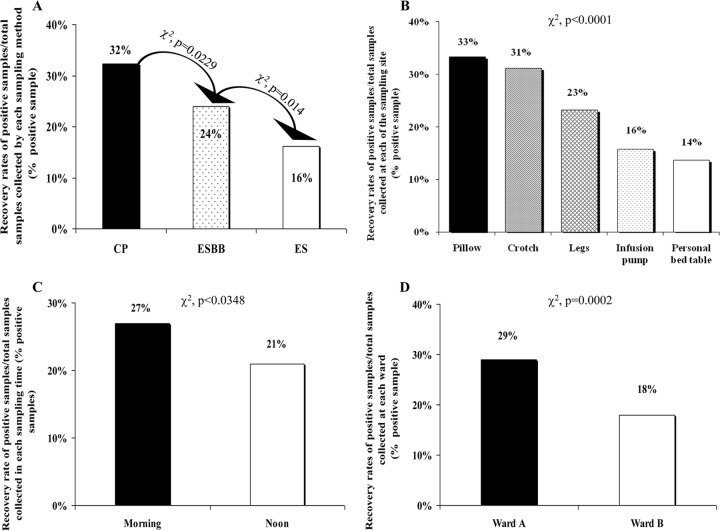
In the last decade, the global emergence of carbapenem resistance in Enterobacteriaceae has posed great concern to public health. Data concerning the role of environmental contamination in the dissemination of carbapenem-resistant Enterobacteriaceae (CRE) are currently lacking. Here, we aimed to examine the extent of CRE contamination in various sites in the immediate surroundings of CRE carriers and to assess the effects of sampling time and cleaning regimens on the recovery rate. We evaluated the performance of two sampling methods, CHROMAgar KPC contact plate and eSwab, for the detection of environmental CRE. eSwab was followed either by direct plating or by broth enrichment. First, 14 sites in the close vicinity of the carrier were evaluated for environmental contamination, and 5, which were found to be contaminated, were further studied. The environmental contamination decreased with distance from the patient; the bed area was the most contaminated site. Additionally, we found that the sampling time and the cleaning regimen were critical factors affecting the prevalence of environmental CRE contamination. We found that the CHROMAgar KPC contact plate method was a more effective technique for detecting environmental CRE than were eSwab-based methods. In summary, our study demonstrated that the vicinity of patients colonized with CRE is often contaminated by these organisms. Using selective contact plates to detect environmental contamination may guide cleaning efficacy and assist with outbreak investigation in an effort to limit the spread of CRE.
Figures
References
-
- Bilavsky E, Schwaber MJ, Carmeli Y. 2010. How to stem the tide of carbapenemase-producing enterobacteriaceae?: proactive versus reactive strategies. Curr. Opin. Infect. Dis. 23:327–331 - PubMed
-
- Nordmann P, Cuzon G, Naas T. 2009. The real threat of Klebsiella pneumoniae carbapenemase-producing bacteria. Lancet Infect. Dis. 9:228–236 - PubMed
-
- Schwaber MJ, Carmeli Y. 2008. Carbapenem-resistant Enterobacteriaceae: a potential threat. JAMA 300:2911–2913 - PubMed
-
- Schwaber MJ, Lev B, Israeli A, Solter E, Smollan G, Rubinovitch B, Shalit I, Carmeli Y, Israel Carbapenem-Resistant Enterobacteriaceae Working Group 2011. Containment of a country-wide outbreak of carbapenem-resistant Klebsiella pneumoniae in Israeli hospitals via a nationally implemented intervention. Clin. Infect. Dis. 52:848–855 - PubMed
-
- de Oliveira AC, Damasceno QS. 2010. Surfaces of the hospital environment as possible deposits of resistant bacteria: a review. Rev. Esc. Enferm. USP 44:1118–1123 - PubMed
Publication types
MeSH terms
Substances
LinkOut - more resources
Full Text Sources
Medical