


Non-specific abdominal pain and air pollution: a novel association
- PMID: 23118887
- PMCID: PMC3485276
- DOI: 10.1371/journal.pone.0047669
Non-specific abdominal pain and air pollution: a novel association
Abstract
Background: We studied whether short-term exposure to air pollution was associated with non-specific abdominal pain in epidemiologic and animal studies.
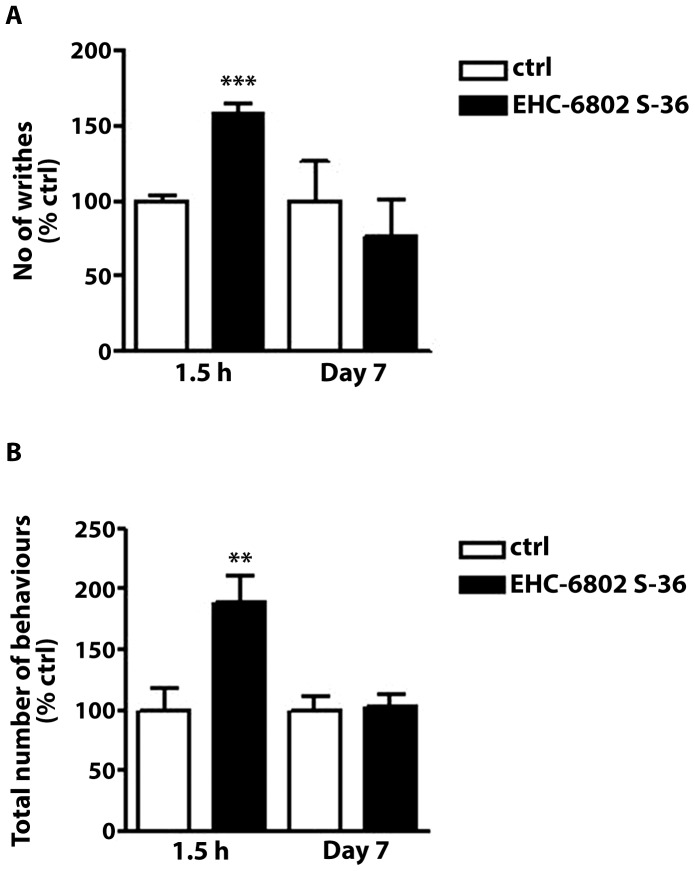
Methods: Patients visiting the emergency department with non-specific abdominal pain were identified in Edmonton (1992 to 2002, n = 95,173) and Montreal (1997 to 2002, n = 25,852). We calculated the daily concentrations for ozone (O(3)), nitrogen dioxide (NO(2)), sulfur dioxide (SO(2)), carbon monoxide (CO), and particles <10 (PM(10)) or <2.5 (PM(2.5)) µm. A case crossover study design was used to estimate the odds ratio (OR) and 95% confidence interval (CI) associated with an increase in the interquartile range of the air pollutants. We investigated differential effects by age and sex. Mice were gavaged with urban particle extracts. In animal models, colonic motility was tested, and visceral abdominal pain was measured using a writhing test, and behavioral response to oil of mustard and neostigmine. Motility and pain was measured acutely (1.5 hours after gavage) and chronically (7-days and 21-days after gavage).
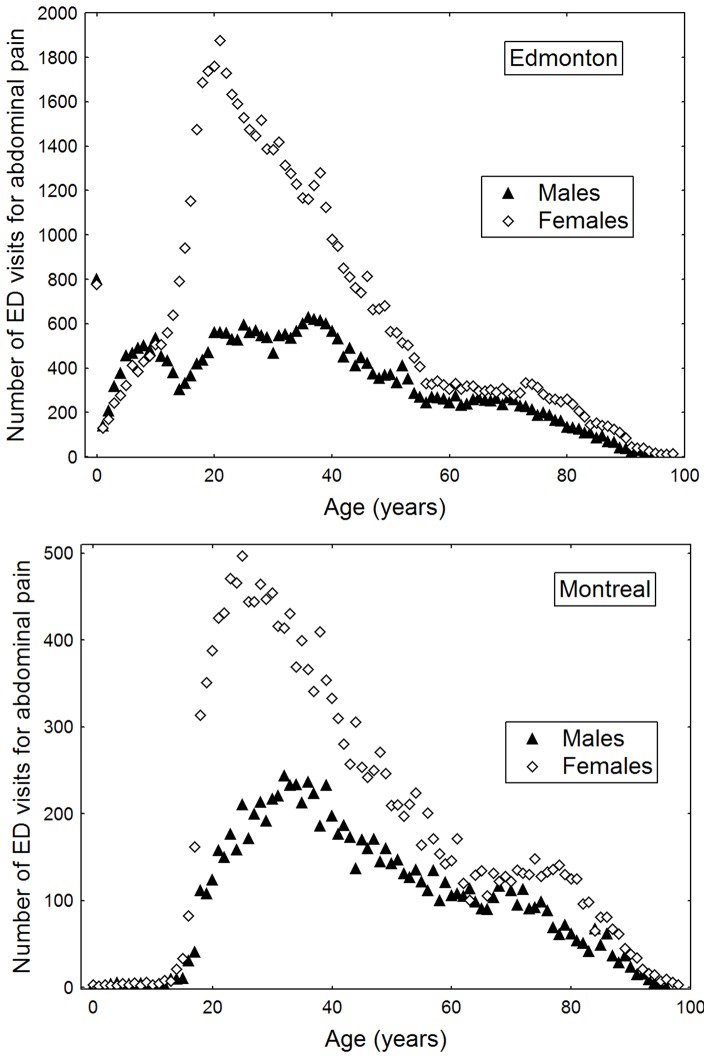
Results: Emergency department visits for non-specific abdominal pain were primarily by women between the ages of 15-24 years. Individuals aged 15 to 24 years were at increased risk of non-specific abdominal pain in Edmonton (same day CO: OR = 1.04, 95% CI = 1.02-1.06; and NO(2): OR = 1.06, 95% CI = 1.03-1.09). The risk of air pollution among 15-24 year olds in Montreal was significantly positive (same day CO: OR = 1.11, 95% CI = 1.05-1.17; NO(2): OR = 1.09, 95% CI = 1.01-1.16; SO(2): OR = 1.17, 95% CI = 1.10-1.25; PM(2.5): OR = 1.09, 95% CI = 1.04-1.15). Abdominal pain was increased by an acute gavage of pollution extract but not to chronic exposure to pollutants. Colonic transit was delayed following chronic but not acute exposure with the pollutants.
Conclusions: Epidemiological and animal data suggest that short-term exposure to air pollution may trigger non-specific abdominal pain in young individuals.
Conflict of interest statement
Figures

References
-
- Nawar EW, Niska RW, Xu J (2007) National Hospital Ambulatory Medical Care Survey: 2005 emergency department summary. Adv Data 1–32. - PubMed
-
- Jess P, Bjerregaard B, Brynitz S, Holst-Christensen J, Kalaja E, et al. (1982) Prognosis of acute nonspecific abdominal pain. A prospective study. Am J Surg 144: 338–340. - PubMed
-
- O'Byrne JM, Dempsey CB, O'Malley MK, O'Connell FX (1991) Non-specific abdominal pain in pre-menopausal women. Ir J Med Sci 160: 344–346. - PubMed
-
- Lukens TW, Emerman C, Effron D (1993) The natural history and clinical findings in undifferentiated abdominal pain. Ann Emerg Med 22: 690–696. - PubMed
Publication types
MeSH terms
Substances
LinkOut - more resources
Full Text Sources
Medical
