Clinical Trial
. 2012;7(10):e48322.
doi: 10.1371/journal.pone.0048322. Epub 2012 Oct 31.

A T cell-inducing influenza vaccine for the elderly: safety and immunogenicity of MVA-NP+M1 in adults aged over 50 years

Affiliations
Clinical Trial

A T cell-inducing influenza vaccine for the elderly: safety and immunogenicity of MVA-NP+M1 in adults aged over 50 years

Richard D Antrobus et al. PLoS One. 2012.

Abstract

Background: Current influenza vaccines have reduced immunogenicity and are of uncertain efficacy in older adults. We assessed the safety and immunogenicity of MVA-NP+M1, a viral-vectored influenza vaccine designed to boost memory T cell responses, in a group of older adults.

Methods: Thirty volunteers (aged 50-85) received a single intramuscular injection of MVA-NP+M1 at a dose of 1·5×10(8) plaque forming units (pfu). Safety and immunogenicity were assessed over a period of one year. The frequency of T cells specific for nucleoprotein (NP) and matrix protein 1 (M1) was determined by interferon-gamma (IFN-γ) ELISpot, and their phenotypic and functional properties were characterized by polychromatic flow cytometry. In a subset of M1-specific CD8(+) T cells, T cell receptor (TCR) gene expression was evaluated using an unbiased molecular approach.

Results: Vaccination with MVA-NP+M1 was well tolerated. ELISpot responses were boosted significantly above baseline following vaccination. Increases were detected in both CD4(+) and CD8(+) T cell subsets. Clonality studies indicated that MVA-NP+M1 expanded pre-existing memory CD8(+) T cells, which displayed a predominant CD27(+)CD45RO(+)CD57(-)CCR7(-) phenotype both before and after vaccination.

Conclusions: MVA-NP+M1 is safe and immunogenic in older adults. Unlike seasonal influenza vaccination, the immune responses generated by MVA-NP+M1 are similar between younger and older individuals. A T cell-inducing vaccine such as MVA-NP+M1 may therefore provide a way to circumvent the immunosenescence that impairs routine influenza vaccination.

Trial registration: ClinicalTrials.gov NCT00942071.


Conflict of interest statement

Competing Interests: SCG and AVSH are named as inventors on patents relating to methods of vaccination, including influenza vaccines: Methods and reagents for vaccination which generate a CD8+ T cell response. 1997 06 07. United States Patent Application 20110159034. Compositions and methods 2007 10 05. United States Patent Application 20100285050. All other authors have declared that no competing interests exist. This does not alter the authors' adherence to all the PLoS ONE policies on sharing data and materials.

Figures

Figure 1
Figure 1. CONSORT flow diagram of the trial.
Figure 2
Figure 2. Frequency of local and systemic adverse events that were possibly, probably or definitely related to vaccination.
(A) Volunteers aged 50+ (n = 30). (B) Volunteers aged 18–45 (n = 15). For both age groups pain was the most frequently recorded local adverse event followed by erythema. A similar pattern of systemic adverse events was observed in both age groups with the majority of solicited adverse events occurring in 20–60% of individuals. For volunteers aged 18–45, 85% of adverse events were mild; for volunteers aged 50+, 87% of adverse events were mild.
Figure 3
Figure 3. Ex vivo IFN-γ ELISpot responses to the vaccine insert.
(A) Median and individual ex vivo IFN-γ ELISpot responses from vaccinated volunteers at baseline (week 0), and weeks 1, 3, 8, 12, 24, and 52. Significant differences between the pre- and post-vaccination time points were detected using the Wilcoxon signed rank test: week 1 (p = 0·0001), week 3 (p = 0·0001), week 8 (p = 0·0001), and week 12 (p = 0·001). (B) Median ex vivo IFN-γ ELISpot responses to the NP+M1 insert stratified according to age: black bars  =  group 1 (50–59 years), white bars  =  group 2 (60–69 years), and grey bars  =  group 3 (70+ years). Error bars indicate interquartile ranges. Significant differences between the pre- and post-vaccination time points were detected using the Wilcoxon signed rank test as follows. Group 1: week 1 (p = 0·002), week 3 (p = 0·002), week 8 (p = 0·002), week 12 (p = 0·039), week 24 (p = 0·002), and week 52 (p = 0·0039). Group 2: week 1 (p = 0·002), week 3 (p = 0·002), week 8 (p = 0·002), and week 12 (p = 0·0371). Group 3: week 1 (p = 0·0039) and week 3 (p = 0·0195). Significant differences were also detected between groups using the Mann-Whitney U-test, with responses in group 1 being higher than those in group 3 at week 3 (p = 0·043) and week 8 (p = 0·023). (C) Median and individual ex vivo IFN-γ ELISpot responses at week 1 and week 3 stratified according to age, and including a vaccinated cohort of younger (18–45 years) volunteers.
Figure 4
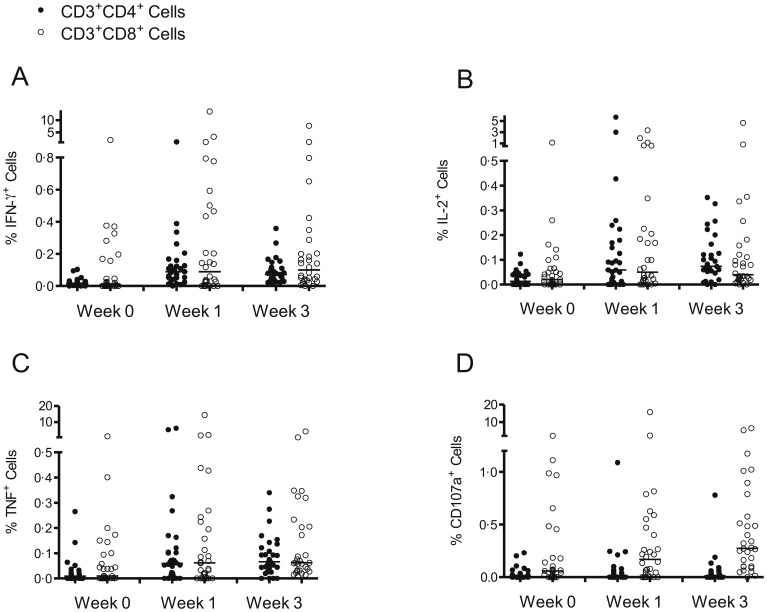
Figure 4. IFN-γ, IL-2, TNF and CD107a responses to the vaccine insert measured by flow cytometry.
Production of IFN-γ (A), IL-2 (B) and TNF (C), and mobilization of CD107a (D), after background subtraction in CD3+CD4+ (black circles) and CD3+CD8+ (white circles) cell populations stimulated with a single pool of peptides spanning the complete NP+M1 vaccine insert. Volunteers in group 3 were tested at weeks 0, 1, and 3. Significant differences between pre- and post-vaccination time points were detected using the Wilcoxon signed rank test as follows: IFN-γ CD4+, week 1 (p = 0·0001) and week 3 (p = 0·0001); IFN-γ CD8+, week 1 (p = 0·001) and week 3 (p = 0·0005); IL-2 CD4+, week 1 (p = 0.001) and week 3 (p = 0·0001); IL-2 CD8+, week 1 (p = 0·006) and week 3 (p = 0·03); TNF CD4+, week 1 (p = 0·002) and week 3 (p = 0·0003); TNF CD8+, week 1 (p = 0·0003) and week 3 (p = 0·002); CD107a CD8+, week 3 (p = 0·004).
Figure 5
Figure 5. Functional profile of T cell responses to the vaccine insert measured by flow cytometry.
Mobilization of CD107a and production of IFN-γ, IL-2 and TNF after background subtraction in CD3+CD4+ (A) and CD3+CD8+ (B) cell populations stimulated with a single pool of peptides spanning the complete NP+M1 vaccine insert. Median percentages of quadruple (black), triple (dark grey), double (light grey) and single (white) functional cells are shown.
Figure 6
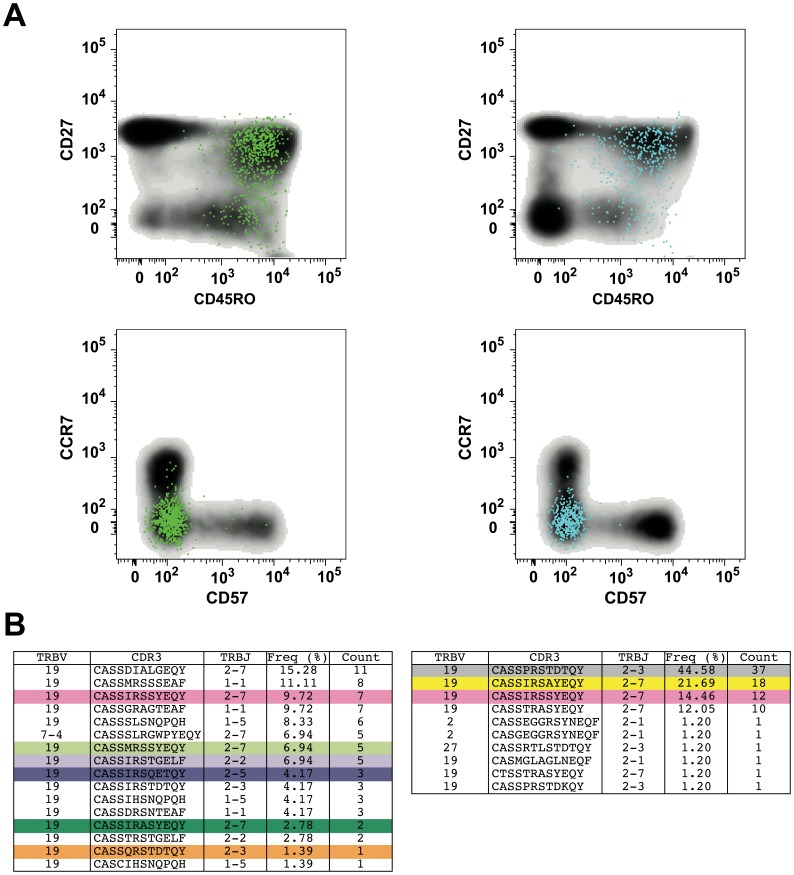
Figure 6. Phenotypic and clonotypic properties of M1-specific CD8+ T cells elicited by MVA-NP+M1.
(A) Phenotype of vaccine-elicited CD8+ T cells specific for the HLA A*0201-restricted M1-derived epitope GILGFVFTL (residues 58–66). Antigen-specific CD3+CD8+tetramer+ cells are shown as coloured dots superimposed on bivariate plots showing the phenotypic distribution of the total CD8+ T cell population (grey density plots). Response sizes were 1·48% (left panels) and 0·75% (right panels) with respect to the total CD8+ T cell population. (B) TRBV and TRBJ usage, CDR3 amino acid sequence and relative frequency of the GILGFVFTL-specific CD8+ T cell clonotypes contained within the antigen-specific populations depicted in (A). Public clonotypes within the present dataset are colour-coded. Representative analyses are shown for volunteers in group 3 (70+ years).
Figure 7
Figure 7. Patterns of clonotype usage in M1-specific CD8+ T cell populations before and after vaccination with MVA-NP+M1.
TRBV and TRBJ usage, CDR3 amino acid sequence and relative frequency are shown for GILGFVFTL-specific CD8+ T cell clonotypes on day 0 (pre-vaccination) and day 7 (post-vaccination). Public clonotypes within the present dataset are colour-coded. Non-public clonotypes present at both time points within an individual are highlighted in bold type.

References

    1. Hardelid P, Pebody R, Andrews N (2012) Mortality caused by influenza and respiratory syncytial virus by age group in England and Wales 1999–2010. Influenza Other Respi Viruses. - PMC - PubMed
    1. Simonsen L, Taylor RJ, Viboud C, Miller MA, Jackson LA (2007) Mortality benefits of influenza vaccination in elderly people: an ongoing controversy. Lancet Infect Dis 7: 658–666. - PubMed
    1. Nicholson KG, Wood JM, Zambon M (2003) Influenza. Lancet 362: 1733–1745. - PMC - PubMed
    1. Goodwin K, Viboud C, Simonsen L (2006) Antibody response to influenza vaccination in the elderly: a quantitative review. Vaccine 24: 1159–1169. - PubMed
    1. Osterholm MT, Kelley NS, Sommer A, Belongia EA (2012) Efficacy and effectiveness of influenza vaccines: a systematic review and meta-analysis. Lancet Infect Dis 12: 36–44. - PubMed

Publication types

MeSH terms

Associated data