


Increased expression of fatty acid binding protein 4 and leptin in resident macrophages characterises atherosclerotic plaque rupture
- PMID: 23122912
- PMCID: PMC3566542
- DOI: 10.1016/j.atherosclerosis.2012.09.037
Increased expression of fatty acid binding protein 4 and leptin in resident macrophages characterises atherosclerotic plaque rupture
Abstract
Objective: Resident macrophages play an important role in atheromatous plaque rupture. The macrophage gene expression signature associated with plaque rupture is incompletely defined due to the complex cellular heterogeneity in the plaque. We aimed to characterise differential gene expression in resident plaque macrophages from ruptured and stable human atheromatous lesions.
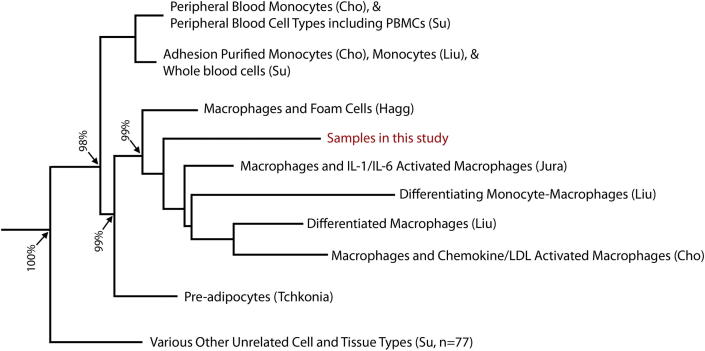
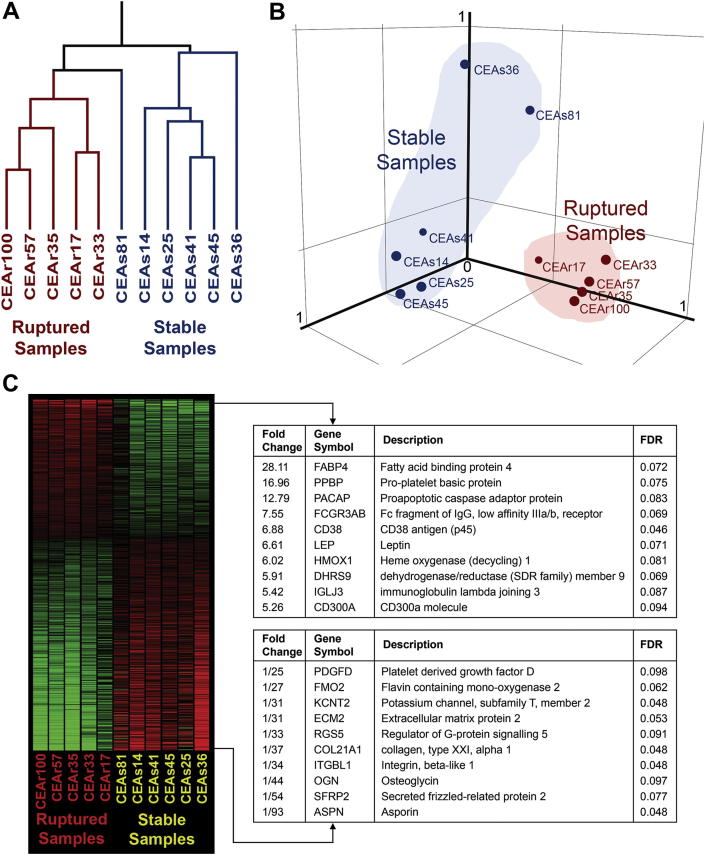
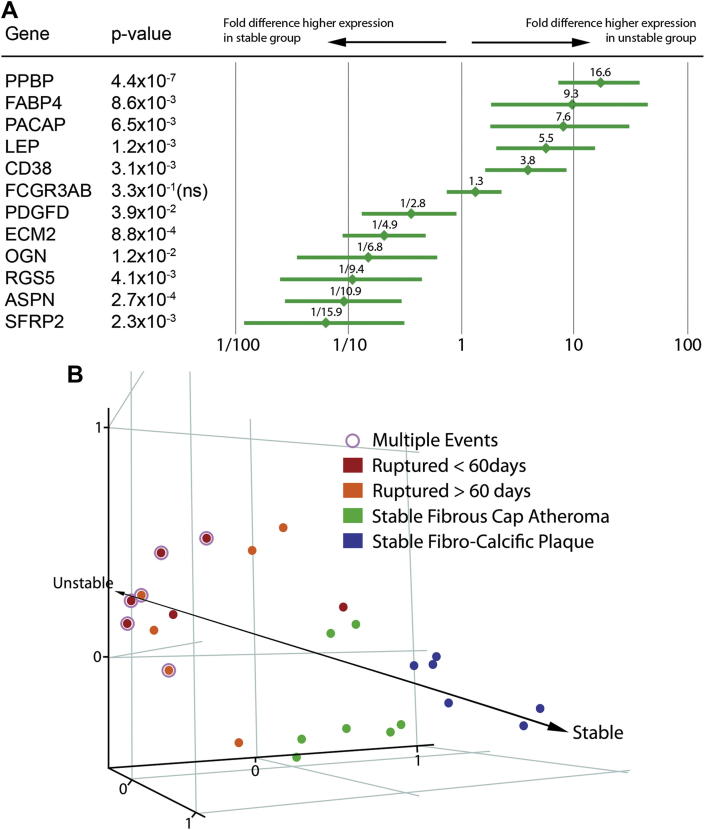
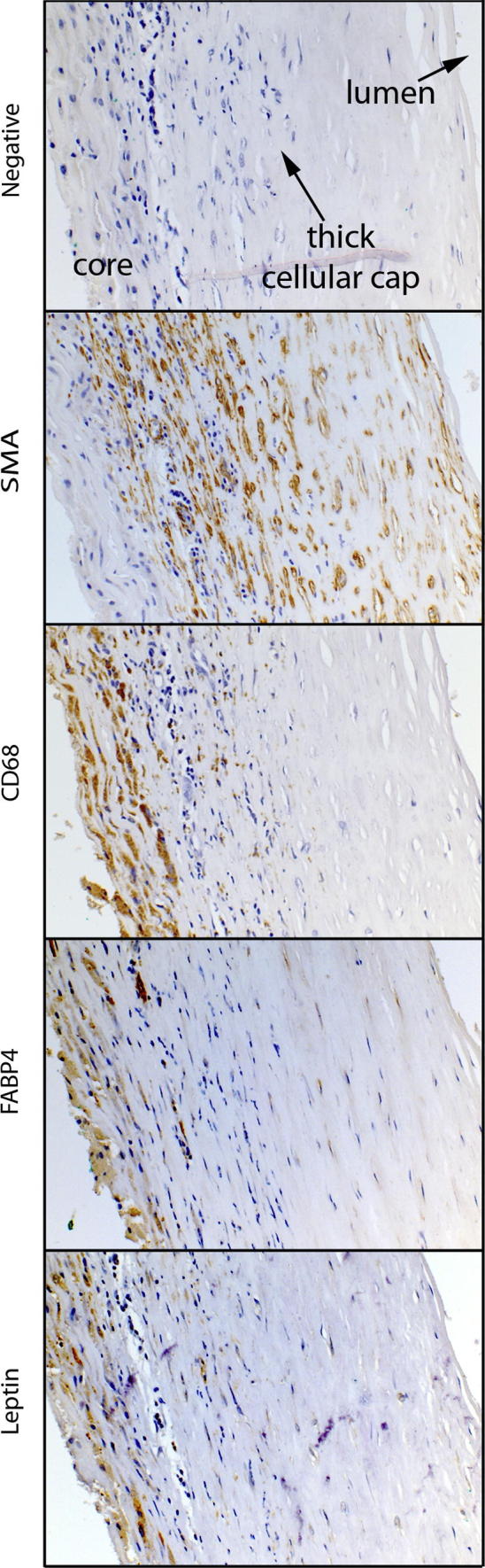
Methods and results: We performed genome-wide expression analyses of isolated macrophage-rich regions of stable and ruptured human atherosclerotic plaques. Plaques present in carotid endarterectomy specimens were designated as stable or ruptured using clinical, radiological and histopathological criteria. Macrophage-rich regions were excised from 5 ruptured and 6 stable plaques by laser micro-dissection. Transcriptional profiling was performed using Affymetrix microarrays. The profiles were characteristic of activated macrophages. At a false discovery rate of 10%, 914 genes were differentially expressed between stable and ruptured plaques. The findings were confirmed in fourteen further stable and ruptured samples for a subset of eleven genes with the highest expression differences (p < 0.05). Pathway analysis revealed that components of the PPAR/Adipocytokine signaling pathway were the most significantly upregulated in ruptured compared to stable plaques (p = 5.4 × 10(-7)). Two key components of the pathway, fatty-acid binding-protein 4 (FABP4) and leptin, showed nine-fold (p = 0.0086) and five-fold (p = 0.0012) greater expression respectively in macrophages from ruptured plaques.
Conclusions: We found differences in gene expression signatures between macrophages isolated from stable and ruptured human atheromatous plaques. Our findings indicate the involvement of FABP4 and leptin in the progression of atherosclerosis and plaque rupture, and suggest that down-regulation of PPAR/adipocytokine signaling within plaques may have therapeutic potential.
Copyright © 2012 Elsevier Ireland Ltd. All rights reserved.
Figures
References
-
- Virmani R., Kolodgie F.D., Burke A.P., Farb A., Schwartz S.M. Lessons from sudden coronary death: a comprehensive morphological classification scheme for atherosclerotic lesions. Arteriosclerosis, Thrombosis, and Vascular Biology. 2000 May;20(5):1262–1275. - PubMed
-
- Bijnens A.P., Lutgens E., Ayoubi T., Kuiper J., Horrevoets A.J., Daemen M.J. Genome-wide expression studies of atherosclerosis: critical issues in methodology, analysis, interpretation of transcriptomics data. Arteriosclerosis, Thrombosis, and Vascular Biology. 2006 Jun.;26(6):1226–1235. - PubMed
-
- Di Taranto M.D., Morgante A., Bracale U.M. Altered expression of inflammation-related genes in human carotid atherosclerotic plaques. Atherosclerosis. 2012 Jan.;220(1):93–101. - PubMed
-
- Faber B.C., Cleutjens K.B., Niessen R.L. Identification of genes potentially involved in rupture of human atherosclerotic plaques. Circulation Research. 2001 Sep. 14;89(6):547–554. - PubMed
-
- Randi A.M., Biguzzi E., Falciani F. Identification of differentially expressed genes in coronary atherosclerotic plaques from patients with stable or unstable angina by cDNA array analysis. Journal of Thrombosis and Haemostasis. 2003 Apr.;1(4):829–835. - PubMed
Publication types
MeSH terms
Substances
Grants and funding
LinkOut - more resources
Full Text Sources
Other Literature Sources
Molecular Biology Databases
Research Materials
