Primordial germ cells in mice
- PMID: 23125014
- PMCID: PMC3536339
- DOI: 10.1101/cshperspect.a008375
Primordial germ cells in mice
Abstract
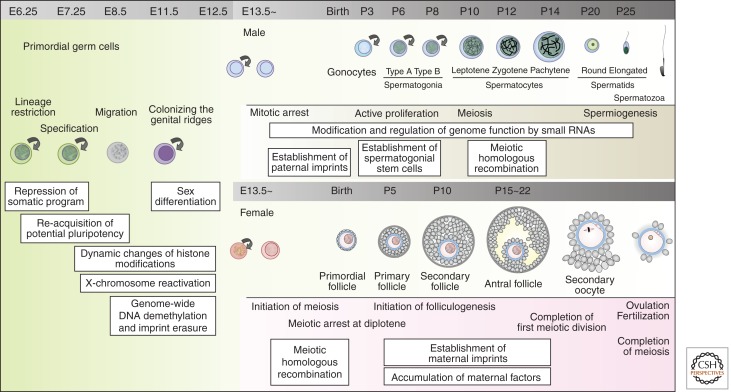
Germ cell development creates totipotency through genetic as well as epigenetic regulation of the genome function. Primordial germ cells (PGCs) are the first germ cell population established during development and are immediate precursors for both the oocytes and spermatogonia. We here summarize recent findings regarding the mechanism of PGC development in mice. We focus on the transcriptional and signaling mechanism for PGC specification, potential pluripotency, and epigenetic reprogramming in PGCs and strategies for the reconstitution of germ cell development using pluripotent stem cells in culture. Continued studies on germ cell development may lead to the generation of totipotency in vitro, which should have a profound influence on biological science as well as on medicine.
Figures


References
-
- Abe K, Naruse C, Kato T, Nishiuchi T, Saitou M, Asano M 2011. Loss of heterochromatin protein 1γ reduces the number of primordial germ cells via impaired cell cycle progression in mice. Biol Reprod 85: 1013–1024 - PubMed
-
- Ancelin K, Lange UC, Hajkova P, Schneider R, Bannister AJ, Kouzarides T, Surani MA 2006. Blimp1 associates with Prmt5 and directs histone arginine methylation in mouse germ cells. Nat Cell Biol 8: 623–630 - PubMed
-
- Anderson R, Fassler R, Georges-Labouesse E, Hynes RO, Bader BL, Kreidberg JA, Schaible K, Heasman J, Wylie C 1999. Mouse primordial germ cells lacking β1 integrins enter the germline but fail to migrate normally to the gonads. Development 126: 1655–1664 - PubMed
Publication types
MeSH terms
LinkOut - more resources
Full Text Sources
Other Literature Sources