


Detection of disseminated tumor cells in the bone marrow of breast cancer patients using multiplex gene expression measurements identifies new therapeutic targets in patients at high risk for the development of metastatic disease
- PMID: 23129172
- PMCID: PMC4920139
- DOI: 10.1007/s10549-012-2279-y
Detection of disseminated tumor cells in the bone marrow of breast cancer patients using multiplex gene expression measurements identifies new therapeutic targets in patients at high risk for the development of metastatic disease
Abstract
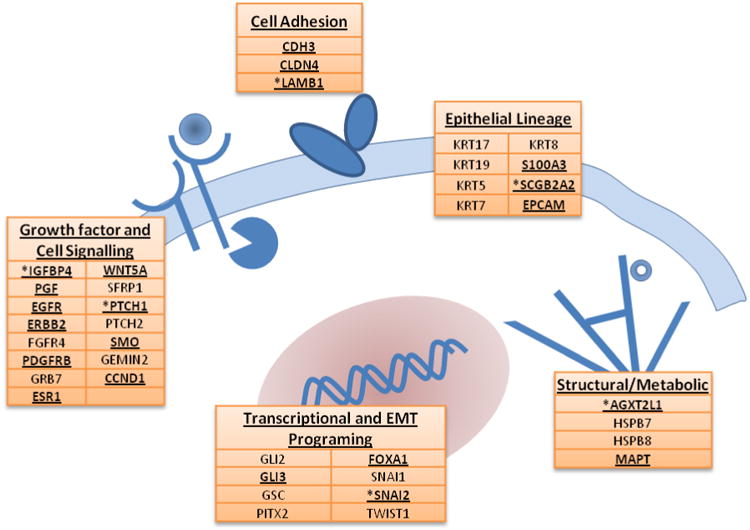
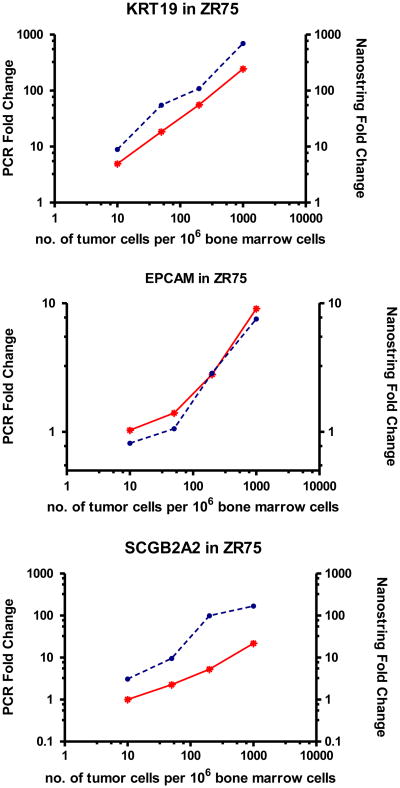
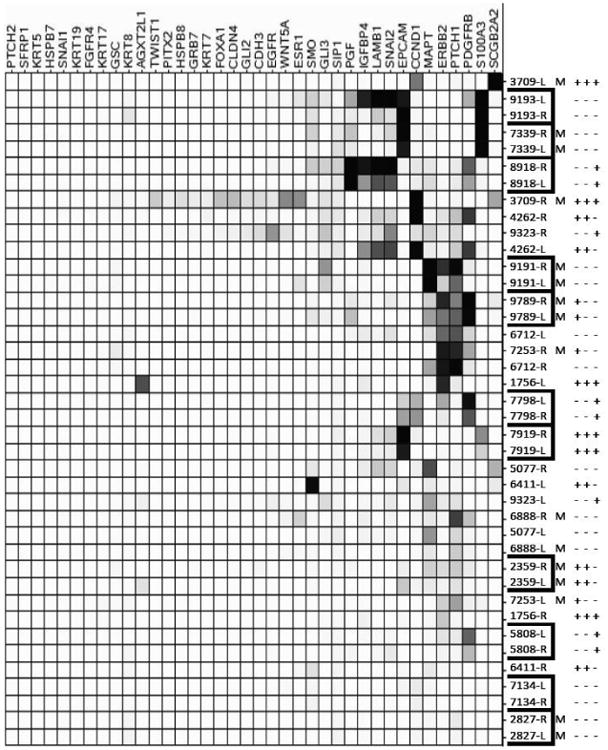
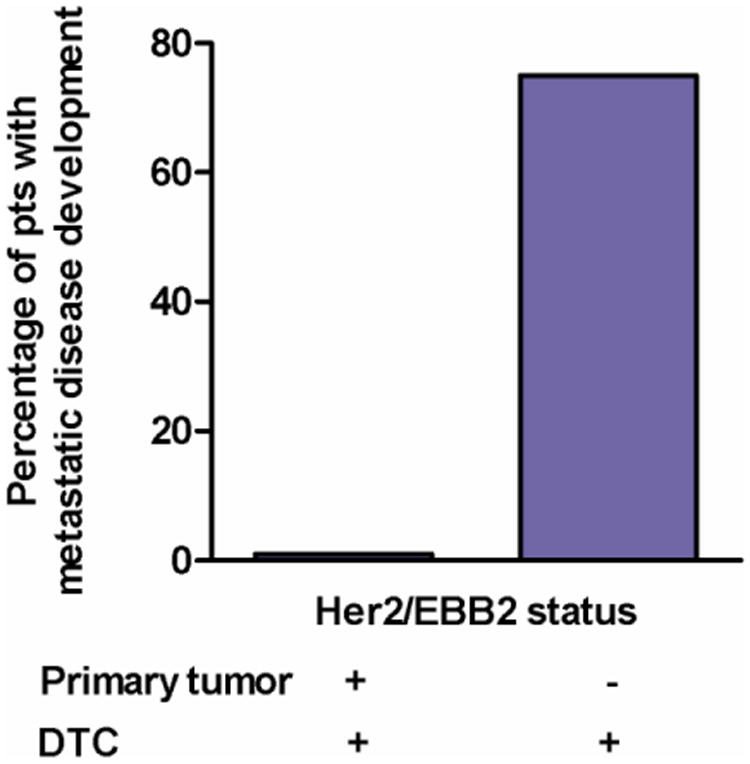
Disseminated tumor cells (DTCs) detected in the bone marrow (BM) of breast cancer patients identify women at high risk of recurrence. DTCs are traditionally detected by immunocytochemical staining for cytokeratins or single gene expression measurements, which limit both specificity and sensitivity. We evaluated the Nanostring nCounter™ platform for multi-marker, gene expression-based detection and classification of DTCs in the BM of breast cancer patients. Candidate genes exhibiting tumor cell-specific expression were identified from microarray datasets and validated by qRT-PCR analysis in non-malignant human BM and identical samples spiked with predefined numbers of molecularly diverse breast tumor cell lines. Thirty-eight validated transcripts were designed for the nCounter™ platform and a subset of these transcripts was technically validated against qRT-PCR measurements using identical spiked BM controls. Bilateral iliac crest BM aspirates were collected and analyzed from twenty breast cancer patients, prior to neoadjuvant therapy, using the full 38-gene nCounter™ code set. Tumor cell-specific gene expression by nCounter™ was detected with a sensitivity of one cancer cell per 1 × 10(6) nucleated BM cells after optimization. Measurements were quantitative, log linear over a 20-fold range, and correlated with qRT-PCR measurements. Using the nCounter™ 38-gene panel, 6 of 8 patients (75 %) who developed metastatic disease had detectable expression of at least one transcript. Notably, three of these patients had detectable expression of ERBB2 in their BM, despite the fact that their corresponding primary tumors were HER2/ERBB2 negative and therefore did not receive trastuzumab therapy. Four of these patients also expressed the PTCH1 receptor, a newly recognized therapeutic target based on hedgehog signaling pathway inhibition. The presumptive detection and classification of DTCs in the BM of breast cancer patients, based on sensitive and quantitative multi-marker detection of gene expression using the nCounter™ platform, provide an opportunity to both predict early distant recurrence and, more importantly, identify opportunities for preventing the spread of disease based on the expression of unique, therapeutically actionable gene targets. This study demonstrates the application of a new technology for multiplexed gene expression-based detection of DTCs in the BM of breast cancer patients and identifies at least two therapeutically targetable genes that are frequently expressed in the BM of patients who develop metastatic disease.
Conflict of interest statement
Conflict of Interest: None of the authors have any conflict of interest to report including related honoraria, investments, or research funding to report.
Disclosure: None of the authors have any disclosures or conflicts of interest.
Figures
References
-
- Sahai E. Illuminating the metastatic process. Nat Rev Cancer. 2007;7(10):737–749. - PubMed
-
- Weigelt B, Peterse JL, van't Veer LJ. Breast cancer metastasis: markers and models. Nat Rev Cancer. 2005;5(8):591–602. - PubMed
-
- Sorlie T, Perou CM, Tibshirani R, Aas T, Geisler S, Johnsen H, Hastie T, Eisen MB, van de Rijn M, Jeffrey SS, Thorsen T, Quist H, Matese JC, Brown PO, Botstein D, Lonning PE, Borresen-Dale AL. Gene expression patterns of breast carcinomas distinguish tumor subclasses with clinical implications. Proc Natl Acad Sci U S A. 2001;98(19):10869–10874. doi: 10.1073/pnas.191367098. - DOI - PMC - PubMed
Publication types
MeSH terms
Substances
Grants and funding
LinkOut - more resources
Full Text Sources
Medical
Research Materials
Miscellaneous
