


Effects of cannabis on neurocognitive functioning: recent advances, neurodevelopmental influences, and sex differences
- PMID: 23129391
- PMCID: PMC3593817
- DOI: 10.1007/s11065-012-9222-1
Effects of cannabis on neurocognitive functioning: recent advances, neurodevelopmental influences, and sex differences
Abstract
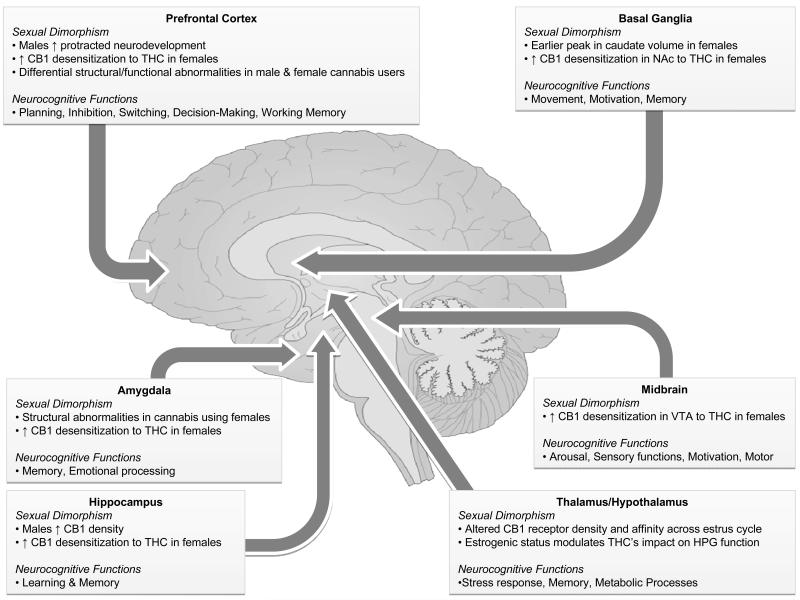
Decades of research have examined the effects of cannabis on neurocognition. Recent advances in this field provide us with a better understanding of how cannabis use influences neurocognition both acutely (during intoxication) and non-acutely (after acute effects subside). Evidence of problems with episodic memory is one of the most consistent findings reported; however, several other neurocognitive domains appear to be adversely affected by cannabis use under various conditions. There is significant variability in findings across studies, thus a discussion of potential moderators is increasingly relevant. The purpose of this review was to 1) provide an update on research of cannabis' acute and non-acute effects on neurocognition, with a focus on findings since 2007 and 2) suggest and discuss how neurodevelopmental issues and sex differences may influence cannabis effects on neurocognition. Finally we discuss how future investigations may lead to better understanding of the complex interplay among cannabis, stages of neurodevelopment, and sex on neurocognitive functioning.
Figures
References
-
- Abdullaev Y, Posner MI, Nunnally R, Dishion TJ. Functional MRI evidence for inefficient attentional control in adolescent chronic cannabis abuse. Behavioural Brain Research. 2010;215(1):45–57. - PubMed
Publication types
MeSH terms
Substances
Grants and funding
LinkOut - more resources
Full Text Sources
Medical
