


Testosterone negatively regulates right ventricular load stress responses in mice
- PMID: 23130103
- PMCID: PMC3487303
- DOI: 10.4103/2045-8932.101647
Testosterone negatively regulates right ventricular load stress responses in mice
Abstract
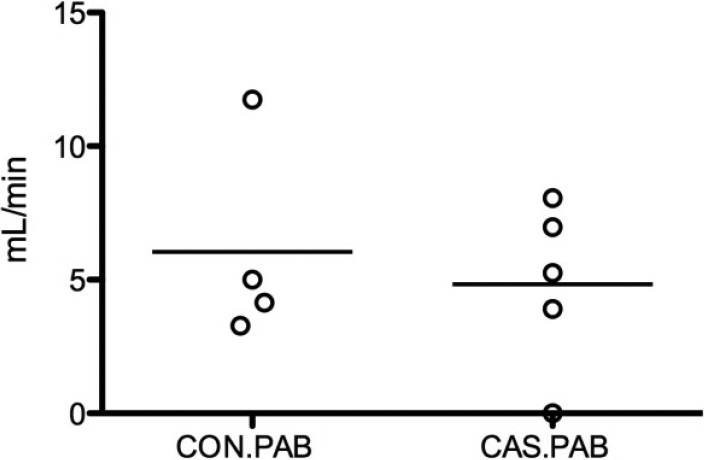
Right ventricular (RV) function is the major determinant of mortality in pulmonary arterial hypertension and male sex is a strong predictor of mortality in this disease. The effects of testosterone on RV structure and function in load stress are presently unknown. We tested whether testosterone levels affect RV hypertrophic responses, fibrosis, and function. Male C57BL/6 mice underwent castration or sham followed by pulmonary artery banding (PAB) or sham. After recovery, testosterone pellets were placed in a subset of the castrated mice and mice were maintained for at least two weeks, when they underwent hemodynamic measurements and tissues were harvested. Plasma levels of testosterone were reduced by castration and repleted by testosterone administration. In PAB, castration resulted in lower right ventricle/left ventricle + septum (RV/LV+S), and myocyte diameter (P < 0.05). Replacement of testosterone normalized these parameters and increased RV fibrosis (P < 0.05). Two weeks of PAB resulted in increased RV systolic pressure in all groups with decreased markers of RV systolic and diastolic function, specifically reduced ejection fraction and increased time constant, and dPdt minimum (P < 0.05), though there was minimal effect of testosterone on hemodynamic parameters. Survival was improved in mice that underwent castration with PAB compared with PAB alone (P < 0.05). Testosterone affects RV hypertrophic response to load stress through increased myocyte size and increased fibrosis in mice. Castration and testosterone replacement are not accompanied by significant alterations in RV in vivo hemodynamics, but testosterone deprivation appears to improve survival in PAB. Further study of the role of testosterone in RV dysfunction is warranted to better understand these findings in the context of human disease.
Keywords: pulmonary hypertension; right ventricle; sex hormones; testosterone.
Conflict of interest statement
Figures


References
-
- D’Alonzo GE, Barst RJ, Ayres SM, Bergofsky EH, Brundage BH, Detre KM, et al. Survival in patients with primary pulmonary hypertension. Results from a national prospective registry. Ann Intern Med. 1991;115:343–9. - PubMed
-
- Tapson VF. Acute pulmonary embolism. N Engl J Med. 2008;358:1037–52. - PubMed
-
- Karatasakis GT, Karagounis LA, Kalyvas PA, Manginas A, Athanassopoulos GD, Aggelakas SA, et al. Prognostic significance of echocardiographically estimated right ventricular shortening in advanced heart failure. Am J Cardiol. 1998;82:329–34. - PubMed
-
- Thompson WP. Commonest cause of hypertrophy of the right ventricle-left ventricular strain and failure. Am Heart J. 1936;12:641–9.
-
- Voelkel NF, Quaife RA, Leinwand LA, Barst RJ, McGoon MD, Meldrum DR, et al. Right ventricular function and failure: report of a National Heart, Lung, and Blood Institute working group on cellular and molecular mechanisms of right heart failure. Circulation. 2006;114:1883–91. - PubMed
Grants and funding
LinkOut - more resources
Full Text Sources
