


Task difficulty manipulation reveals multiple demand activity but no frontal lobe hierarchy
- PMID: 23131804
- PMCID: PMC3888372
- DOI: 10.1093/cercor/bhs333
Task difficulty manipulation reveals multiple demand activity but no frontal lobe hierarchy
Abstract
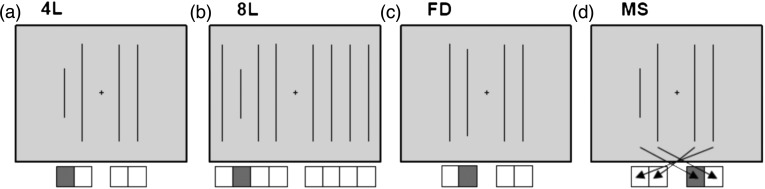
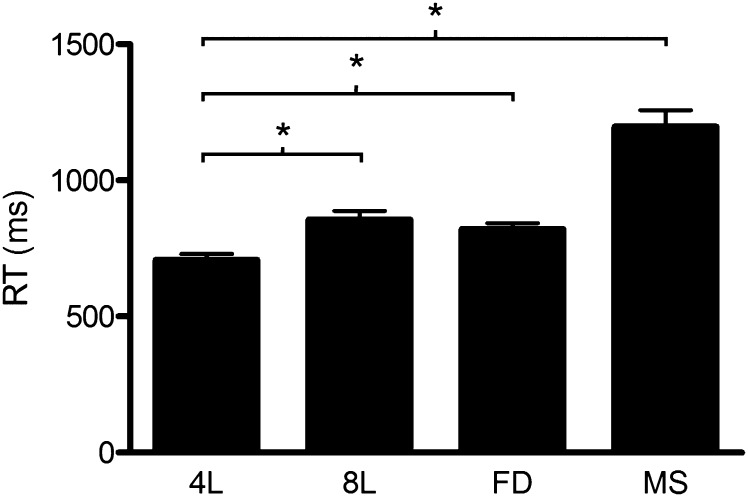
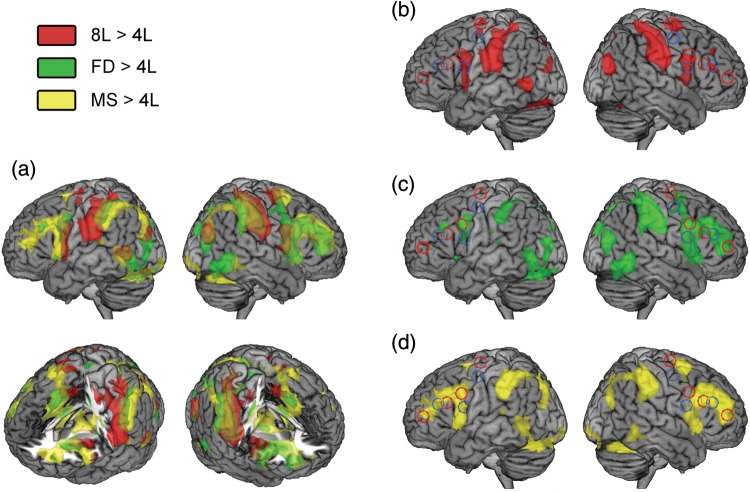
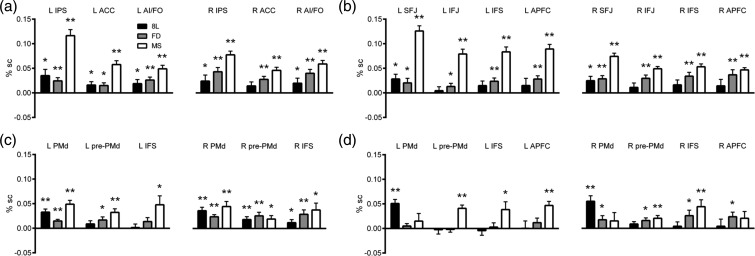
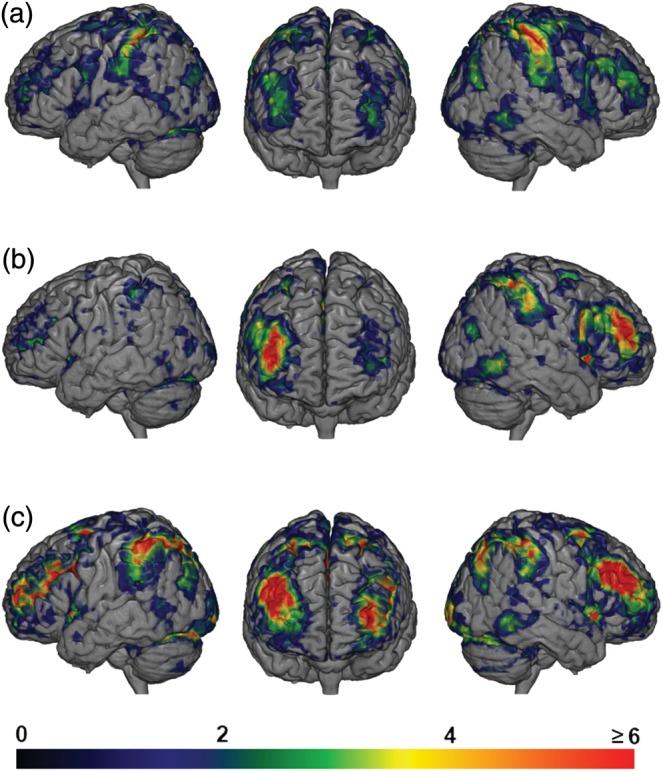
It has been proposed that task control is functionally implemented by a distributed frontoparietal system. It has been argued that one component of this system, the lateral frontal cortex, is functionally organized through a caudal to rostral gradient. Here, we tested 2 competing models, the Information Cascade and Rule Abstraction hypotheses, which suggest different principles underlying the rostrocaudal gradient. We presented participants with 4 vertical lines on a screen and asked them to indicate the position of the shortest line. We manipulated the difficulty of the task in 3 simple ways: By increasing the number of lines, by decreasing the difference between short and normal line length, and by changing the stimulus-response mapping. As expected, these manipulations evoked widespread frontoparietal activation, with activity much more anterior than predicted by Information Cascade and Rule Abstraction models. There were also striking individual differences in the rostrocaudal extent of activity. The results suggest an integrated frontoparietal system, which can be recruited as a whole even by very simple task demands.
Keywords: Information Cascade; Rule Abstraction; functional magnetic resonance imaging; multiple demand; prefrontal cortex.
Figures

References
-
- Badre D. Cognitive control, hierarchy, and the rostro-caudal organization of the frontal lobes. Trends Cogn Sci. 2008;12:193–200. doi:10.1016/j.tics.2008.02.004. - DOI - PubMed
-
- Badre D, D'Esposito M. Functional magnetic resonance imaging evidence for a hierarchical organization of the prefrontal cortex. J Cogn Neurosci. 2007;19:2082–2099. doi:10.1162/jocn.2007.19.12.2082. - DOI - PubMed
-
- Badre D, D'Esposito M. Is the rostro-caudal axis of the frontal lobe hierarchical? Nat Rev Neurosci. 2009;10:659–669. doi:10.1038/nrn2667. - DOI - PMC - PubMed
-
- Bishop SJ, Fossella J, Croucher CJ, Duncan J. COMT val158met genotype affects recruitment of neural mechanisms supporting fluid intelligence. Cereb Cortex. 2008;18:2132–2140. doi:10.1093/cercor/bhm240. - DOI - PMC - PubMed
-
- Botvinick MM, Braver TS, Barch DM, Carter CS, Cohen JD. Conflict monitoring and cognitive control. Psychol Rev. 2001;108:624–652. doi:10.1037/0033-295X.108.3.624. - DOI - PubMed
Publication types
MeSH terms
Grants and funding
LinkOut - more resources
Full Text Sources
Research Materials
