


A randomized, controlled, pilot study of acamprosate added to escitalopram in adults with major depressive disorder and alcohol use disorder
- PMID: 23131884
- PMCID: PMC3794470
- DOI: 10.1097/JCP.0b013e3182726764
A randomized, controlled, pilot study of acamprosate added to escitalopram in adults with major depressive disorder and alcohol use disorder
Abstract
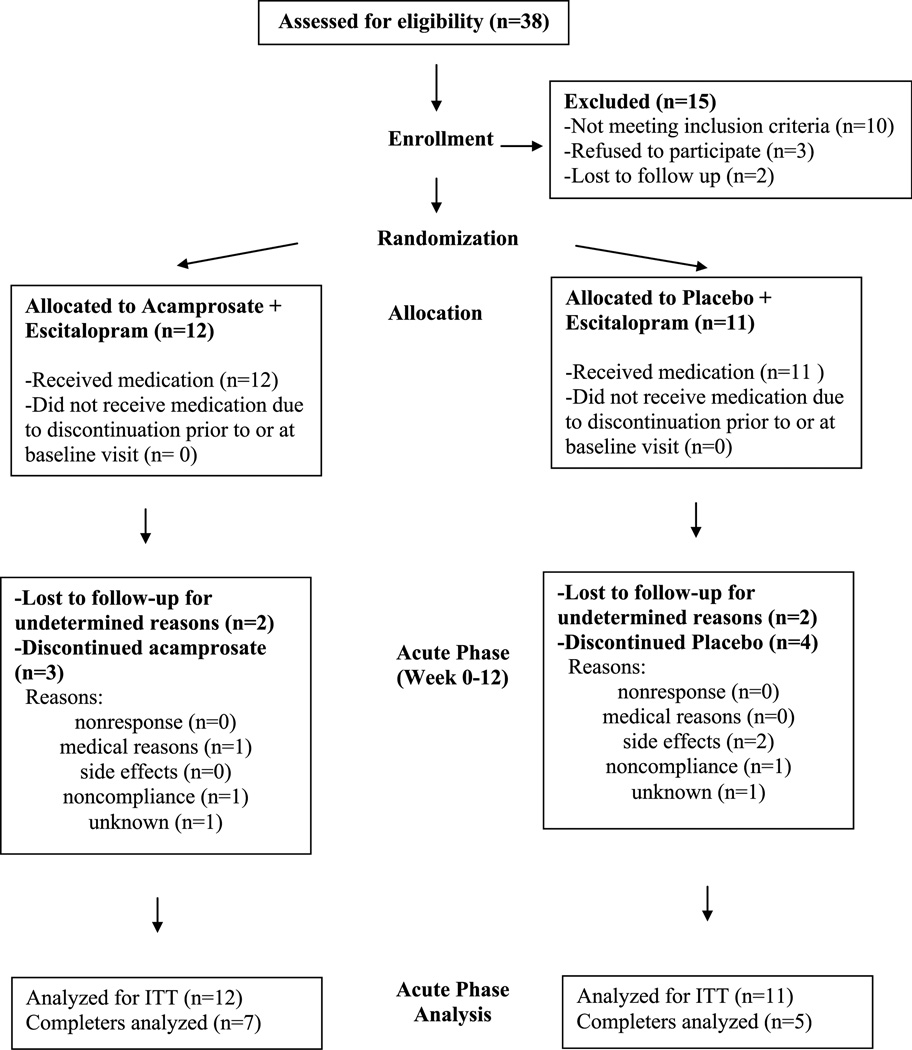
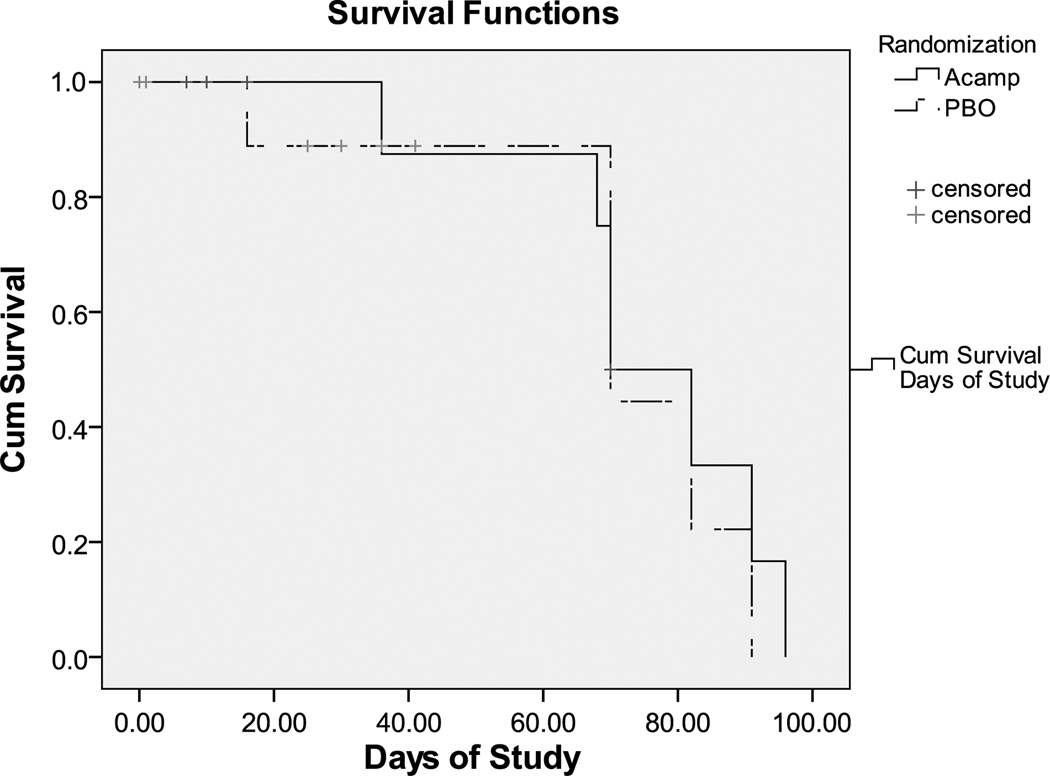
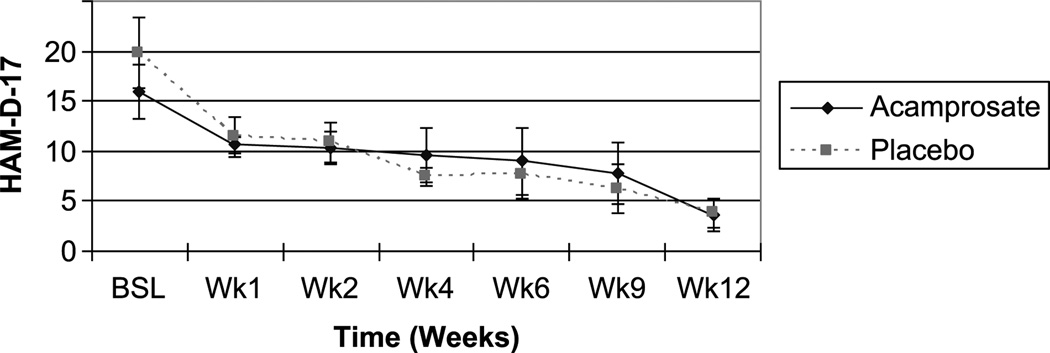
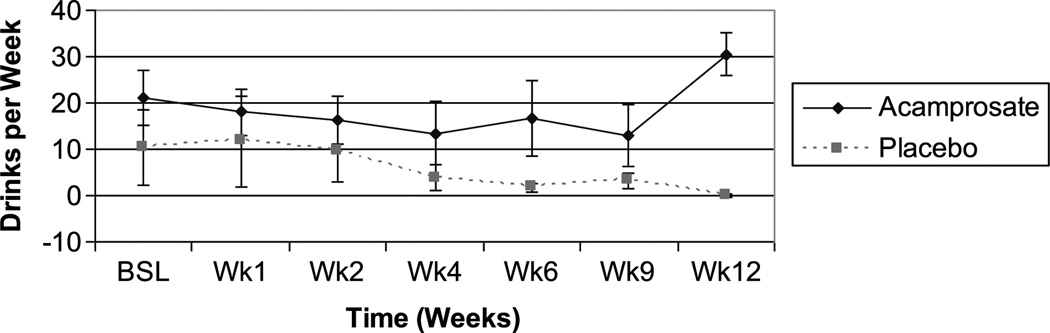
We sought to examine the efficacy and safety of acamprosate augmentation of escitalopram in patients with concurrent major depressive disorder (MDD) and alcohol use disorders. Twenty-three adults (43% female; mean ± SD age, 46 ± 14 years) were enrolled and received 12 weeks of treatment with psychosocial support; escitalopram, 10 to 30 mg/d; and either acamprosate, 2000 mg/d (n = 12), or identical placebo (n = 11). Outcomes included change in clinician ratings of depressive symptoms, MDD response and remission rates, changes in frequency and intensity of alcohol use, retention rates, and adverse events. Twelve subjects (acamprosate, n = 7; placebo, n = 5) completed the study. There was significant mean reduction in ratings of depressive symptoms from baseline in both treatment arms (P < 0.05), with no significant difference between the groups. Those in the acamprosate group had a 50% MDD response rate and a 42% remission rate, whereas those in the placebo arm had a 36% response and remission rate (not significant). Those assigned to acamprosate had significant reduction in number of drinks per week and drinks per month during the trial, whereas those assigned to placebo demonstrated no significant change in any alcohol use parameter, but the between-group difference was not significant. There were no significant associations between change in depressive symptoms and change in alcohol use. Attrition rates did not differ significantly between the 2 arms. Acamprosate added to escitalopram in adults with MDD and alcohol use disorders was associated with reduction in the frequency of alcohol use. The present study was not powered to detect superiority versus placebo. Further study in a larger sample is warranted.
Trial registration: ClinicalTrials.gov NCT00452543.
Conflict of interest statement
The remaining authors (Ms Kate Bentley, Dr Paola Pedrelli, Dr Lee Baer, and Ms Alisabet Clain) have no conflicts of interest to disclose.
Figures
References
-
- Grant BF, Stinson SF, Dawson DA, et al. Prevalence and co-occurrence of substance use disorders and independent mood and anxiety disorders: results from the National Epidemiologic Survey on Alcohol and Related Conditions. Arch Gen Psychiatry. 2004;61:807–816. - PubMed
-
- Kessler RC, Crum RM, Warner LA, et al. Lifetime co-occurrence of DSM-III-R alcohol abuse and dependence with other psychiatric disorders in the national Comorbidity Survey. Arch Gen Psychiatry. 1997;53:232–240. - PubMed
-
- Watkins KE, Paddock SM, Zhang L, et al. Improving care for depression in patients with comorbid substance misuse. Am J Psychiatry. 2006;163:125–132. - PubMed
-
- Grant BF, Harford TC. Comorbidity between DSM-IV alcohol use disorders and major depression: results of a national survey. Drug Alcohol Depend. 1995;39:197–206. - PubMed
-
- Gilman SE, Abraham HD. A longitudinal study of the order of onset of alcohol dependence and major depression. Drug Alcohol Depend. 2001;63:277–286. - PubMed
Publication types
MeSH terms
Substances
Associated data
Grants and funding
LinkOut - more resources
Full Text Sources
Medical
