


Safety of cell therapy with mesenchymal stromal cells (SafeCell): a systematic review and meta-analysis of clinical trials
- PMID: 23133515
- PMCID: PMC3485008
- DOI: 10.1371/journal.pone.0047559
Safety of cell therapy with mesenchymal stromal cells (SafeCell): a systematic review and meta-analysis of clinical trials
Abstract
Background: Mesenchymal stromal cells (MSCs, "adult stem cells") have been widely used experimentally in a variety of clinical contexts. There is interest in using these cells in critical illness, however, the safety profile of these cells is not well known. We thus conducted a systematic review of clinical trials that examined the use MSCs to evaluate their safety.
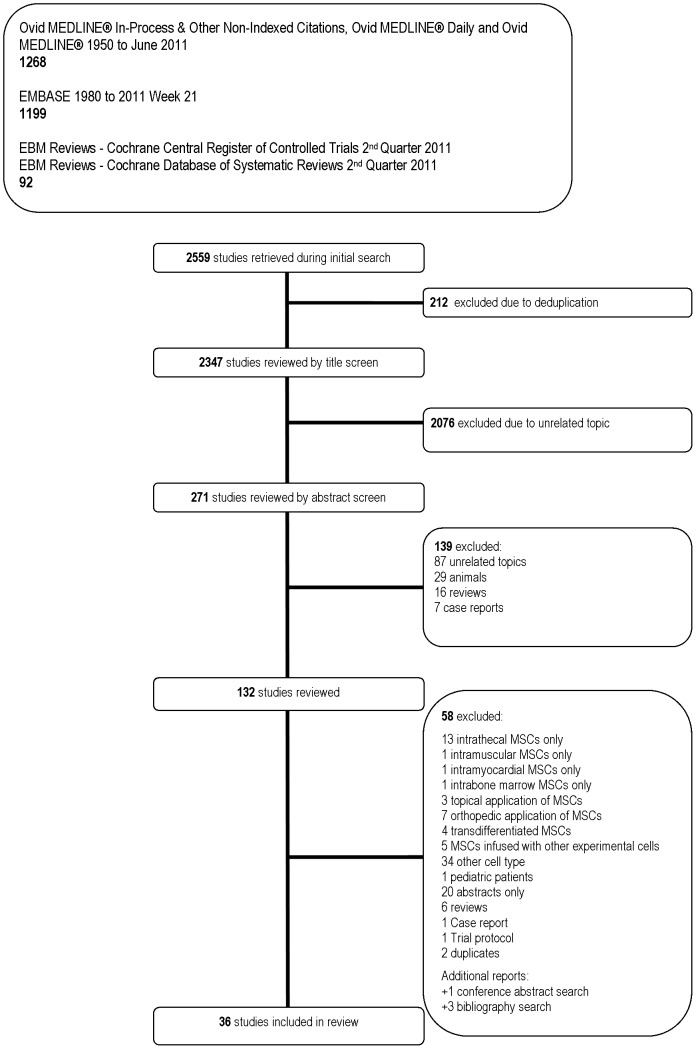
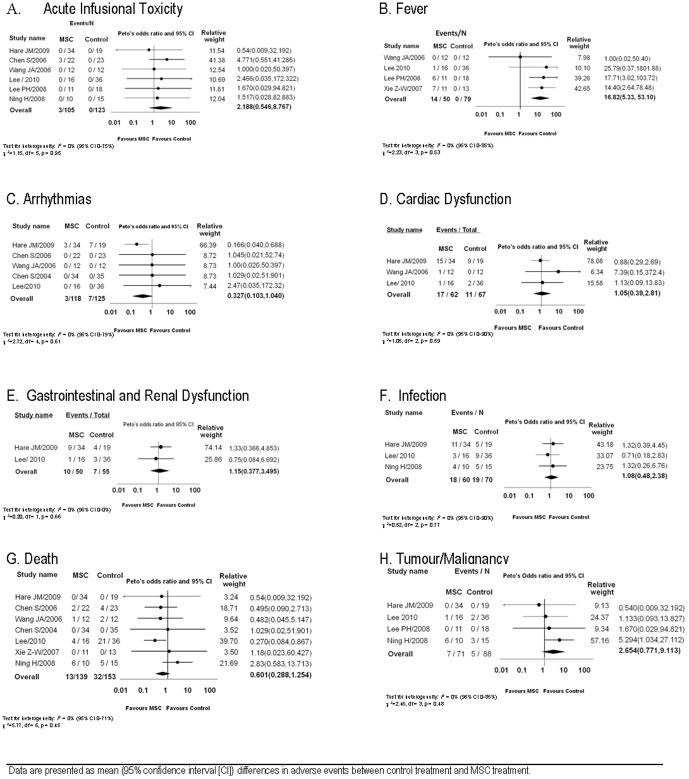
Methods and findings: MEDLINE, EMBASE, and the Cochrane Central Register of Controlled Trials (to June 2011), were searched. Prospective clinical trials that used intravascular delivery of MSCs (intravenously or intra-arterially) in adult populations or mixed adult and pediatric populations were identified. Studies using differentiated MSCs or additional cell types were excluded. The primary outcome adverse events were grouped according to immediate events (acute infusional toxicity, fever), organ system complications, infection, and longer term adverse events (death, malignancy). 2347 citations were reviewed and 36 studies met inclusion criteria. A total of 1012 participants with clinical conditions of ischemic stroke, Crohn's disease, cardiomyopathy, myocardial infarction, graft versus host disease, and healthy volunteers were included. Eight studies were randomized control trials (RCTs) and enrolled 321 participants. Meta-analysis of the RCTs did not detect an association between acute infusional toxicity, organ system complications, infection, death or malignancy. There was a significant association between MSCs and transient fever.
Conclusions: Based on the current clinical trials, MSC therapy appears safe. However, further larger scale controlled clinical trials with rigorous reporting of adverse events are required to further define the safety profile of MSCs.
Conflict of interest statement
Figures
References
-
- Friedenstein AJ, Chailakhyan RK, Latsinik NV, Panasyuk AF, Keiliss-Borok IV (1974) Stromal cells responsible for transferring the microenvironment of the hemopoietic tissues. Cloning in vitro and retransplantation in vivo. Transplantation 17: 331–340. - PubMed
-
- Mei SHJ, Haitsma JJ, Dos Santos CC, Deng Y, Lai PFH, et al. (2010) Mesenchymal stem cells reduce inflammation while enhancing bacterial clearance and improving survival in sepsis. American Journal of Respiratory and Critical Care Medicine 182: 1047–1057. - PubMed
Publication types
MeSH terms
LinkOut - more resources
Full Text Sources
Other Literature Sources
Medical
Miscellaneous
