


Detection of long non-coding RNA in archival tissue: correlation with polycomb protein expression in primary and metastatic breast carcinoma
- PMID: 23133536
- PMCID: PMC3485022
- DOI: 10.1371/journal.pone.0047998
Detection of long non-coding RNA in archival tissue: correlation with polycomb protein expression in primary and metastatic breast carcinoma
Abstract
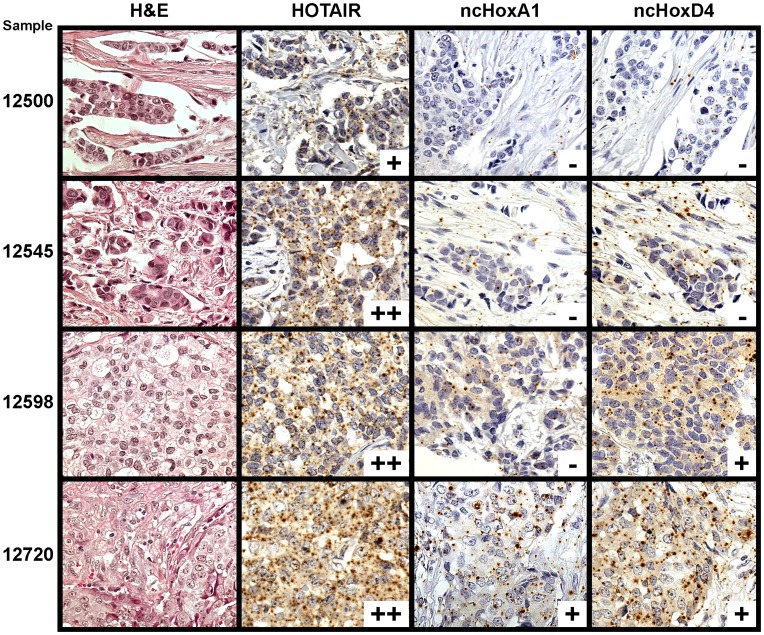
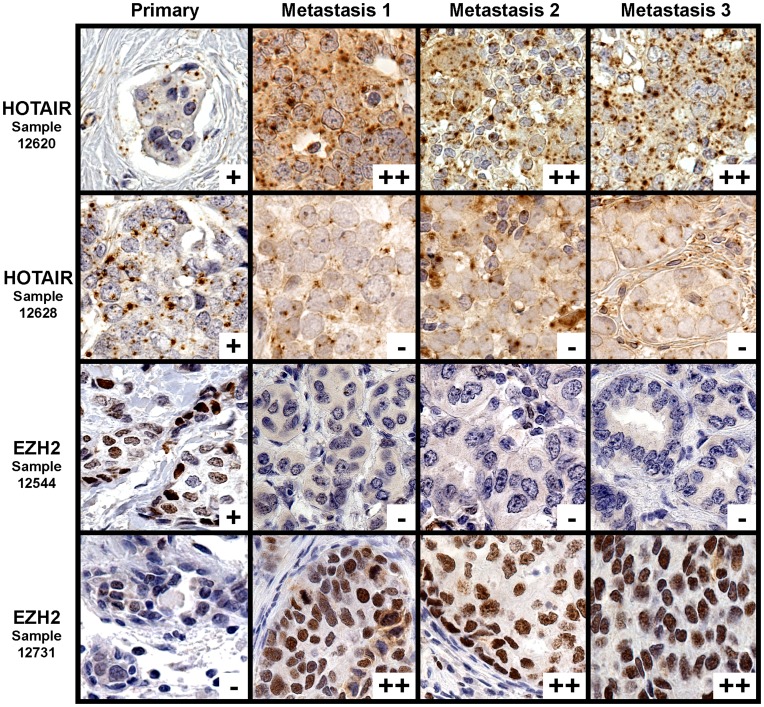
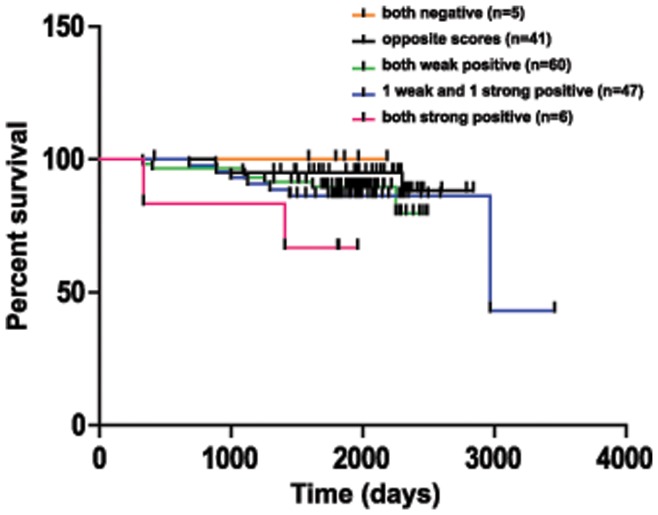
A major function of long non-coding RNAs (lncRNAs) is regulating gene expression through changes in chromatin state. Experimental evidence suggests that in cancer, they can influence Polycomb Repressive Complexes (PRC) to retarget to an occupancy pattern resembling that of the embryonic state. We have previously demonstrated that the expression level of lncRNA in the HOX locus, including HOTAIR, is a predictor of breast cancer metastasis. In this current project, RNA in situ hybridization of probes to three different lncRNAs (HOTAIR, ncHoxA1, and ncHoxD4), as well a immunohistochemical staining of EZH2, is undertaken in formalin-fixed paraffin-embedded breast cancer tissues in a high throughput tissue microarray format to correlate expression with clinicopathologic features. Though overall EZH2 and HOTAIR expression levels were highly correlated, the subset of cases with strong HOTAIR expression correlated with ER and PR positivity, while the subset of cases with strong EZH2 expression correlated with an increased proliferation rate, ER and PR negativity, HER2 underexpression, and triple negativity. Co-expression of HOTAIR and EZH2 trended with a worse outcome. In matched primary and metastatic cancers, both HOTAIR and EZH2 had increased expression in the metastatic carcinomas. This is the first study to show that RNA in situ hybridization of formalin fixed paraffin-embedded clinical material can be used to measure levels of long non-coding RNAs. This approach offers a method to make observations on lncRNAs that may influence the cancer epigenome in a tissue-based technique.
Conflict of interest statement
Figures
References
-
- Schlesinger Y, Straussman R, Keshet I, Farkash S, Hecht M, et al. (2007) Polycomb-mediated methylation on Lys27 of histone H3 pre-marks genes for de novo methylation in cancer. Nat Genet 39: 232–6. - PubMed
-
- Widschwendter M, Fiegl H, Egle D, Mueller-Holzner E, Spizzo G, et al. (2007) Epigenetic stem cell signature in cancer. Nat Genet 39: 157–8. - PubMed
-
- Sparmann A, van Lohuizen M (2006) Polycomb silencers control cell fate, development and cancer. Nat Rev Cancer 6: 846–56. - PubMed
Publication types
MeSH terms
Substances
Grants and funding
LinkOut - more resources
Full Text Sources
Other Literature Sources
Research Materials
Miscellaneous
