


Defining the cause of death in hospitalised patients with acute kidney injury
- PMID: 23133643
- PMCID: PMC3487783
- DOI: 10.1371/journal.pone.0048580
Defining the cause of death in hospitalised patients with acute kidney injury
Abstract
Background: The high mortality rates that follow the onset of acute kidney injury (AKI) are well recognised. However, the mode of death in patients with AKI remains relatively under-studied, particularly in general hospitalised populations who represent the majority of those affected. We sought to describe the primary cause of death in a large group of prospectively identified patients with AKI.
Methods: All patients sustaining AKI at our centre between 1(st) October 2010 and 31(st) October 2011 were identified by real-time, hospital-wide, electronic AKI reporting based on the Acute Kidney Injury Network (AKIN) diagnostic criteria. Using this system we are able to generate a prospective database of all AKI cases that includes demographic, outcome and hospital coding data. For those patients that died during hospital admission, cause of death was derived from the Medical Certificate of Cause of Death.
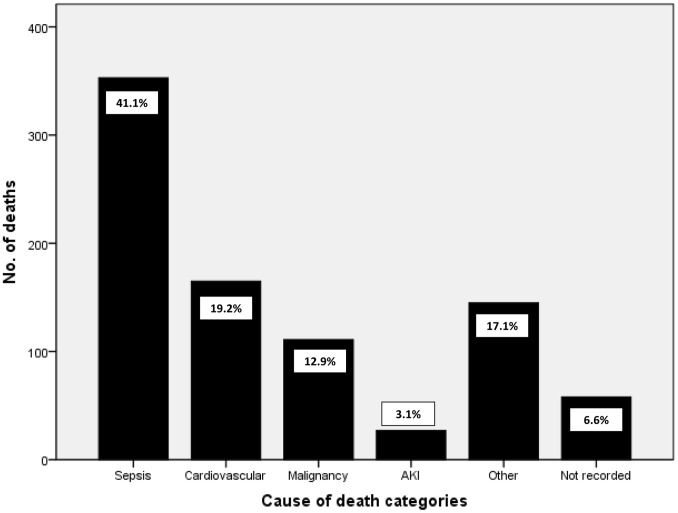
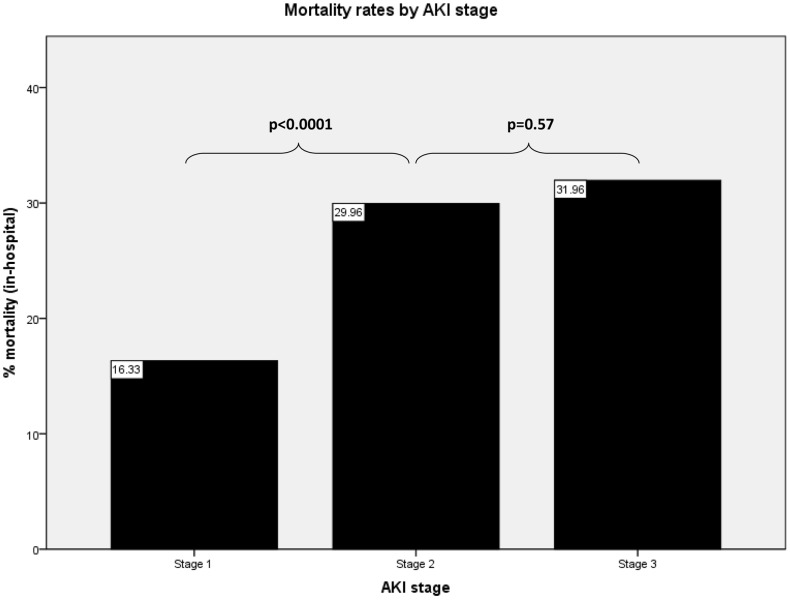
Results: During the study period there were 3,930 patients who sustained AKI; 62.0% had AKI stage 1, 20.6% had stage 2 and 17.4% stage 3. In-hospital mortality rate was 21.9% (859 patients). Cause of death could be identified in 93.4% of cases. There were three main disease categories accounting for three quarters of all mortality; sepsis (41.1%), cardiovascular disease (19.2%) and malignancy (12.9%). The major diagnosis leading to sepsis was pneumonia, whilst cardiovascular death was largely a result of heart failure and ischaemic heart disease. AKI was the primary cause of death in only 3% of cases.
Conclusions: Mortality associated with AKI remains high, although cause of death is usually concurrent illness. Specific strategies to improve outcomes may therefore need to target not just the management of AKI but also the most relevant co-existing conditions.
Conflict of interest statement
Figures
References
-
- Uchino S, Bellomo R, Goldsmith D, Bates S, Ronco C (2006) An assessment of the RIFLE criteria for acute renal failure in hospitalized patients. Crit Care Med 34: 1913–1917. - PubMed
-
- Lines SW, Cherukuri A, Murdoch SD, Bellamy MC, Lewington AJ (2011) The outcomes of critically ill patients with acute kidney injury receiving renal replacement therapy. Int J Artif Organs 34: 2–9. - PubMed
MeSH terms
LinkOut - more resources
Full Text Sources
