Antibiotic prescribing practice in management of cough and/or diarrhoea in Moshi Municipality, Northern Tanzania: cross-sectional descriptive study
- PMID: 23133703
- PMCID: PMC3489386
Antibiotic prescribing practice in management of cough and/or diarrhoea in Moshi Municipality, Northern Tanzania: cross-sectional descriptive study
Abstract
Introduction: The increase in resistance of many pathogens to currently available antibiotics has been recognized as life-threatening problem. The development of drug resistance is promoted by irrational prescribing behavior. Inappropriate use of antibiotics is attributed by over-prescription, inadequate dosage and use for non-bacterial infections. The purpose of this study was to assess antibiotic prescribing practices in the management of diarrhoea and cough among children attending hospitals in Moshi municipal, Tanzania.
Methods: We conducted a cross-sectional descriptive hospital based study, from September 2010 to March 2011. All children presenting with diarrhoea and cough, aged between one month and 5 years attended at the two hospitals were enrolled. Data were collected by a standard questionnaire. Information on the prescribed drugs was obtained from patient files.
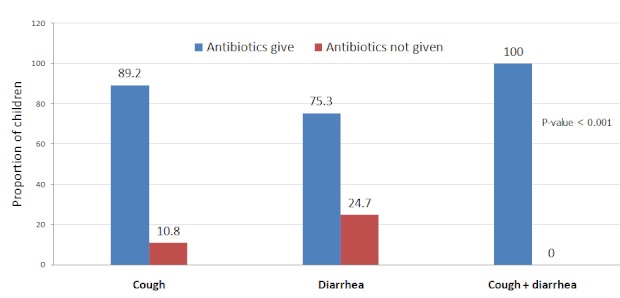
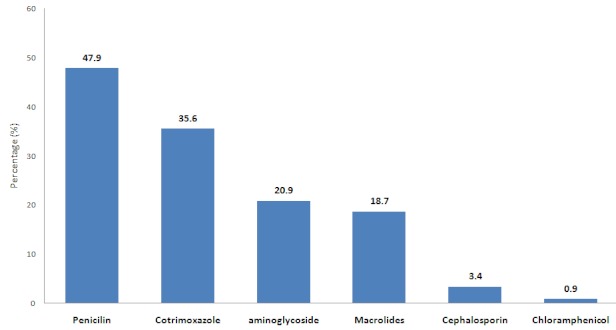
Results: A total of 384 children were enrolled. Of these, 326 (84.9%) received antibiotics; common prescribed antibiotics were penicillins, sulphonamides, aminoglycosides and macrolides. Eighty percent of children with acute watery diarrhoea and 68.9% with common cold were given antibiotics inappropriately. Inappropriate antibiotic prescription was significantly associated with prescriber being a clinical officer and assistant medical officer, and child having diarrhoea. Inappropriate antibiotic dosage was significantly occurred when prescriber was clinical officer with reference to medical officer.
Conclusion: This study observed a high antibiotic prescription rate by clinicians and treatment guidelines for management of patients who presented with cough and/or diarrhoea are followed. Continuing professional development programmes for clinicians on prescription would help in reducing irrational prescribing practices.
Keywords: Antibiotics use; antibiotic prescribing; cough; diarrhea; irrational prescribing; pneumonia; under-five.
Figures
References
-
- World Health Organization. Factsheet N°338. 2010 May; http://www.who.int/mediacentre/factsheets/fs338/en/index.html Accessed June 23, 2011.
-
- World Health Orgarnization. Geneva: World Health Organization; 1987. The Rational Use of Drugs - Report of the Conference of Experts, Nairobi 25-29 November 1985.
-
- Le Grand A, Hogerzeil HV, Haaijer-Ruskamp FM. Intervention research in rational use of drugs: a review. Health Policy Plan. 1999;14:89–102. - PubMed
-
- Larsson M, Kronvall G, Falkenberg T, et al. Antibiotic medication and bacterial resistance to antibiotics: a survey of children in a Vietnamese community. Trop Med Int Health. 2000;5:711–721. - PubMed
-
- United Republic of Tanzania Ministry of Health and Social Welfare. Ministry of Health, Dar-es-salaam; 2007. Standard treatment guidelines (STG) and The National Essential Medicines List (NEMLIT) for Mainland Tanzania, (third edition)
MeSH terms
Substances
LinkOut - more resources
Full Text Sources
Medical