


The clinical use of PET with (11)C-acetate
- PMID: 23133801
- PMCID: PMC3478117
The clinical use of PET with (11)C-acetate
Abstract
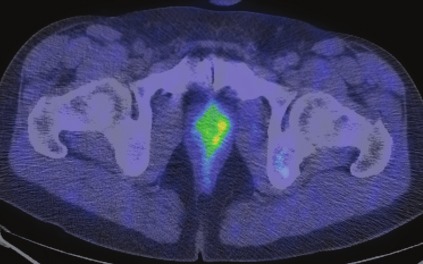
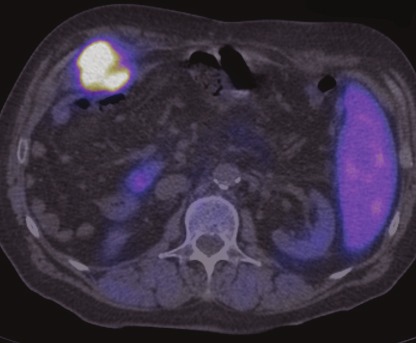
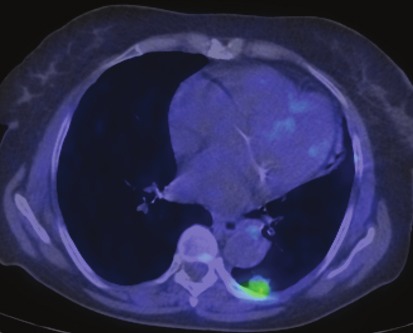
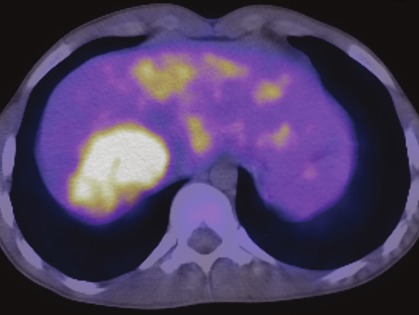
The aim of this review is to evaluate clinical applications of (11)C-acetate positron emission tomography (PET). Acetate is quickly metabolized into acetyl-CoA in human cells. In this form it can either enter into the tricarboxylic acid cycle, thus producing energy, as happens in the myocardium, or participate in cell membrane lipid synthesis, as happens in tumor cells. (11)C-acetate PET was originally employed in cardiology, to study myocardial oxygen metabolism. More recently it has also been used to evaluate myocardial perfusion, as well as in oncology. The first studies of (11)C-acetate focused on its use in prostate cancer. Subsequently, (11)C-acetate was studied in other urological malignancies, as well as renal cell carcinoma and bladder cancer. Well differentiated hepatocellular carcinoma represents an (18)F-fluoro-deoxyglucose ((18)F-FDG) PET pitfall, so many authors have proposed to use (11)C-acetate in addition to (18)F-FDG in studying this tumor. (11)C-acetate PET has also been used in other malignancies, such as brain tumors and lung carcinoma. Some authors reported a few cases in which (11)C-acetate PET incidentally found multiple myeloma or rare tumors, such as thymoma, multicentric angiomyolipoma of the kidney and cerebellopontine angle schwannoma. Lastly, (11)C-acetate PET was also employed in a differential diagnosis case between glioma and encephalitis. The numerous studies on (11)C-acetate have demonstrated that it can be used in cardiology and oncology with no contraindications apart from pregnancy and the necessity of a rapid scan. Despite its limited availability, this tracer can surely be considered to be a promising one, because of its versatility and capacity to even detect non (18)F-FDG-avid neoplasm, such as differentiated lung cancer or hepatocellular carcinoma.
Keywords: 11C-acetate; Positron emission tomography (PET); brain tumor; cancer; cardiology; liver cancer; prostate cancer.
Figures
References
-
- de Beco V, Le Bars D, Scherrmann JM. 18Fluorine in radiopharmacy. Ann Pharm Fr. 2008;66:60–65. - PubMed
-
- Ho CL, Yu SC, Yeung DW. 11C-acetate PET imaging in hepatocellular carcinoma and other liver masses. J Nucl Med. 2003;44:213–21. - PubMed
-
- Shibata H, Nomori H, Uno K, Iyama K, Tomiyoshi K, Nakashima R, Sakaguchi K, Goya T, Takanami I, Koizumi K, Suzuki T, Kaji M, Horio H. 11C-acetate for positron emission tomography imaging of clinical stage IA lung adenocarcinoma: comparison with 18F-fluoro deoxyglucose for imaging and evaluation of tumor aggressiveness. Ann Nucl Med. 2009;23:609–16. - PubMed
-
- Hain SF, Maisey MN. Positron emission tomography for urological tumors. BJU Int. 2003;92:159–64. - PubMed
-
- Krause BJ, Souvatzoglou M, Treiber U. Imaging of prostate cancer with PET/CT and radioactively labeled choline derivates. Urol Oncol. 2011 (in press) - PubMed
LinkOut - more resources
Full Text Sources
Other Literature Sources