


In a "nutshell": intrinsically radio-labeled quantum dots
- PMID: 23133808
- PMCID: PMC3477731
In a "nutshell": intrinsically radio-labeled quantum dots
Abstract
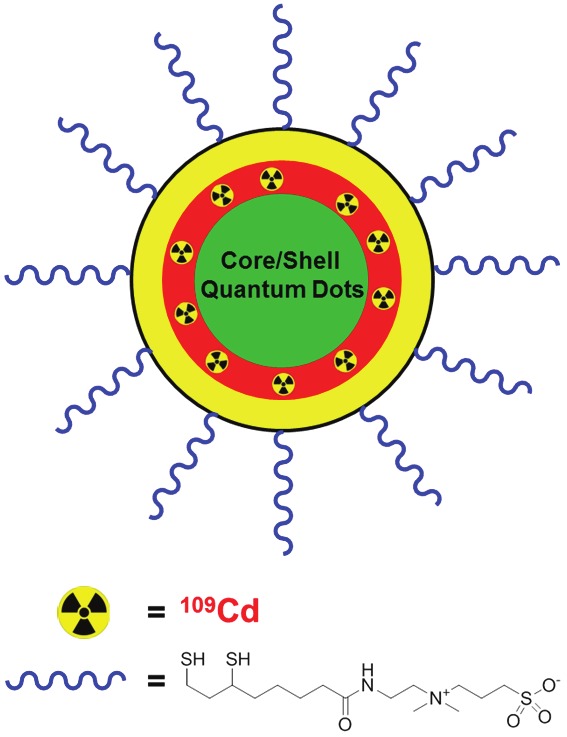
Quantum dots (QDs) have many intriguing properties suitable for biomedical imaging applications. The poor tissue penetration of optical imaging in general, including those using QDs, has motivated the development of various QD-based dual-modality imaging agents. In this issue of AJNMMI (http://www.ajnmmi.us), Sun et al. reported the synthesis and in vitro/in vivo characterization of intrinsically radio-labeled QDs (r-QDs), where (109)Cd was incorporated into the core/shell of QDs of various compositions. These r-QDs emit in the near-infrared range, have long circulation half-life, are quite stable with low cytotoxicity, exhibit small size and low accumulation in the reticuloendothelial system, and can allow for accurate measurement of their biodistribution in mice. With these desirable features demonstrated in this study, future development and optimization will further enhance the biomedical potential of intrinsically radio-labeled QDs.
Keywords: Quantum-dots (QDs); nanoparticle; near-infrared (NIR); optical imaging; positron emission tomography (PET); single-photon emission computed tomography (SPECT).
Figures
References
-
- Thayer AM. Building up nanotech research. Chem Eng News. 2007;85:15–21.
-
- Farrell D, Alper J, Ptak K, Panaro NJ, Grodzinski P, Barker AD. Recent advances from the National Cancer Institute Alliance for Nanotechnology in Cancer. ACS Nano. 2010;4:589–594. - PubMed
-
- Farrell D, Ptak K, Panaro NJ, Grodzinski P. Nanotechnology-based cancer therapeutics--promise and challenge--lessons learned through the NCI Alliance for Nanotechnology in Cancer. Pharm Res. 2011;28:273–278. - PubMed
Grants and funding
LinkOut - more resources
Full Text Sources
Miscellaneous