Risk-to-benefit ratio of inhaled corticosteroids in patients with COPD
- PMID: 23135217
- PMCID: PMC6548052
- DOI: 10.4104/pcrj.2012.00092
Risk-to-benefit ratio of inhaled corticosteroids in patients with COPD
Abstract
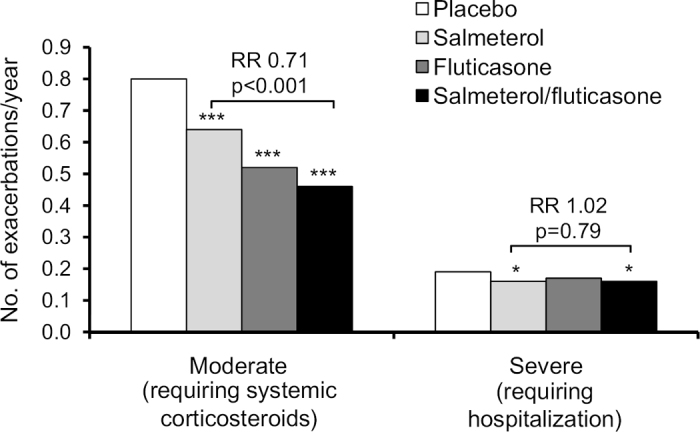
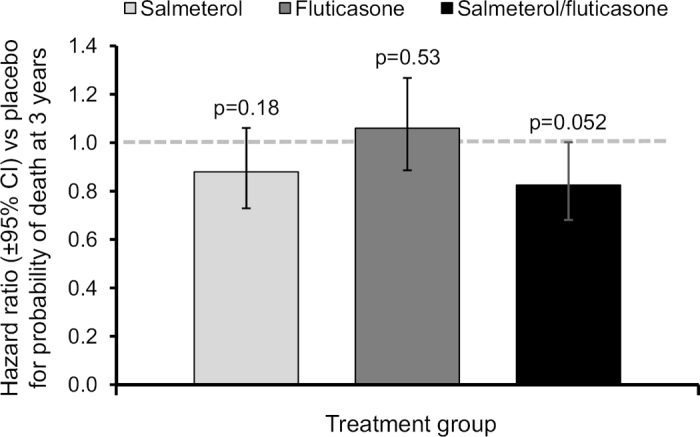
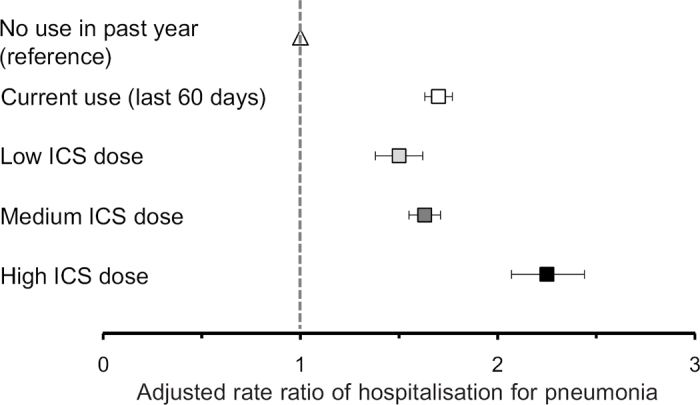
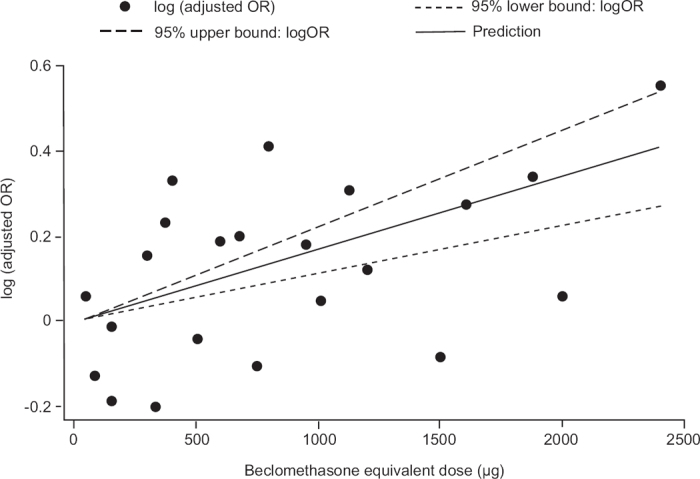
While the pharmacological management of chronic obstructive pulmonary disease (COPD) has evolved from the drugs used to treat asthma, the treatment models are different and the two diseases require clear differential diagnosis in order to determine the correct therapeutic strategy. In contrast to the almost universal requirement for anti-inflammatory treatment of persistent asthma, the efficacy of inhaled corticosteroids (ICS) is less well established in COPD and their role in treatment is limited. There is some evidence of a preventive effect of ICS on exacerbations in patients with COPD, but there is little evidence for an effect on mortality or lung function decline. As a result, treatment guidelines recommend the use of ICS in patients with severe or very severe disease (forced expiratory volume in 1 second <50% predicted) and repeated exacerbations. Patients with frequent exacerbations - a phenotype that is stable over time - are likely to be less common among those with moderate COPD (many of whom are managed in primary care) than in those with more severe disease. The indiscriminate use of ICS in COPD may expose patients to an unnecessary increase in the risk of side-effects such as pneumonia, osteoporosis, diabetes and cataracts, while wasting healthcare spending and potentially diverting attention from other more appropriate forms of management such as pulmonary rehabilitation and maximal bronchodilator use. Physicians should carefully weigh the likely benefits of ICS use against the potential risk of side-effects and costs in individual patients with COPD.
Conflict of interest statement
DP has consultant arrangements with Almirall, AstraZeneca, Boehringer Ingelheim, Chiesi, GlaxoSmithKline, Merck, Mundipharma, Novartis, Pfizer, Sandoz and Teva. He or his research team has received grants and support for research in respiratory disease from the following organisations in the last 5 years: UK National Health Service, Aerocrine, AstraZeneca, Boehringer Ingelheim, Chiesi, GlaxoSmithKline, Merck, Mundipharma, Novartis, Nycomed, Pfizer and Teva. He has spoken for Almirral, AstraZeneca, Boehringer Ingelheim, Chiesi, Cipla, GlaxoSmithKline, Kyorin, Merck, Mundipharma, Pfizer and Teva. He has shares in AKL Ltd which produces phytopharmaceuticals. He is the sole owner of Research in Real Life Ltd. Within the past 36 months BY has received research funding for studies in COPD from BI-Pfizer, Novartis, Merck and has served on the COPD advisory board for future phase 4 studies for BI-Pfizer and Novartis. She has also received funding from NHLBI and ATS related to spirometry use for COPD in primary care practice. GB has, within the last 5 years, received honoraria for lectures from AstraZeneca, Boehringer-Ingelheim, Chiesi, GlaxoSmithKline, MerckSharp&Dohme, Novartis, Pfizer, and UCB. He is a member of advisory boards for AstraZeneca, Boehringer-Ingelheim, GlaxoSmithKline, and Novartis. AR has received reimbursement for attending symposia, fees for speaking, fees for organising education, funds for research, and fees for consulting from AstraZeneca, Boehringer/Pfizer, Chiesi, GlaxoSmithKline, Novartis, and Nycomed/Tanaka.
Figures
References
-
- Global initiative for chronic obstructive lung disease (GOLD). Global Strategy for the Diagnosis, Management, and Prevention of Chronic Obstructive Pulmonary Disease. Updated 2011. www.goldcopd.com (accessed 21 Sep 2011).
-
- Qaseem A, Wilt TJ, Weinberger SE, et al. Diagnosis and management of stable chronic obstructive pulmonary disease: a clinical practice guideline update from the American College of Physicians, American College of Chest Physicians, American Thoracic Society, and European Respiratory Society. Ann Intern Med 2011;155(3):179–91. - PubMed
-
- National Institute for Health and Clinical Excellence. CG101 Chronic obstructive pulmonary disease (update): full guideline. 18 Jan 2012. http://guidance.nice.org.uk/CG101/Guidance/pdf/English (accessed 23 May 2012).
-
- Suissa S, Barnes PJ. Inhaled corticosteroids in COPD: the case against. Eur Respir J 2009;34(1):13–16. http://dx.doi.org/10.1183/09031936.00190908 - PubMed
-
- Jochmann A, Neubauer F, Miedinger D, Schafroth S, Tamm M, Leuppi JD. General practitioner's adherence to the COPD GOLD guidelines: baseline data of the Swiss COPD Cohort Study. Swiss Med Wkly 2010;140:w13053. http://dx.doi.org/10.4414/smw.2010.13053 - PubMed
Publication types
MeSH terms
Substances
LinkOut - more resources
Full Text Sources
Medical