Interleukin-6--a key regulator of colorectal cancer development
- PMID: 23136553
- PMCID: PMC3491448
- DOI: 10.7150/ijbs.4614
Interleukin-6--a key regulator of colorectal cancer development
Abstract
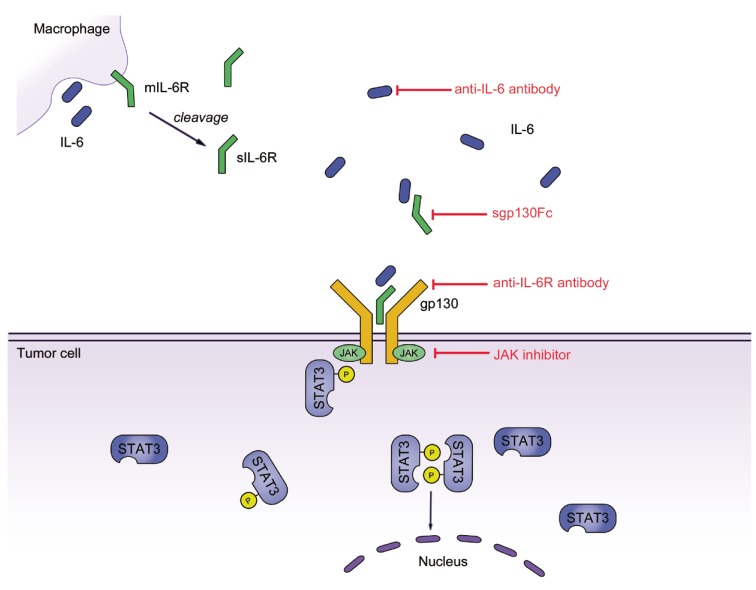
Growing evidence proposes an important role for pro-inflammatory cytokines during tumor development. Several experimental and clinical studies have linked the pleiotropic cytokine interleukin-6 (IL-6) to the pathogenesis of sporadic and inflammation-associated colorectal cancer (CRC). Increased IL-6 expression has been related to advanced stage of disease and decreased survival in CRC patients. According to experimental studies, these effects are mediated through IL-6 trans-signaling promoting tumor cell proliferation and inhibiting apoptosis through gp130 activation on tumor cells with subsequent signaling through Janus kinases (JAKs) and signal transducer and activator of transcription 3 (STAT3). During recent years, several therapeutics targeting the IL-6/STAT3 pathway have been developed and pose a promising strategy for the treatment of CRC. This review discusses the molecular mechanisms and possible therapeutic targets involved in IL-6 signaling in CRC.
Keywords: IL-6; colorectal cancer; interleukin-6.
Conflict of interest statement
Competing Interests: The authors have declared that no competing interest exists.
Figures
References
-
- Pitot HC. The molecular biology of carcinogenesis. Cancer. 1993;72:962–70. - PubMed
-
- Foulds L. The natural history of cancer. J Chronic Dis. 1958;8:2–37. - PubMed
-
- Foulds L. The experimental study of tumor progression: a review. Cancer Res. 1954;14:327–39. - PubMed
-
- Vogelstein B, Fearon ER, Hamilton SR, Kern SE, Preisinger AC, Leppert M. et al. Genetic alterations during colorectal-tumor development. N Engl J Med. 1988;319:525–32. - PubMed
Publication types
MeSH terms
Substances
LinkOut - more resources
Full Text Sources
Other Literature Sources
Medical
Miscellaneous