


Psychological aspect of cancer: From stressor to cancer progression
- PMID: 23136586
- PMCID: PMC3490404
- DOI: 10.3892/etm_00000003
Psychological aspect of cancer: From stressor to cancer progression
Abstract
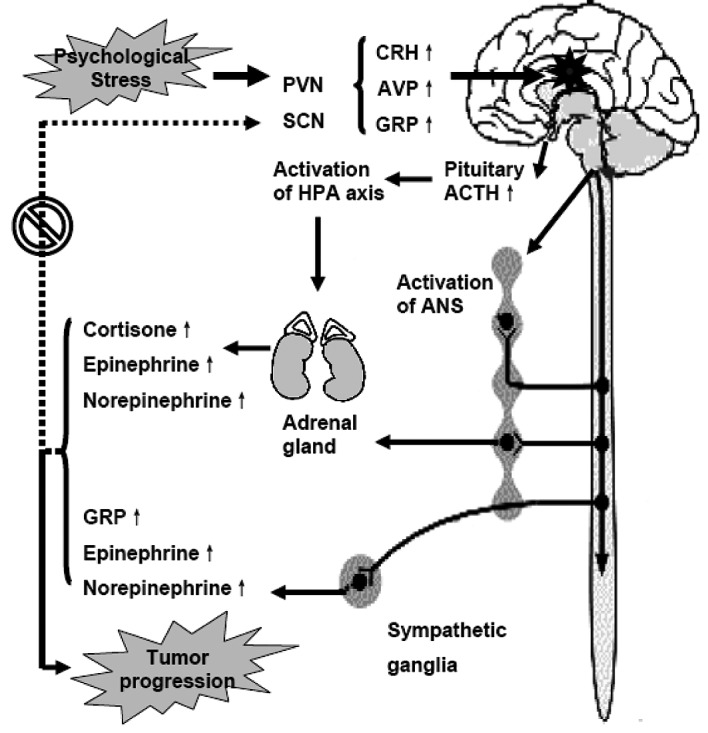
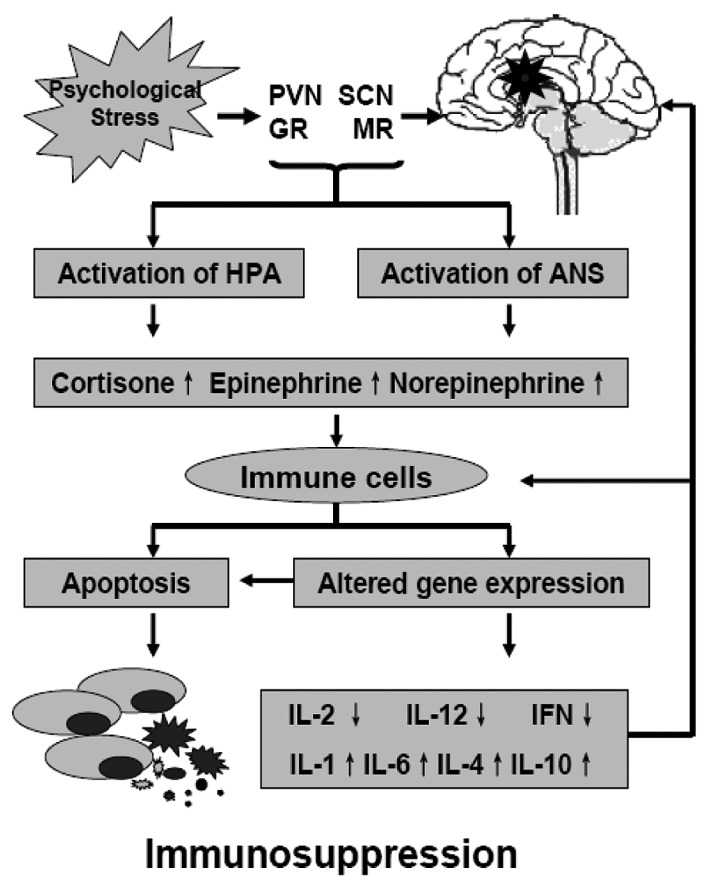
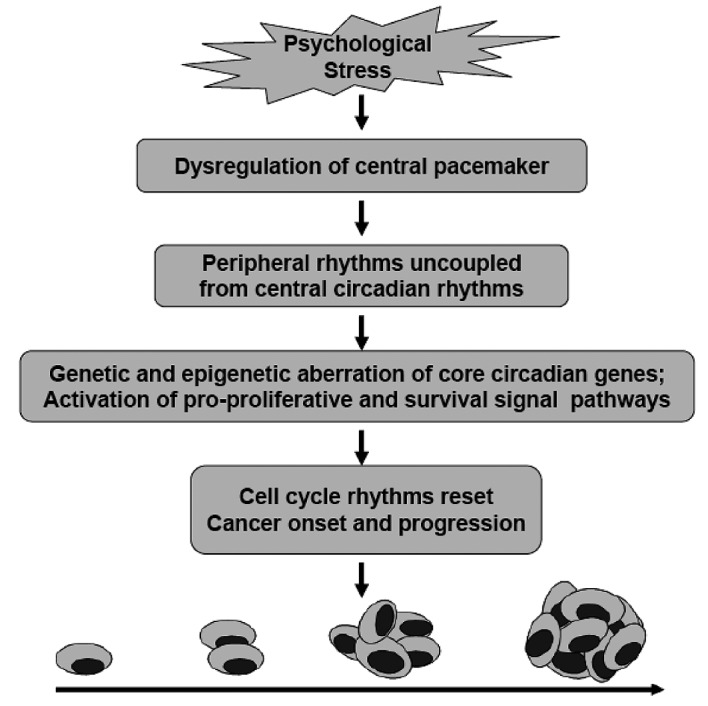
Substantial evidence indicates that psychological stress can influence the incidence and progression of cancers, and adequate psychotherapies are beneficial to cancer patients. Recently, the mechanisms responsible for the effects of psychological stress on cancer cells have been extensively investigated at the systemic, biochemical and molecular levels. Accumulating data indicate that the effects of psychological stress on cancer cells are mainly mediated by key stress-related mediators and their corresponding receptors in multi-fold pathways: chronic stressors act on the paraventricular nucleus and the suprachiasmatic nuclei. The effects are then transmitted through the sympathetic nervous system and the hypothalamic-pituitary-adrenal axis, amplified by the unchecked release of stress-related mediators and altered behaviors. These mediators act as immunosuppressors or mitogens in the tumor microenvironment. The converging effects of psychological stress on cancer cells finally signal through receptors of the stress mediators and cytokines to activate the intracellular pro-proliferative and pro-migratory signaling pathways, and reset the molecular clock in tumor cells. Understanding these action mechanisms of psychological stress in promoting the growth and invasion of cancer cells is crucial for devising effective interventions.
Figures


References
-
- Riley V. Mouse mammary tumors: alteration of incidence as apparent function of stress. Science. 1975;189:465–467. - PubMed
-
- Massie MJ. Prevalence of depression in patients with Cancer. J Natl Cancer Inst Monogr. 2004;32:57–71. - PubMed
-
- Garssen B. Psychological factors and cancer development: evidence after 30 years of research. Clin Psychol Rev. 2004;24:315–338. - PubMed
LinkOut - more resources
Full Text Sources