Chemoprevention of prostate cancer: soy isoflavones and curcumin
- PMID: 23136625
- PMCID: PMC3490085
- DOI: 10.4111/kju.2012.53.10.665
Chemoprevention of prostate cancer: soy isoflavones and curcumin
Abstract
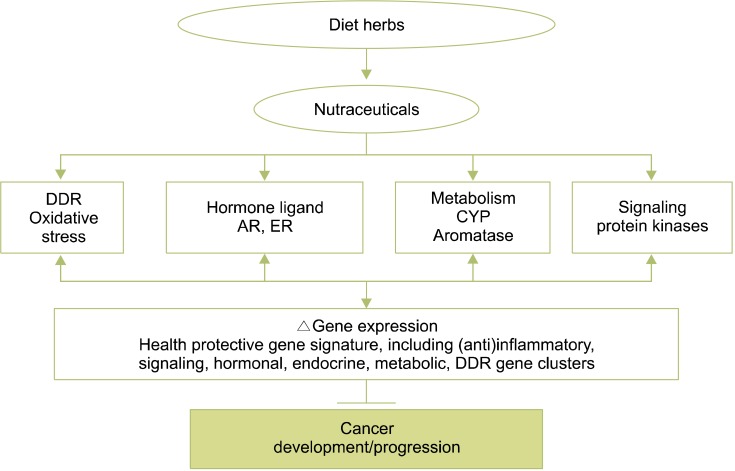
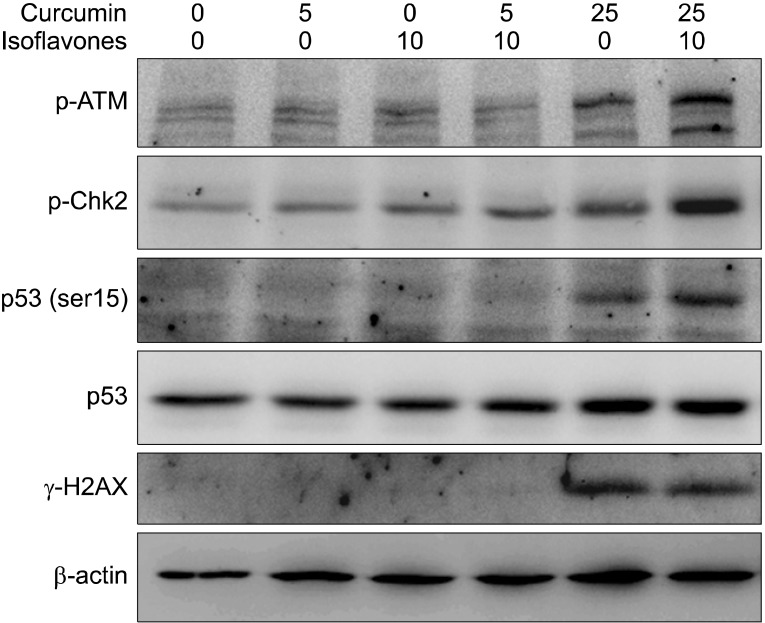
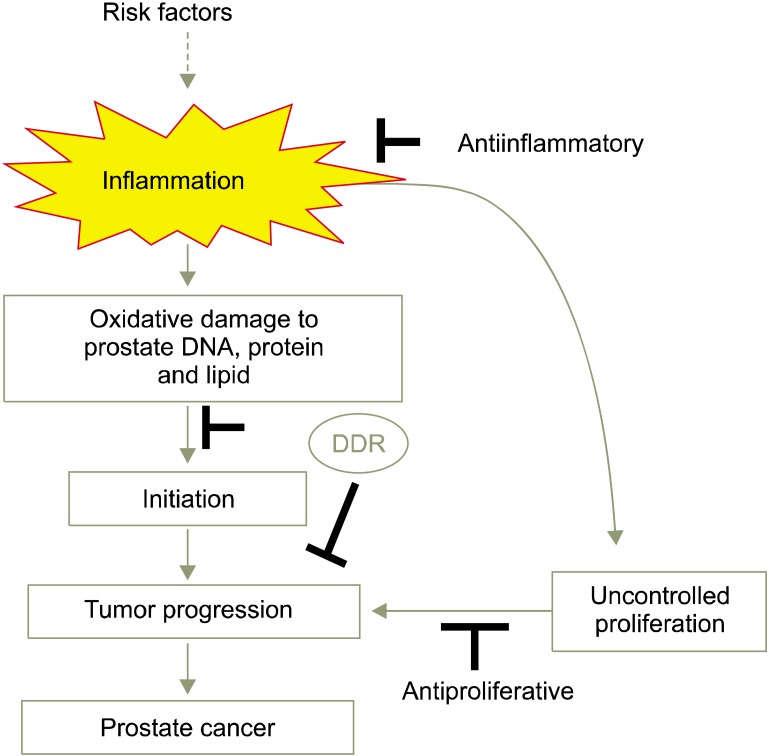
The burden of increasing morbidity and mortality due to prostate cancer imposes a need for new, effective measures of prevention in daily life. The influence of lifestyle on carcinogenesis in Asian men who migrate to Western cultures supports a causal role for dietary, environmental, and genetic factors in the epidemiology of prostate cancer. Chemoprevention, a prophylactic approach that uses nontoxic natural or synthetic compounds to reverse, inhibit, or prevent cancer by targeting specific steps in the carcinogenic pathway, is gaining traction among health care practitioners. Soy isoflavones and curcumin, staples of the Asian diet, have shown promise as functional factors for the chemoprevention of prostate cancer because of their ability to modulate multiple intracellular signaling pathways, including cellular proliferation, apoptosis, inflammation, and androgen receptor signaling. Recent evidence has revealed the DNA damage response (DDR) to be one of the earliest events in the multistep progression of human epithelial carcinomas to invasive malignancy. Soy isoflavones and curcumin activate the DDR, providing an opportunity and rationale for the clinical application of these nutraceuticals in the chemoprevention of prostate cancer.
Keywords: Chemoprevention; Curcumin; Isoflavones; Prostate neoplasms.
Conflict of interest statement
The authors have nothing to disclose.
Figures
References
-
- Namiki M, Akaza H, Lee SE, Song JM, Umbas R, Zhou L, et al. Prostate Cancer Working Group report. Jpn J Clin Oncol. 2010;40(Suppl 1):i70–i75. - PubMed
-
- Parkin DM, Bray F, Ferlay J, Pisani P. Global cancer statistics, 2002. CA Cancer J Clin. 2005;55:74–108. - PubMed
-
- Gronberg H. Prostate cancer epidemiology. Lancet. 2003;361:859–864. - PubMed
-
- Whittemore AS, Kolonel LN, Wu AH, John EM, Gallagher RP, Howe GR, et al. Prostate cancer in relation to diet, physical activity, and body size in blacks, whites, and Asians in the United States and Canada. J Natl Cancer Inst. 1995;87:652–661. - PubMed
-
- Nagata Y, Sonoda T, Mori M, Miyanaga N, Okumura K, Goto K, et al. Dietary isoflavones may protect against prostate cancer in Japanese men. J Nutr. 2007;137:1974–1979. - PubMed
LinkOut - more resources
Full Text Sources