Saliva and dental erosion
- PMID: 23138733
- PMCID: PMC3881791
- DOI: 10.1590/s1678-77572012000500001
Saliva and dental erosion
Abstract
Dental erosion is a multifactorial condition. The consideration of chemical, biological and behavioral factors is fundamental for its prevention and therapy. Among the biological factors, saliva is one of the most important parameters in the protection against erosive wear.
Objective: This review discusses the role of salivary factors on the development of dental erosion.
Material and methods: A search was undertaken on MeDLINe website for papers from 1969 to 2010. The keywords used in the research were "saliva", "acquired pellicle", "salivary flow", "salivary buffering capacity" and "dental erosion". Inclusion of studies, data extraction and quality assessment were undertaken independently and in duplicate by two members of the review team. Disagreements were solved by discussion and consensus or by a third party.
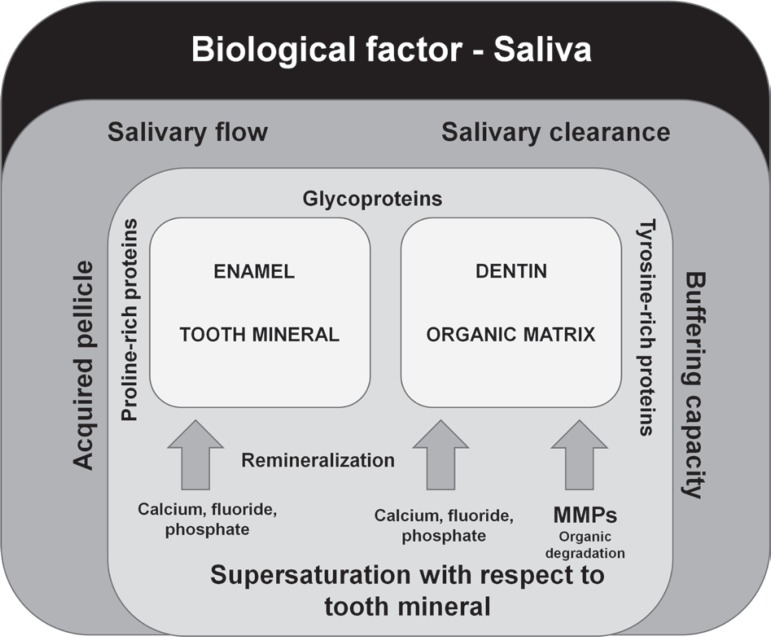
Results: Several characteristics and properties of saliva play an important role in dental erosion. Salivary clearance gradually eliminates the acids through swallowing and saliva presents buffering capacity causing neutralization and buffering of dietary acids. Salivary flow allows dilution of the acids. In addition, saliva is supersaturated with respect to tooth mineral, providing calcium, phosphate and fluoride necessary for remineralization after an erosive challenge. Furthermore, many proteins present in saliva and acquired pellicle play an important role in dental erosion.
Conclusions: Saliva is the most important biological factor affecting the progression of dental erosion. Knowledge of its components and properties involved in this protective role can drive the development of preventive measures targeting to enhance its known beneficial effects.
Figures
References
-
- Amaechi BT, Higham SM. Eroded enamel lesion remineralization by saliva as a possible factor in the site-specificity of human dental erosion. Arch Oral Biol. 2001;46:697–703. - PubMed
-
- Attin T, Knöfel S, Buchalla W, Tütüncü R. in situ evaluation of different remineralization periods to decrease brushing abrasion of demineralized enamel. Caries Res. 2001;35:216–222. - PubMed
-
- Bartlett DW, Smith BG, Wilson RF. Comparison of the effect of fluoride and non-fluoride toothpaste on tooth wear in vitro and the influence of enamel fluoride concentration and hardness of enamel. Br Dent J. 1994;176:346–348. - PubMed
-
- Ben-Aryeh H, Shalev A, Szargel R, Laor A, Laufer D, Gutman D. The salivary flow rate and composition of whole and parotid resting and stimulated saliva in young and old healthy subjects. Biochem Med Metab Biol. 1986;36:260–265. - PubMed
-
- Birkedal-Hansen H. Proteolytic remodeling of extracellular matrix. Curr Opin Cell Biol. 1995;7:728–735. - PubMed
Publication types
MeSH terms
Substances
LinkOut - more resources
Full Text Sources