


N-chlorotaurine, a long-lived oxidant produced by human leukocytes, inactivates Shiga toxin of enterohemorrhagic Escherichia coli
- PMID: 23139739
- PMCID: PMC3491008
- DOI: 10.1371/journal.pone.0047105
N-chlorotaurine, a long-lived oxidant produced by human leukocytes, inactivates Shiga toxin of enterohemorrhagic Escherichia coli
Abstract
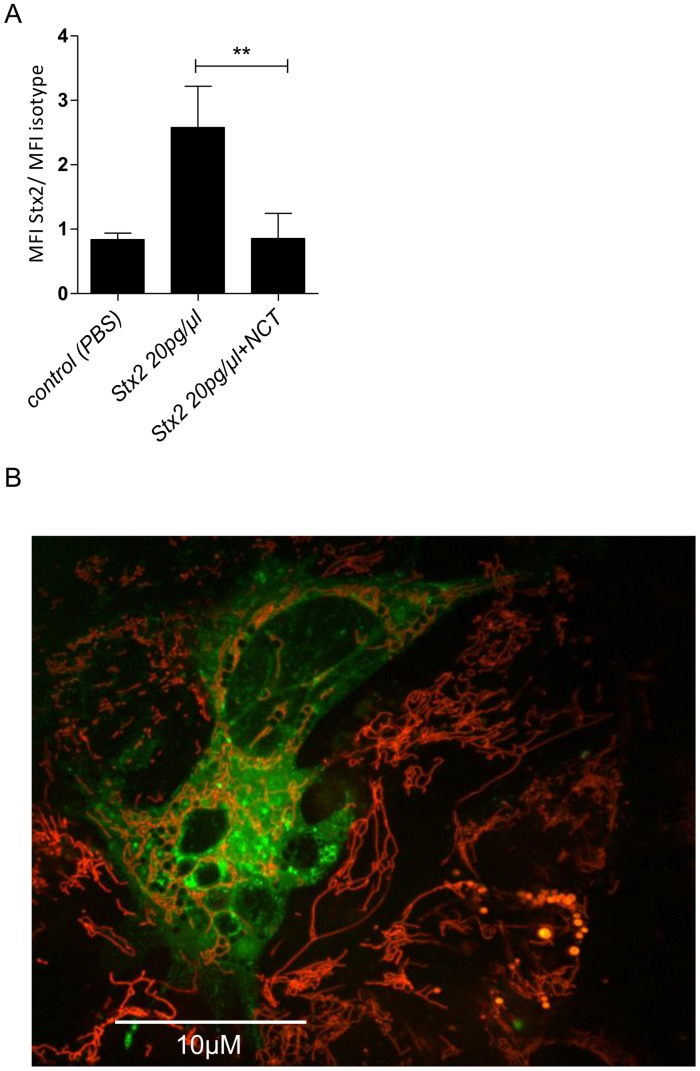
N-chlorotaurine (NCT), the main representative of long-lived oxidants produced by granulocytes and monocytes, is known to exert broad-spectrum microbicidal activity. Here we show that NCT directly inactivates Shiga toxin 2 (Stx2), used as a model toxin secreted by enterohemorrhagic Escherichia coli (EHEC). Bacterial growth and Stx2 production were both inhibited by 2 mM NCT. The cytotoxic effect of Stx2 on Vero cells was removed by ≥5.5 mM NCT. Confocal microscopy and FACS analyses showed that the binding of Stx2 to human kidney glomerular endothelial cells was inhibited, and no NCT-treated Stx2 entered the cytosol. Mass spectrometry displayed oxidation of thio groups and aromatic amino acids of Stx2 by NCT. Therefore, long-lived oxidants may act as powerful tools of innate immunity against soluble virulence factors of pathogens. Moreover, inactivation of virulence factors may contribute to therapeutic success of NCT and novel analogs, which are in development as topical antiinfectives.
Conflict of interest statement
Figures




References
-
- Grisham MB, Jefferson MM, Melton DF, Thomas EL (1984) Chlorination of endogenous amines by isolated neutrophils. J Biol Chem 259: 10404–10413. - PubMed
-
- Weiss SJ (1989) Tissue destruction by neutrophils. N Engl J Med 320: 365–376. - PubMed
-
- Koprowski M, Marcinkiewicz J (2002) Taurine chloramine - its role in immunity and new perspectives for clinical use. Centr Eur J Immunol 27: 69–74.
-
- Marcinkiewicz J (1997) Neutrophil chloramines: missing links between innate and acquired immunity. Immunol Today 18: 577–580. - PubMed
Publication types
MeSH terms
Substances
LinkOut - more resources
Full Text Sources
Molecular Biology Databases
