Variability and reproducibility of circulating vitamin D in a nationwide U.S. population
- PMID: 23144464
- PMCID: PMC3537087
- DOI: 10.1210/jc.2012-2643
Variability and reproducibility of circulating vitamin D in a nationwide U.S. population
Abstract
Context: Most studies examining associations between circulating vitamin D and disease are based on a single measure of vitamin D, which may not reflect levels over time, particularly because vitamin D concentrations vary by season. Few studies evaluated how well multiple 25-hydroxyvitamin D [25(OH)D] measures track within the same individual over time.
Objective: This study examined variability and reproducibility of vitamin D by evaluating repeat measurements of plasma 25(OH)D concentrations while accounting for determinants of circulating concentrations including dietary supplement use and latitude of residence from a population of U.S. radiologic technologists.
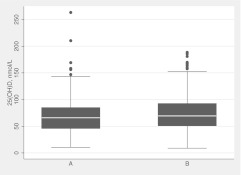
Design and participants: We analyzed circulating 25(OH)D in blood samples taken from 538 men and women from a prospective, nationwide study at two time points within a 1-yr period, most measured in different seasons. Inter- and intra-individual variability, reliability coefficients, and measurement error were examined.
Results: The spearman rank correlation between two measurements of 25(OH)D concentrations was moderate (r = 0.75, P < 0.001) and did not vary significantly by participant characteristics including age, race, or latitude. The intraclass correlation coefficient was 0.72 (95% confidence interval = 0.68-0.76). The deattenuation factor of plasma 25(OH)D levels was 1.39, suggesting that a single measure of vitamin D on a continuous scale in regression analyses may result in attenuated relationships of about 40%.
Conclusion: Our results suggest that a single blood sample obtained in spring or fall provides a reasonable average for 25(OH)D over a 1-yr period, but additional studies are needed to estimate variability and agreement in plasma 25(OH)D measurements over longer intervals and younger populations.
Figures
References
-
- Gagnon C, Lu ZX, Magliano DJ, Dunstan DW, Shaw JE, Zimmet PZ, Sikaris K, Grantham N, Ebeling PR, Daly RM. 2011. Serum 25-hydroxyvitamin D, calcium intake, and risk of type 2 diabetes after 5 years: results from a national, population-based prospective study (the Australian Diabetes, Obesity and Lifestyle study). Diabetes Care 34:1133–1138 - PMC - PubMed
-
- Giovannucci E. 2009. Vitamin D and cancer incidence in the Harvard cohorts. Ann Epidemiol 19:84–88 - PubMed
-
- Holick MF. 2004. Sunlight and vitamin D for bone health and prevention of autoimmune diseases, cancers, and cardiovascular disease. Am J Clin Nutr 80:1678S–1688S - PubMed
-
- IARC 2008. Vitamin D and Cancer. In: IARC Working Group Reports. Lyon, France: IARC
-
- Leu M, Giovannucci E. 2011. Vitamin D: epidemiology of cardiovascular risks and events. Best Pract Res Clin Endocrinol Metab 25:633–646 - PubMed
Publication types
MeSH terms
Substances
Grants and funding
LinkOut - more resources
Full Text Sources
Other Literature Sources
Medical