


Adenocarcinoma not otherwise specified on dorsum of tongue: case report and literature review
- PMID: 23144584
- PMCID: PMC3457887
- DOI: 10.3747/co.19.1091
Adenocarcinoma not otherwise specified on dorsum of tongue: case report and literature review
Abstract
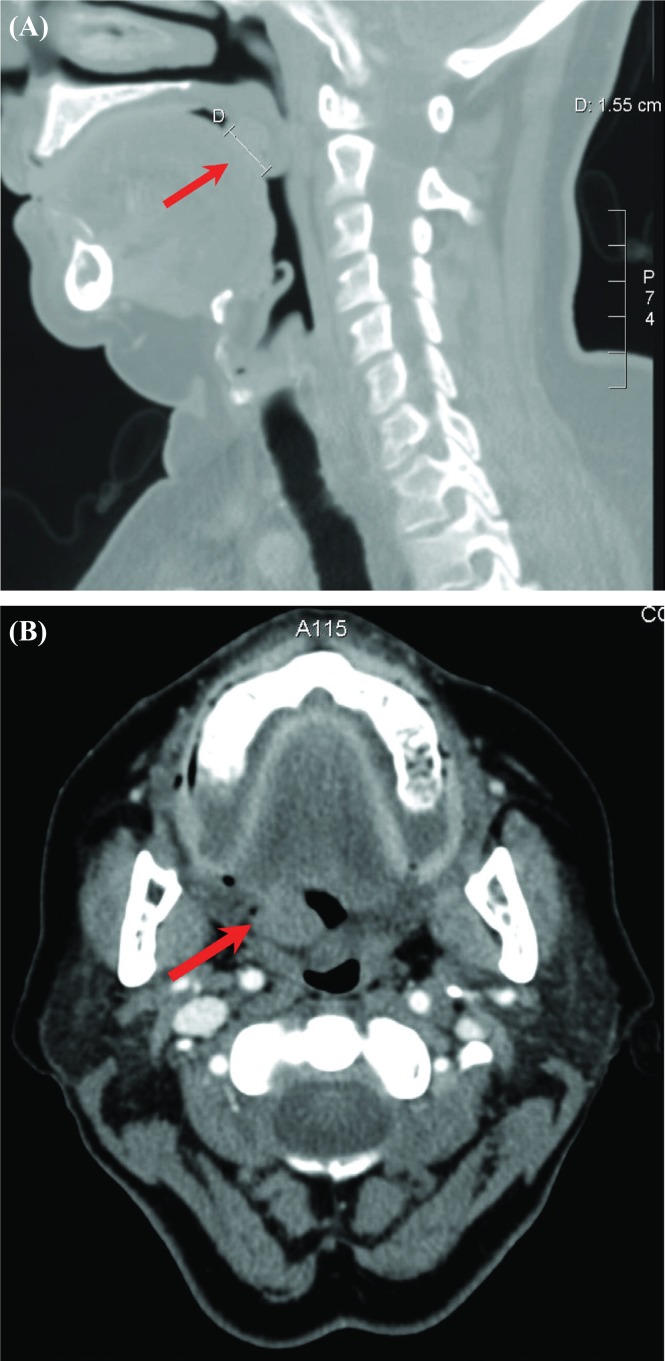
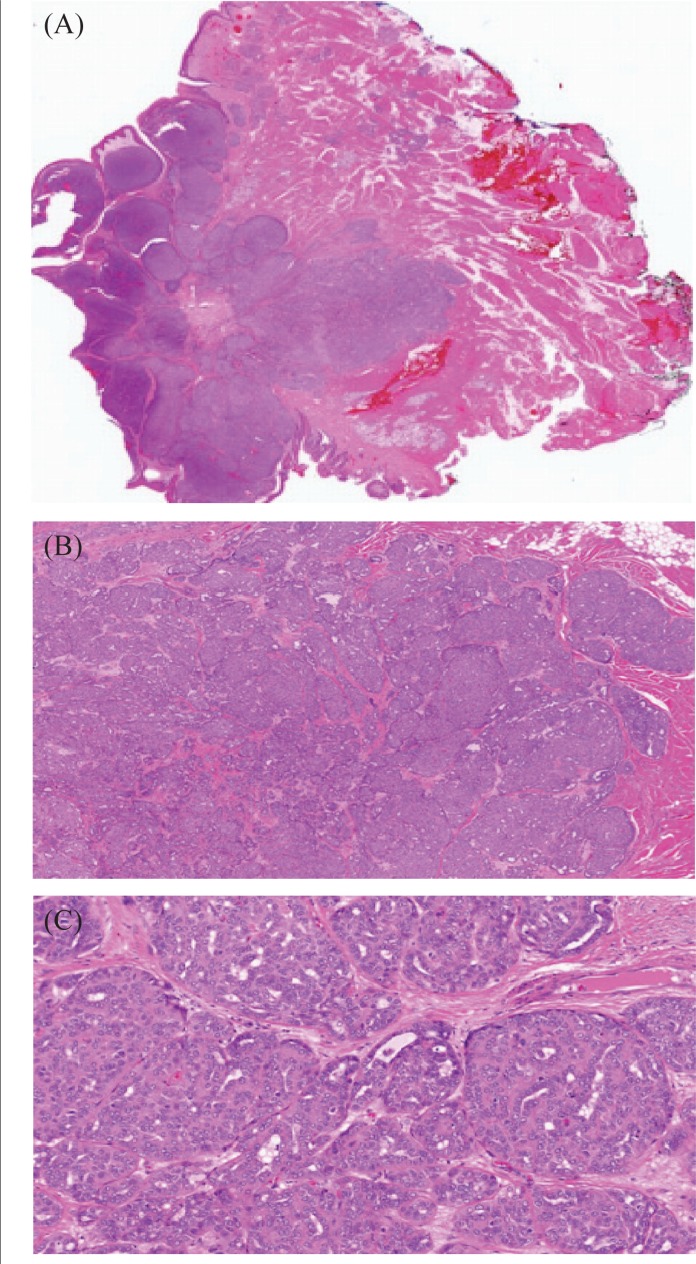
Primary adenocarcinoma of the oropharynx most often arises from the minor salivary glands, and primary squamous cell carcinoma is more commonly seen arising from the tongue. Few cases of adenocarcinoma not otherwise specified of the tongue have been reported in the literature, and none found on the dorsum of the tongue. Successful treatment strategies have therefore not been defined.We report a case of adenocarcinoma located on the dorsum of the posterior one third of the tongue adjacent to the circumvallate papillae in a woman presenting with globus sensation and mild dysphagia. Treatment consisted of transoral laser excision and postoperative external-beam radiotherapy, resulting in disease-free survival at her 5-year follow-up. The goals of this report are to present a case of adenocarcinoma arising from the minor salivary gland located on the dorsum of the tongue, to discuss previous reports of similar cases, and to suggest that surgery with or without radiotherapy be used as the mainstay of treatment.
Keywords: Adenocarcinoma; base of tongue; minor salivary gland; radiation therapy.
Figures
References
-
- Canadian Cancer Society’s Steering Committee . Canadian Cancer Statistics 2010. Toronto, ON: Canadian Cancer Society; 2010.
-
- Burbank PM, Dockerty MB, Devine KD. A clinicopathologic study of 43 cases of glandular tumors of the tongue. Surg Gynecol Obstet. 1959;109:573–82. - PubMed
LinkOut - more resources
Full Text Sources
